Electrical Tips
HVAC Surge Protector Installation in Los Angeles
6 min read
A single voltage spike can take out a variable-speed compressor or a control board in less time than it takes to blink — and in Los Angeles, those spikes arrive far more often than most homeowners realize. An HVAC surge protector is one of the cheapest pieces of insurance you can put on a system that costs five figures to replace.
Why Los Angeles HVAC Systems Take So Much Surge Abuse
Surges are not just a lightning problem, which is lucky, because LA barely gets lightning. The damaging spikes here come from somewhere else:
- Grid switching and rolling load management. During September and October heat waves, LADWP and Southern California Edison shift load across the grid. Every switch, recloser operation, and restoration after an outage sends a transient down the line.
- Your own equipment. The single biggest source of internal surges is the AC condenser itself. Every time a large motor kicks on and off, it dumps a small voltage spike back into your panel — dozens of times a day in summer.
- Aging neighborhood infrastructure. Older services in Highland Park, Eagle Rock, Altadena, and much of the San Fernando Valley run on utility equipment that has been patched for decades.
- Wildfire-related shutoffs. Public Safety Power Shutoffs and the restorations that follow are hard on sensitive electronics.
Modern HVAC is far more surge-sensitive than the equipment it replaced. A 1990s condenser was essentially a motor and a contactor. Today's inverter-driven heat pumps and variable-speed air handlers are computers with refrigerant lines, and their control boards fail at voltages an old unit would have shrugged off.
What an HVAC Surge Protector Actually Does
A surge protective device (SPD) is a fast-acting valve for voltage. It sits idle at normal voltage, then clamps and diverts excess energy to ground within nanoseconds when a transient shows up. Nothing about it changes your energy bill or your system's performance — it only acts during the spike.
Whole-House vs. Dedicated HVAC Surge Protection
These are complementary, not competing:
- A whole-house surge protector installs at your main electrical panel and handles the big external events coming in from the street. It protects everything downstream, including the HVAC circuit.
- A dedicated HVAC surge protector installs at the condenser disconnect outside (and sometimes at the air handler). It sits inches from the equipment, so it catches the internally generated spikes the panel-level device never sees, and it stops let-through voltage that slips past the main SPD.
For most LA homes, the right answer is both. If you only do one, start at the panel — a whole-house device covers the widest range of threats. Our guide to whole-house surge protector installation in Los Angeles walks through that side in detail.
Signs Your AC or Heat Pump Has Already Taken Surge Damage
Surge damage is often mistaken for a normal breakdown. Watch for:
- Repeated control board or capacitor failures on a unit that is otherwise healthy.
- The system runs, but the thermostat loses communication with the outdoor unit intermittently.
- Error codes that clear on a power cycle and then return days later.
- A contactor that welds shut or chatters audibly at the disconnect.
- Other electronics failing in the same window — garage door opener, router, LED drivers — which points to a house-wide event rather than an HVAC fault.
If several of these line up, get the circuit and panel looked at before you replace the part. A pattern of failures usually means something upstream is still doing damage. That is the kind of diagnosis our electrical repair team in Los Angeles handles regularly.
HVAC Surge Protector Cost in Los Angeles
Prices vary by equipment, panel condition, and permitting, and you should always get a written quote. As a realistic range for the LA area:
- Dedicated condenser-mounted SPD, installed: roughly $250–$550 for the device and labor when the disconnect is accessible and in good shape.
- Whole-house SPD at the main panel, installed: roughly $450–$900 depending on the device rating and panel type.
- Both together: most homeowners land in the $700–$1,300 range, and many electricians discount the second device when it is done on the same visit.
- Add-ons that move the price: a failed or non-compliant disconnect, a full panel with no space, aluminum feeders, or an obsolete panel that will not accept a modern breaker-style SPD.
That last one comes up often. If your home still has a Zinsco, Federal Pacific, or a crowded 100-amp service, surge protection is usually bundled into a larger conversation about an electrical panel upgrade — and that upgrade solves several problems at once.
What the Installation Involves
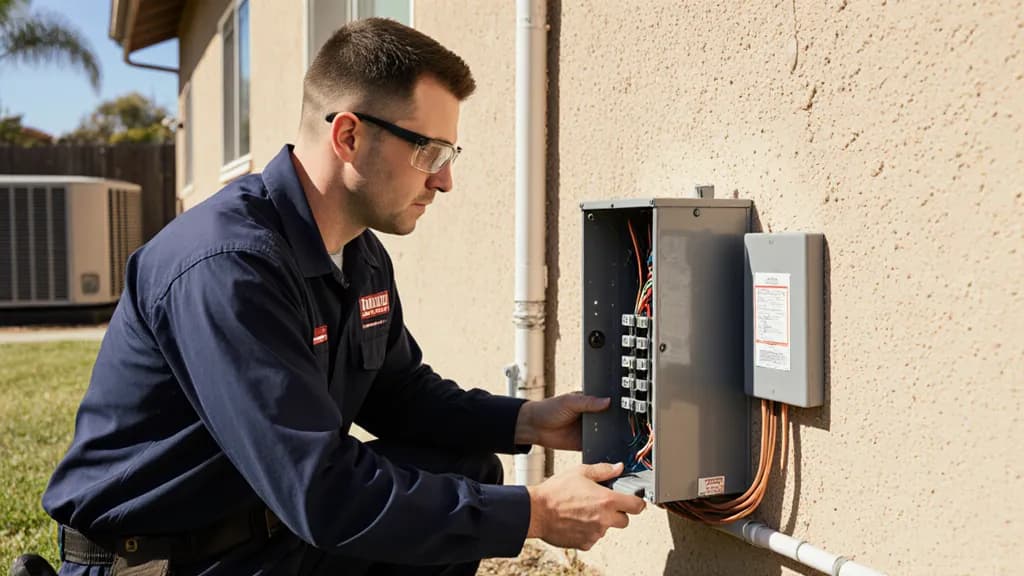
A dedicated HVAC SPD is a short job for a licensed electrician: power down at the panel, open the outdoor disconnect, land the SPD's line conductors on the load side, bond the ground, verify the indicator light, and restore power. Most installs take under an hour. Panel-level devices take a little longer because the SPD needs a dedicated two-pole breaker and short, straight lead runs — long or looping leads measurably reduce how well the device clamps.
Permitting rules differ by jurisdiction across LA County, and some devices carry warranties that are only valid with licensed installation and documentation. Both are good reasons not to make this a DIY project on a live 240-volt circuit.
Frequently Asked Questions
Do I really need a surge protector for my HVAC system?
If you have an inverter-driven, variable-speed, or heat pump system, it is strongly recommended — those control boards are expensive and surge-sensitive. For an older single-stage condenser the case is weaker, but the device still costs a fraction of a compressor.
Will a whole-house surge protector protect my HVAC?
It protects it from external surges, yes. It does not catch the spikes your own compressor generates on the load side, which is why a point-of-use device at the condenser is recommended alongside it.
How long does an HVAC surge protector last?
SPDs wear out as they absorb energy. Most have an indicator light or audible alarm; plan on inspecting it annually and replacing the device every 5–10 years, sooner after a major event.
Does an HVAC surge protector affect my warranty or rebate eligibility?
Manufacturer warranties generally require professional installation. Some HVAC makers offer extended parts coverage when a listed SPD is installed, and rebate programs change frequently — verify current terms with your manufacturer and utility before you buy.
Can I install one myself?
The work happens on a live 240-volt service and requires proper bonding to be effective at all. An improperly grounded SPD can pass its self-test and still fail to protect anything. This is licensed-electrician work.
Protect Your HVAC Before the Next Heat Wave
911 Construction & Electric Inc. is a licensed, bonded, and insured C-10 electrical contractor (CA Lic. #1027421) serving Los Angeles, Pasadena, Burbank, Glendale, Altadena, Arcadia, and the surrounding San Fernando Valley. We install both panel-level and equipment-level surge protection, and we will tell you honestly which one your home actually needs. Request a free estimate or call 747-255-8595 — 24/7 emergency service available.
Keep Reading
5 min read
Electrical Preventive Maintenance in Los Angeles
A loose lug or a scorched neutral rarely announces itself. It shows up as a breaker that trips on the hottest afternoon of the year, or a tenant calling at closing time about ha…
Read article →
6 min read
Electrical Panel Maintenance in Los Angeles: Checklist
Most homeowners service the furnace, flush the water heater and change the HVAC filter on a schedule. The electrical panel — the single component every circuit in the building d…
Read article →
6 min read
Home Battery Backup Installation in Los Angeles
A red-flag wind warning goes up, the power drops, and suddenly the most important appliance in the house is the refrigerator. That is usually the moment Los Angeles homeowners s…
Read article →Have an electrical project in mind?
Talk to a licensed electrician today — free estimates, 24/7 emergency service.