Electrical Tips
NEMA 14-50 Outlet Installation Cost in Los Angeles
Updated 6 min read
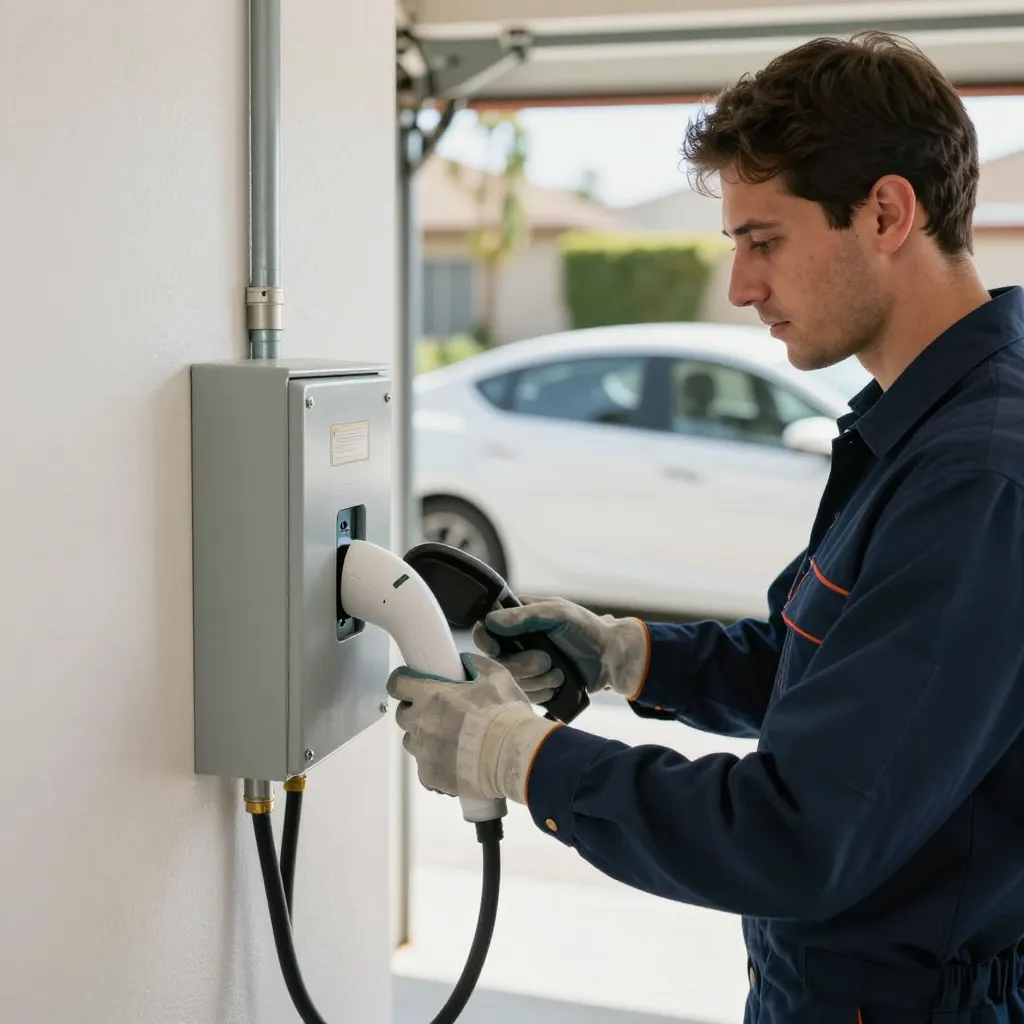
Plenty of Los Angeles drivers buy an EV, look at the mobile connector in the trunk, and realize the garage has no 240-volt outlet to plug it into. A NEMA 14-50 outlet is usually the fastest, least expensive way to fix that — but what it costs depends far more on your garage and your panel than on the receptacle itself.
What a NEMA 14-50 Outlet Actually Is
A NEMA 14-50 is a 50-amp, 240-volt receptacle with four slots: two hot legs, a neutral, and a ground. It is the same style of outlet used for many electric ranges and RV hookups, which is why EV manufacturers standardized around it. Plugged into a properly wired 14-50 on a 50-amp breaker, most EVs charge at roughly 32 amps — about 25 to 30 miles of range per hour, enough to refill a daily commute several times over while you sleep.
It is not a DIY receptacle swap. A 14-50 needs its own dedicated circuit run from your electrical panel, correctly sized wire, a permit in most Los Angeles jurisdictions, and — under current code — GFCI protection.
NEMA 14-50 Outlet Installation Cost in Los Angeles
For most LA homes, a permitted 14-50 install lands somewhere between $650 and $1,600. The spread is almost entirely about how far the new circuit has to travel and what it has to travel through. Typical drivers of the price:
- Distance from the panel — a garage wall directly behind the panel may run $650–$900; a 60-foot run across a crawlspace or attic pushes toward $1,200–$1,600.
- Wire size and material — a 50-amp circuit generally needs 6 AWG copper, and copper prices move; aluminum feeders can lower material cost on long runs but require a larger conductor.
- Detached garages — trenching and burying conduit from the house to a separate structure commonly adds $1,000–$2,500 depending on length and whether concrete has to be cut.
- Surface conduit vs. fishing walls — exposed EMT in a garage is quick; fishing through finished stucco or plaster costs labor.
- Permit and inspection fees — these vary by city (LADBS, Pasadena, Burbank, Glendale all set their own) and are usually a modest line item, but they are not optional.
- Panel capacity — if there is no room or no spare capacity, a panel upgrade is the real cost, not the outlet.
Treat those as ranges, not quotes. Materials, city fees, and the condition of your existing service all move the number, so get a written estimate after someone has actually looked at your panel.
Plug-In vs. Hardwired: Which Should You Choose?
Almost every EV owner in LA faces this fork. Both are legitimate; they solve different problems.
Choose a NEMA 14-50 outlet if…
- You want to use the mobile connector that came with the car and skip buying a wall unit.
- You rent, or you expect to move and want to take the charger with you.
- You may switch charger brands later, or want the outlet to double as an RV or welder receptacle.
Choose a hardwired charger if…
- You want faster charging — hardwired units can run 48 amps or more, where a 14-50 plug caps you around 32 amps.
- The charger will live outdoors or in a damp area, where a permanent connection is more weather-resistant than a plug and cover.
- You want load management or Wi-Fi features that only come on a wall unit.
If you are still deciding between the two, our guide to EV charger installation in Los Angeles walks through charger selection, permits, and what an install day looks like.
Code Details That Trip People Up
California adopts the National Electrical Code with state amendments, and a few requirements catch homeowners off guard:
- GFCI protection. Current code requires GFCI protection for 240-volt receptacles in garages and outdoor locations, which means a GFCI breaker — a real cost adder over a standard 50-amp breaker.
- Four-wire circuit. A 14-50 needs a neutral even though EV charging does not use it. Old three-wire range circuits cannot simply be re-terminated.
- Outlet vs. hardwire on continuous load. A plugged-in charger is limited to 80% of the circuit — 40 amps on a 50-amp breaker — and most mobile connectors self-limit to 32 amps.
- Permit and inspection. Nearly every LA-area jurisdiction requires a permit for a new 240-volt circuit. An unpermitted outlet can surface later during a home sale or an insurance claim.
Does Your Panel Have Room for a 50-Amp Circuit?
This is where a lot of quotes change. A 50-amp circuit is a large addition, and many LA homes — especially pre-1980 houses in Highland Park, Eagle Rock, Altadena, and the older Valley neighborhoods — still run 100-amp service, sometimes with a full breaker panel. A licensed electrician performs a load calculation to confirm the existing service can carry the new circuit alongside your AC, range, and dryer.
If it cannot, the options are a subpanel, a load-management device that shares capacity between the charger and another large appliance, or an electrical panel upgrade. A 14-50 is also just one flavor of 240-volt outlet installation — the same circuit logic applies to ranges, dryers, and hot tubs.
Frequently Asked Questions
How much does it cost to install a NEMA 14-50 outlet in Los Angeles?
Most permitted installs run about $650 to $1,600, with detached garages and long conduit runs going higher. Panel work, if needed, is priced separately. Prices vary by home and city fees, so confirm with a written estimate.
Does a NEMA 14-50 outlet require GFCI protection?
Under current code, yes — 240-volt receptacles in garages, outdoors, and similar locations require GFCI protection, typically supplied by a GFCI breaker at the panel. Your inspector applies the code edition in force in your city.
What size wire does a NEMA 14-50 need?
A 50-amp circuit is commonly wired with 6 AWG copper conductors plus a ground, though the correct size depends on run length, ambient temperature, and conductor type. An electrician sizes it for your specific run rather than a rule of thumb.
How fast will my EV charge on a 14-50 outlet?
Most mobile connectors draw 32 amps on a 14-50, which adds roughly 25 to 30 miles of range per hour for a typical EV. A hardwired 48-amp charger is meaningfully faster, but overnight charging on a 14-50 is more than enough for most LA commutes.
Do I need a permit for a 14-50 outlet in Los Angeles?
Yes, in nearly every LA-area jurisdiction a new 240-volt branch circuit requires an electrical permit and inspection. A licensed contractor pulls it for you, and the signed-off permit is what protects you at resale and with your insurer.
Get a Free Estimate for Your 14-50 Install
911 Construction & Electric Inc. is a licensed, bonded, and insured C-10 electrical contractor (CA Lic. #1027421) with EVITP-certified installers, serving Los Angeles, Pasadena, Burbank, Glendale, Altadena, Arcadia, and the San Fernando Valley. We handle the load calculation, the permit, the GFCI breaker, and the inspection so the outlet is done right the first time. Request a free estimate or call 747-255-8595 — 24/7 emergency service available.
Keep Reading
5 min read
Electrical Preventive Maintenance in Los Angeles
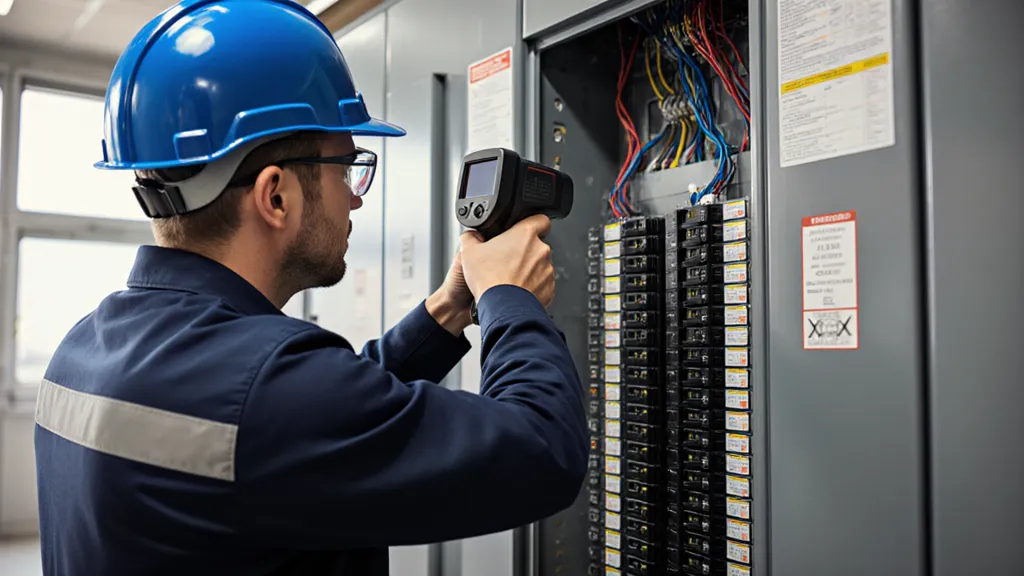
A loose lug or a scorched neutral rarely announces itself. It shows up as a breaker that trips on the hottest afternoon of the year, or a tenant calling at closing time about ha…
Read article →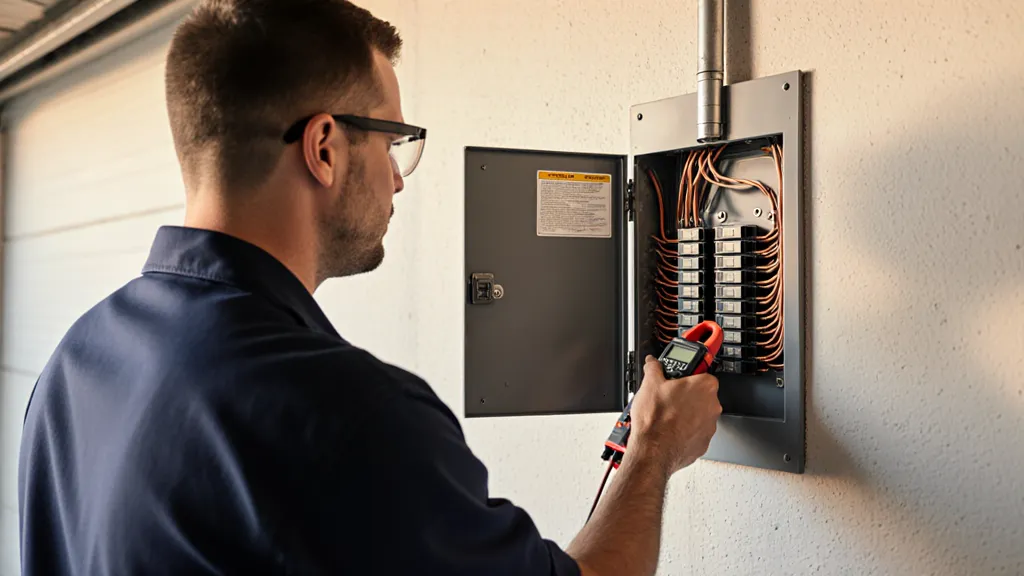
6 min read
Electrical Panel Maintenance in Los Angeles: Checklist
Most homeowners service the furnace, flush the water heater and change the HVAC filter on a schedule. The electrical panel — the single component every circuit in the building d…
Read article →
6 min read
Home Battery Backup Installation in Los Angeles
A red-flag wind warning goes up, the power drops, and suddenly the most important appliance in the house is the refrigerator. That is usually the moment Los Angeles homeowners s…
Read article →Have an electrical project in mind?
Talk to a licensed electrician today — free estimates, 24/7 emergency service.