Electrical Tips
Smart Electrical Panel Installation in Los Angeles
Updated 5 min read
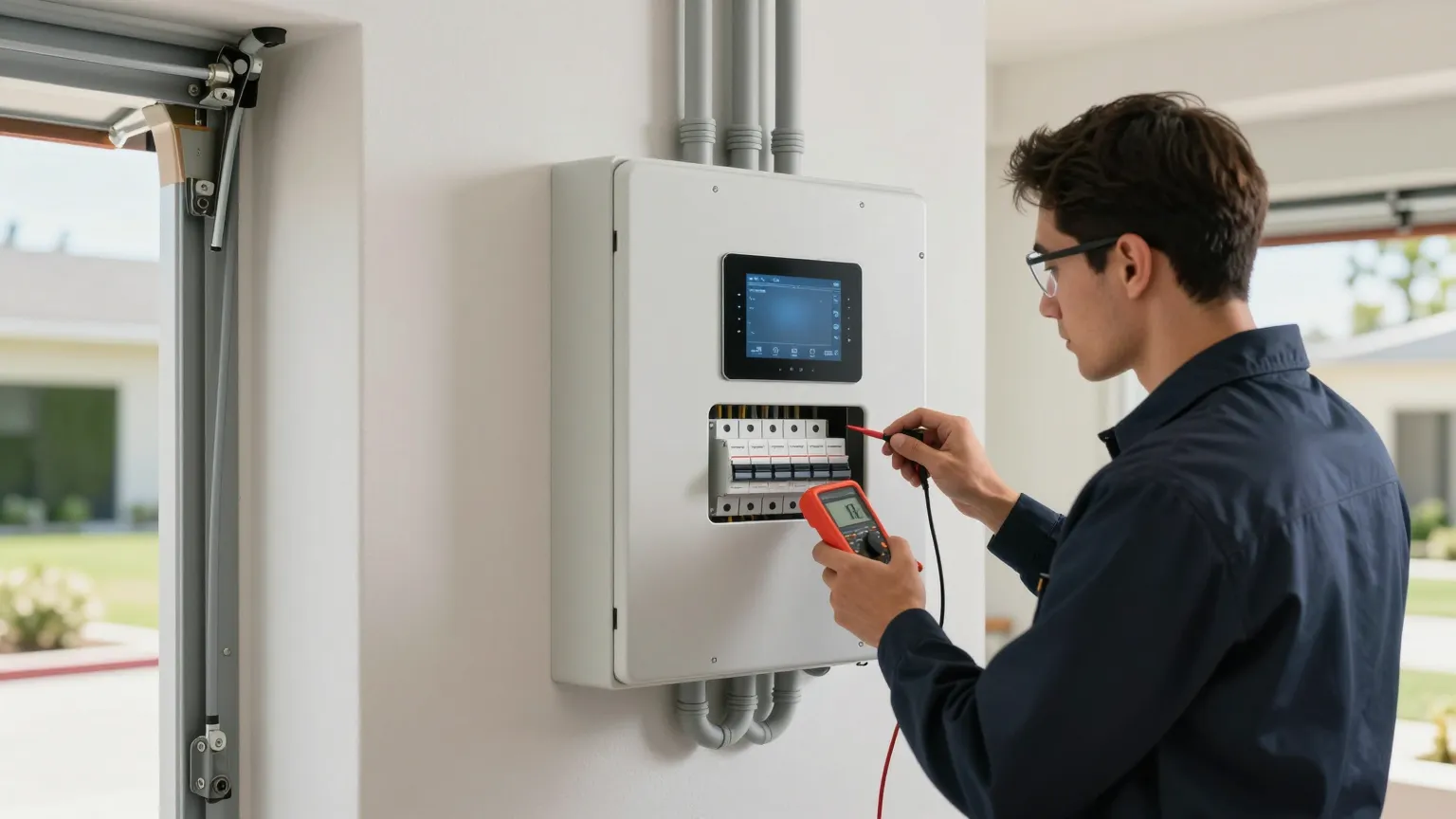
Add an EV charger, a heat pump, and a battery to a 1950s Pasadena bungalow and you usually hit the same wall: the panel is full and the service is only 100 amps. A smart electrical panel is one way around that problem — and in Los Angeles it is quietly becoming a real alternative to ripping out your whole service.
What Is a Smart Electrical Panel?
A smart electrical panel is a load center that measures every circuit individually and can switch circuits on and off by itself. It does everything a conventional panel does — feeds your breakers, protects your wiring — and adds a layer of metering and control on top. Brands you will run into in LA include SPAN, Leviton, Schneider's Square D Energy Center, and Eaton.
In practice, a smart panel installation gets you four things:
- Per-circuit energy monitoring — you can see exactly what the dryer, the AC, and the EV charger each cost you.
- Remote breaker control — turn a circuit off from your phone instead of walking out to the garage.
- Automatic load management — the panel sheds or throttles big loads so you never exceed your service capacity.
- Backup prioritization — paired with a home battery, you choose which circuits stay alive during an outage.
Why Los Angeles Homeowners Are Installing Them
Most of the housing stock across Highland Park, Eagle Rock, Burbank, and the San Fernando Valley was wired for a very different household. A 100-amp service was generous in 1958 and is tight in 2026, once you add:
- A Level 2 EV charger pulling 40 amps or more for hours at a time
- A heat pump for heating and cooling, plus a heat pump water heater
- An induction range replacing gas
- Solar and a home battery that needs to be integrated with your loads
Any one of those is usually fine. Three of them together will exceed what a small service can carry, and that is the point where a smart panel starts to pay for itself.
Smart Panel vs. a Traditional Panel Upgrade
These are not the same project and they solve different problems. A conventional electrical panel upgrade increases the amount of power your home can draw. A smart panel manages the power you already have more intelligently.
When a smart panel makes sense
- You want to add an EV charger and your existing service is borderline on a load calculation
- The utility service drop or underground feed would be expensive or slow to upsize
- You are pairing solar and battery storage and want circuit-level backup control
- You genuinely want the monitoring data — households that watch per-circuit usage tend to cut it
When you still need a service upgrade
- Your total connected load is high even after load management is applied
- The panel, meter socket, or service conductors are damaged, corroded, or an unsafe legacy brand
- You are doing a major addition or an ADU that needs its own capacity
- The budget favors one straightforward upgrade over a premium panel plus a load-management strategy
Under the electrical code, an approved energy management system can allow an EV charger to be installed on a service that would otherwise be undersized. Whether that applies to your house depends on a real load calculation and on the inspector reviewing your plans — it is not automatic, and any contractor who promises otherwise before doing the math is guessing.
What Installation Involves in Los Angeles
A smart panel swap is a permitted service-equipment job, not an afternoon of DIY. Expect roughly this sequence:
- Load calculation and site visit — existing service size, panel condition, grounding and bonding, where the new panel and its control gear will physically fit.
- Permit — pulled through LADBS or your city's building department (Pasadena, Burbank, Glendale and Arcadia each run their own).
- Utility coordination — if the meter or service conductors change, LADWP or SCE has to be scheduled in.
- Installation day — power off for most of a day while circuits are transferred, labeled, and terminated.
- Inspection and commissioning — final sign-off, then app setup, circuit naming, and load-management rules.
What It Costs
Pricing moves with the hardware, your panel location, and how much of the existing wiring has to be reworked. Realistic ranges for Los Angeles:
- Smart panel hardware — typically a few thousand dollars, several times the price of a conventional load center.
- Installed, straightforward swap — generally in the mid four figures to low five figures.
- Smart panel combined with a service upgrade — higher, since it includes utility work, a new meter main, and possibly a mast or underground feed.
- Add-ons — subpanel relocation, grounding electrode corrections, and asbestos or stucco patching on older homes all move the number.
Treat those as planning ranges, not quotes. Rebate and incentive programs for panels, batteries, and EV equipment change often and vary by utility — confirm what is currently open with LADWP or SCE before you count on it.
Frequently Asked Questions
Are smart electrical panels worth it?
If you are electrifying — EV, battery, heat pump — the load management and backup control usually justify the premium, especially when they let you avoid an expensive service upgrade. If your only goal is more breaker space in a healthy 200-amp panel, a standard subpanel is far cheaper.
Can a smart panel let me add an EV charger without upgrading my service?
Often, yes. Load management lets the charger back off when the dryer and AC are running, so the service is never overloaded. It still has to be verified with a load calculation and approved by the inspector on your permit.
Do I need a permit for a smart panel in Los Angeles?
Yes. Replacing service equipment always requires a permit and inspection, and in most cases utility coordination. Unpermitted panel work is a problem when you sell the house and can void insurance claims after a fire.
How long does the installation take?
The physical work is usually one day, sometimes two on older homes with cloth or aluminum branch wiring that needs attention. The longer part of the timeline is permitting and, if the service changes, scheduling the utility.
What happens if the internet or the app goes down?
The panel keeps working as a panel. Breakers still trip on fault and overload exactly as they should — you simply lose the remote control and monitoring features until connectivity returns.
Talk to a Licensed LA Electrician About Your Panel
911 Construction & Electric Inc. is a licensed, bonded, and insured C-10 electrical contractor (CA Lic. #1027421) serving Los Angeles, Pasadena, Burbank, Glendale, Altadena, Arcadia, and the San Fernando Valley. Our EVITP-certified team will run the load calculation, tell you honestly whether a smart panel or a service upgrade is the better spend, and handle the permit end to end. Contact us for a free estimate or call 747-255-8595.
Keep Reading
5 min read
Electrical Preventive Maintenance in Los Angeles
A loose lug or a scorched neutral rarely announces itself. It shows up as a breaker that trips on the hottest afternoon of the year, or a tenant calling at closing time about ha…
Read article →
6 min read
Electrical Panel Maintenance in Los Angeles: Checklist
Most homeowners service the furnace, flush the water heater and change the HVAC filter on a schedule. The electrical panel — the single component every circuit in the building d…
Read article →
6 min read
Home Battery Backup Installation in Los Angeles
A red-flag wind warning goes up, the power drops, and suddenly the most important appliance in the house is the refrigerator. That is usually the moment Los Angeles homeowners s…
Read article →Have an electrical project in mind?
Talk to a licensed electrician today — free estimates, 24/7 emergency service.