Electrical Tips
2025 California Electrical Code: What Changed in 2026
6 min read
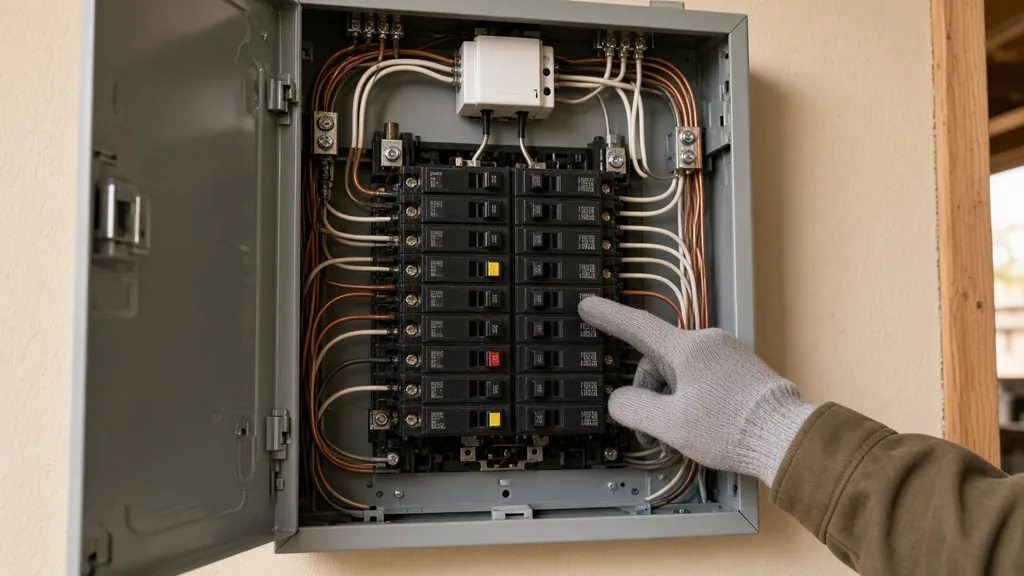
California switched to a new electrical code on January 1, 2026. The 2025 California Electrical Code is based on the 2023 National Electrical Code, replacing the 2022 edition that was based on the 2020 NEC. Most of the changes are about shock protection, and they show up on everyday jobs: a kitchen remodel, a new range or dryer circuit, a panel replacement, or swapping out the AC condenser or heat pump in the side yard. If you're planning electrical work in Pasadena, Altadena, Glendale or anywhere in LA County, here's what's different and what it means for your permit. Questions about your own project? Request a free estimate or call 747-255-8595.
Which Code Applies to Your Project
California's rule is simple: the code in effect when the permit application is filed is the code your job is built and inspected to. Applications filed on or after January 1, 2026 fall under the 2025 California Electrical Code. A project permitted in 2025 can usually finish under the older code, even if the work happens this year.
The state adopted the 2023 NEC with a short list of California amendments. The ones on the state's summary mostly cover hospitals and health-care buildings, plus a change that removes some extra load-calculation requirements and an exclusion of mobile and manufactured homes from the tamper-resistant receptacle rule. None of the listed amendments change the residential GFCI rules below. Cities and LA County can add their own local amendments, so your inspector's reading of the code for your permit is what counts.
More GFCI Protection in the Kitchen
Under the old code, kitchen GFCI protection applied to receptacles serving the countertop. The 2023 NEC removed that limit. Now every 125-volt through 250-volt receptacle in a dwelling kitchen needs GFCI protection, including wall receptacles that don't serve the counter.
The code also expanded GFCI protection for specific appliances. Electric ranges, wall ovens, counter-mounted cooktops and clothes dryers join dishwashers on the list, and the rule applies to the branch circuit whether the appliance plugs in or is hardwired. In practice that usually means a 240-volt GFCI breaker for the range or dryer circuit when that circuit is installed or replaced under a permit.
This doesn't mean every older home has to rewire today. These rules apply to new work and to the circuits that are part of your permit. If you're remodeling a kitchen or adding a dryer circuit, plan on GFCI breakers in the panel, which need space and the right breaker type for your panel brand. Our GFCI and AFCI outlet installation page explains how the two kinds of protection differ.
Outdoor Outlets and Your AC or Heat Pump
The rule for outdoor outlets at homes now reaches garages with floors at or below grade and accessory buildings, such as a detached workshop or studio. And when equipment supplied by an outdoor outlet is replaced, that outlet has to be brought up to GFCI protection.
The biggest change for Southern California homeowners took effect this fall. The code temporarily exempted listed HVAC equipment from the outdoor GFCI rule, because some inverter-driven units didn't work well with GFCI protection. That exception expired September 1, 2026. So a new or replaced outdoor AC condenser or heat pump circuit now needs GFCI protection. If you're replacing an AC unit or switching to a heat pump, ask your HVAC contractor and electrician to confirm the unit and the GFCI breaker are compatible before installation day.
Panel Replacements: Surge Protection and Outdoor Disconnects
Two rules that started with the 2020 NEC still apply, with a few updates:
- Surge protection. Every service that supplies a home needs a Type 1 or Type 2 surge-protective device at or next to the service equipment, and the rule applies when the service equipment is replaced. The 2023 edition adds a minimum rating of 10kA. If you're getting a panel upgrade, the surge protector is part of the job, not an extra. See our whole-house surge protector page for details.
- Emergency disconnect. One- and two-family homes need an outdoor, readily accessible emergency disconnect so firefighters can shut off power from outside. The 2023 NEC extends the same idea to homes fed by an outside feeder, such as a house supplied from a meter pedestal or a separate building. That part isn't required when you're only replacing a panel on an existing outside feeder.
What This Means for Pasadena-Area Permits
The code is statewide, but the permit office and the utility depend on where you live. In Pasadena, the City's Building & Safety Permit Center at 175 N. Garfield Ave. (626-744-4200) issues electrical permits and Pasadena Water & Power handles meter and service work. In unincorporated Altadena, LA County Public Works issues the permit and SCE is the utility. Glendale, Burbank and the City of LA each run their own permit office. Our Pasadena electrical permits guide walks through that city's process.
A licensed electrician pulls the permit and designs the job to the current code, including the GFCI breakers, surge protection and any outdoor disconnect. We plan for these rules up front so they don't turn into surprise change orders or a failed inspection.
Frequently Asked Questions
When did the 2025 California Electrical Code take effect?
January 1, 2026. It applies to permit applications filed on or after that date and is based on the 2023 National Electrical Code.
Do I have to update my home's existing outlets to the new code?
Generally no. The new rules apply to new work and to the circuits covered by your permit. A permitted remodel or replacement brings those circuits up to the current code.
Does my new AC or heat pump need a GFCI breaker?
In most cases, yes. The temporary exception for listed HVAC equipment expired September 1, 2026, so new or replaced outdoor HVAC circuits now need GFCI protection.
Does a panel upgrade require a surge protector?
Yes. When dwelling service equipment is replaced, the code requires a Type 1 or Type 2 surge-protective device at or next to the service equipment.
Do Pasadena and LA County follow the same electrical code?
Both enforce the 2025 California Electrical Code, but local governments can add amendments and each runs its own permit office. Pasadena permits go through the City; unincorporated Altadena goes through LA County Public Works.
Planning Electrical Work in 2026? Call a Local C-10
911 Construction & Electric Inc. is a licensed, bonded and insured C-10 electrical contractor (CA Lic. #1027421) at 1308 E Colorado Blvd Ste 141, Pasadena, CA 91106, serving Pasadena, Altadena, Glendale, Burbank, Arcadia, the San Gabriel Valley and greater Los Angeles. We pull the permit and build every panel upgrade, kitchen circuit and HVAC circuit to the 2025 California Electrical Code for homes across Pasadena and LA County. Request a free estimate, call 747-255-8595 or visit https://911electrics.com. 24/7 emergency service available.
Was this helpful?
Keep Reading

6 min read
Smoke-Damaged Wiring After the Eaton Fire: What to Check
The Eaton Fire destroyed thousands of homes, but many more in Altadena, Pasadena and Sierra Madre are still standing with smoke, soot and ash inside. Those homes can look fine a…
Read article →
6 min read
PWP Outage or Your Panel? What to Check in Pasadena
When the lights go out in Pasadena, the first question is whether the problem is Pasadena Water & Power's or yours. If it's PWP's, their crews fix it and there's nothing for you…
Read article →
6 min read
Pasadena ADU Electrical: Subpanel, Meter & PWP Service
If you're adding an ADU in Pasadena, the electrical plan is one of the first things to settle, because it touches the City permit, Pasadena Water & Power and your budget all at…
Read article →Have an electrical project in mind?
Talk to a licensed electrician today — free estimates, 24/7 emergency service.