Electrical Tips
Electrical Outlet Installation Cost in Los Angeles
Updated 5 min read
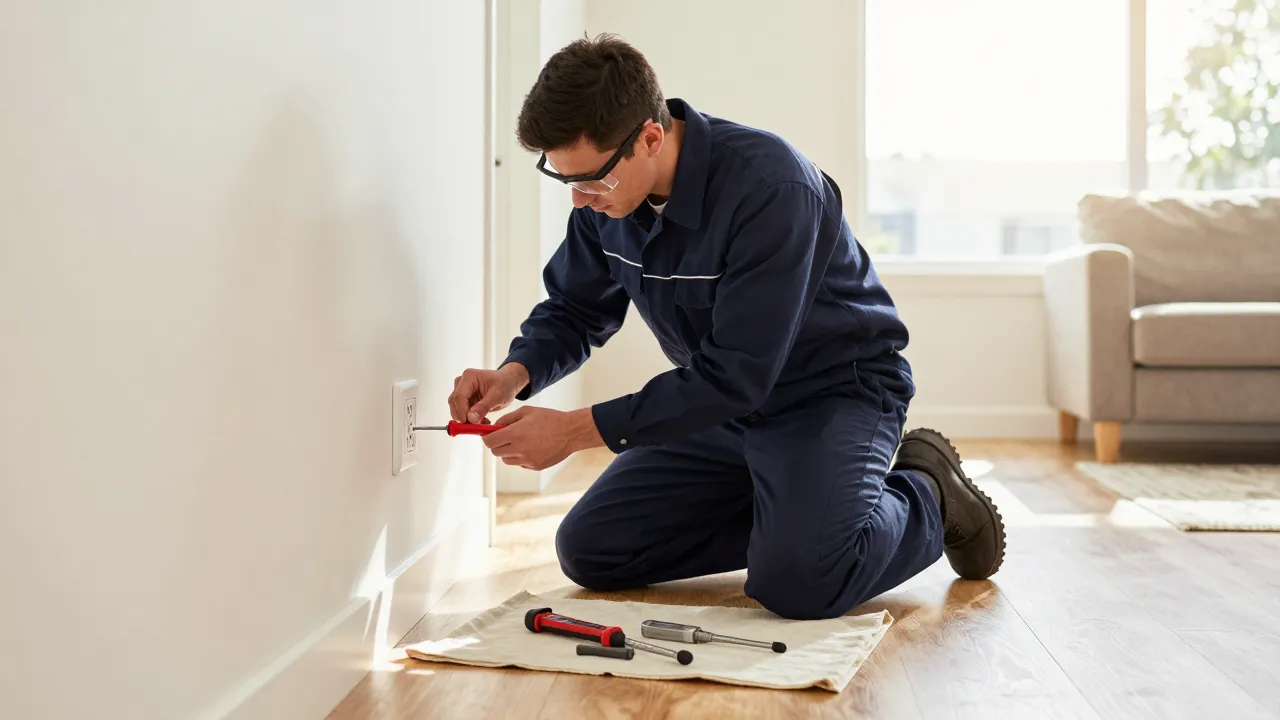
Extension cords snaking across the living room, a power strip behind the TV doing the work of four outlets, a bathroom counter with nowhere to plug in the hair dryer — most Los Angeles homes built before the 1980s simply weren't wired for how we live now. Adding a properly installed receptacle is one of the least expensive electrical upgrades you can make, and this guide breaks down what electrical outlet installation cost really looks like across LA, what drives the number up, and when one outlet turns into a bigger conversation.
Typical Outlet Installation Costs in Los Angeles
Every home is different, but here are realistic ranges LA homeowners can expect from a licensed contractor. These are ballpark figures for planning — not quotes — and they move with wall access, circuit availability, and material choices:
- Replacing an existing outlet: roughly $130–$250 per device, including a modern tamper-resistant receptacle and cover plate.
- Adding a new standard 120V outlet on an existing circuit: about $175–$400 when there is an accessible circuit nearby and reasonable wall or attic access.
- Adding an outlet that needs a new circuit run from the panel: commonly $350–$800+, since it involves a new breaker, a home run of cable, and more drywall or crawlspace work.
- GFCI outlet installation: typically $180–$350 per location — required in kitchens, bathrooms, garages, laundry areas, and outdoors.
- USB / USB-C combination outlets: usually $30–$80 above a standard outlet for the device itself.
- 240V outlets (range, dryer, EV, welder): generally $450–$1,500+ depending on amperage and distance.
Multiple outlets in one visit almost always cost less per outlet than one-off calls, because the trip charge, setup, and permit work get spread across the job.
What Actually Drives the Price
When two neighbors get very different quotes for what sounds like the same job, it's usually one of these four factors.
Distance from the panel and circuit availability
Tapping into a nearby circuit is fast. Running new wire 40 feet from a panel in the garage to a back bedroom is not. If your panel has no open breaker spaces, a panel upgrade or a subpanel may be the real fix, and that changes the scope entirely.
Wall construction and access
Post-war stucco-and-lath homes in Highland Park, Eagle Rock, and Altadena are noticeably harder to fish wire through than drywall over open studs. Plaster, blocked stud bays, finished basements, and concrete slab walls all add labor — and sometimes patching.
Grounding in older homes
Plenty of LA homes still have ungrounded two-prong wiring. You cannot simply swap in a three-prong receptacle and call it grounded. The compliant options are a GFCI-protected outlet labeled "No Equipment Ground" or a new grounded circuit — we cover the tradeoffs in our guide to two-prong to three-prong outlet upgrades.
Permits and inspection
Adding a new branch circuit generally requires a permit from LADBS or your city's building department (Pasadena, Burbank, Glendale, and Arcadia each run their own). Permit fees and inspection time are real costs, but they're also what protects you at resale and with your insurer. Fees vary by jurisdiction and change periodically — confirm current amounts with your local department.
Which Outlet Type Do You Actually Need?
- Standard 15A or 20A tamper-resistant: the default for bedrooms, living rooms, and hallways under current code.
- GFCI: shuts off power when it senses a ground fault. Required near water and in garages, and one of the most common repairs we're called for.
- AFCI or dual-function: protects against arcing faults — typically handled at the breaker, but dual-function receptacles have their place.
- Weather-resistant with an in-use cover: the only correct choice outside. See our guide to outdoor outlet installation before adding one on a patio or exterior wall.
- 240V receptacles: for ranges, dryers, and EV charging — always on a dedicated circuit sized to the appliance.
When One Outlet Signals a Bigger Problem
Sometimes an outlet request is really a capacity or safety issue in disguise. Call sooner rather than later if you notice any of the following:
- Outlets that feel warm, look discolored, or smell faintly of burning plastic
- Plugs that fall out loosely — a sign of worn contacts and a real arcing risk
- Breakers that trip whenever a space heater, microwave, or window AC runs
- Cloth-insulated, aluminum, or knob-and-tube wiring visible in the attic or crawlspace
- A panel with no open slots, or a Zinsco or Federal Pacific label on the door
Any of these move the conversation from "add a receptacle" to a broader look at your wiring. Our electrical repair team can tell you which it is in a single visit, before you spend money on the wrong fix.
Frequently Asked Questions
How much does it cost to install an electrical outlet in Los Angeles?
Most single-outlet jobs land between roughly $175 and $400 when an existing circuit is nearby. Adding a dedicated circuit pushes it higher — often $350 to $800 or more. Get a written estimate; anyone quoting a firm price without seeing the wall is guessing.
Can an electrician add an outlet without running a new circuit?
Often yes, by extending from an existing receptacle on the same circuit — as long as that circuit has spare capacity and the added load is modest. High-draw devices like microwaves, EV chargers, and window air conditioners need their own dedicated circuit regardless.
Do I need a permit to add an outlet?
Replacing a receptacle usually doesn't require one. Adding a new circuit or extending wiring typically does. A licensed contractor pulls the permit for you and meets the inspector, which keeps the work on record for a future sale or insurance claim.
How long does outlet installation take?
A straightforward replacement takes about 20 to 30 minutes. A new outlet on an existing circuit is usually one to two hours. A new home run from the panel through finished walls can take half a day, plus patching if drywall has to be opened.
Is it safe to install an outlet myself?
Beyond the shock hazard, unpermitted DIY wiring is a common finding in pre-sale inspections and a frequent cause of insurance headaches after a fire. California requires a licensed C-10 contractor for most branch circuit work, and the cost difference on a single outlet rarely justifies the risk.
Get a Free Estimate on Outlet Installation
911 Construction & Electric Inc. is a licensed, bonded, and insured C-10 electrical contractor (CA Lic. #1027421) serving Pasadena, Burbank, Glendale, Altadena, Arcadia, Highland Park, Eagle Rock, the San Fernando Valley, and greater Los Angeles. Whether it's one outlet or a whole room's worth, we'll quote it honestly and pull the permits when the job calls for them. Contact us for a free estimate or call 747-255-8595 — we answer 24/7 for electrical emergencies.
Keep Reading
5 min read
Electrical Preventive Maintenance in Los Angeles
A loose lug or a scorched neutral rarely announces itself. It shows up as a breaker that trips on the hottest afternoon of the year, or a tenant calling at closing time about ha…
Read article →
6 min read
Electrical Panel Maintenance in Los Angeles: Checklist
Most homeowners service the furnace, flush the water heater and change the HVAC filter on a schedule. The electrical panel — the single component every circuit in the building d…
Read article →
6 min read
Home Battery Backup Installation in Los Angeles
A red-flag wind warning goes up, the power drops, and suddenly the most important appliance in the house is the refrigerator. That is usually the moment Los Angeles homeowners s…
Read article →Have an electrical project in mind?
Talk to a licensed electrician today — free estimates, 24/7 emergency service.