Electrical Tips
Electrical Preventive Maintenance in Los Angeles
5 min read
A loose lug or a scorched neutral rarely announces itself. It shows up as a breaker that trips on the hottest afternoon of the year, or a tenant calling at closing time about half a building going dark. Electrical preventive maintenance is how Los Angeles building owners find those problems on a scheduled Tuesday morning instead of during a Friday dinner rush.
What Electrical Preventive Maintenance Actually Covers
A PM visit is not a walkthrough with a flashlight. It is a documented inspection of the gear carrying your building's load, performed by a licensed electrician who leaves a written record. On a typical commercial electrical maintenance visit, expect:
- Panel, switchgear, and disconnect inspection — covers off, checking for corrosion, water intrusion, insect damage, and discoloration from heat
- Torque verification on terminations and bus connections, the most common source of heat-related failures
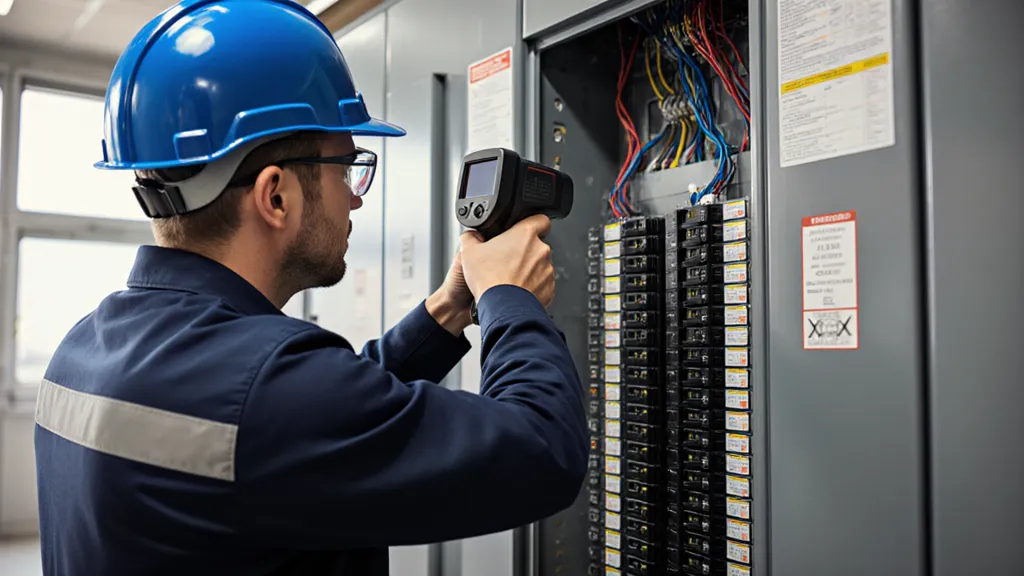
- Infrared thermal scanning under normal load, to find hot spots that look perfectly fine to the eye
- Breaker, GFCI, and AFCI testing, plus grounding and bonding verification
- Emergency lighting and exit sign checks — a code requirement that needs a paper trail in Los Angeles
- A written report with photographs, thermal images, an updated panel directory, and a prioritized repair list
Why LA Buildings Need a Program, Not a One-Off
Much of the commercial stock around Los Angeles — strip retail along Colorado Boulevard, light-industrial boxes in the San Fernando Valley, mid-century offices in Glendale and Burbank — was wired for a load profile that no longer exists. Three things piled on since:
- Heat. Gear in unconditioned electrical rooms and on west-facing walls cycles through hard temperature swings every summer, and thermal cycling loosens connections.
- New load. Kitchen equipment, mini-splits, heat pumps, and vehicle charging keep getting added to panels already close to capacity.
- Deferred repair. A building that turns over tenants accumulates abandoned circuits, mystery junction boxes, and undocumented changes.
NFPA 70B, the national standard for electrical equipment maintenance, treats this as a recurring program with set intervals rather than a service call placed after something breaks. It is also what produces records when an insurer, lender, or buyer asks for them.
How Often Should You Schedule It?
Interval follows consequence — not how old the building is, but what an unplanned outage costs you:
- Annually — small retail suites, professional offices, and single-panel buildings with stable load.
- Twice a year — restaurants and commercial kitchens, medical and dental suites, salons, and anywhere a few dark hours costs real money.
- Quarterly — three-phase equipment, light industrial, large refrigeration, and properties with standby generators or transfer switches.
- Off-cycle — after a heat wave with sustained outages, after any tenant improvement, and before adding a major load such as a commercial EV charging station.
Between visits, log nuisance trips, flickering, and warm cover plates — those notes let an electrician target electrical troubleshooting and repairs on the next scheduled trip instead of starting from scratch.
Infrared Thermography: The Hour That Pays for Itself
Infrared thermography electrical inspection work is the highest-value part of a PM visit. A thermal camera reads surface temperature, so a loosening termination — which adds resistance — shows as a bright spot long before it smells, smokes, or trips anything. Two conditions matter: the building must be under something close to normal load, and the reading must be comparative. A lug running hotter than its identical neighbors on a balanced circuit is the finding, not an absolute number on the screen.
Most findings are cheap at that stage: retorque a lug, replace a tired breaker, correct a double-tapped connection. Left alone, the same spot burns a bus bar, and then you are paying for an after-hours emergency electrician plus equipment replacement at the worst possible moment. That is also when an electrical panel upgrade stops being a planned capital item and becomes an outage.
Budgeting a Program — and Knowing Your Utility
Pricing tracks equipment count, not square footage. A single-panel retail suite is a short visit; a property with three-phase switchgear, house panels, and a generator is a half day with two electricians. Ask for per-visit pricing with the scope itemized, and expect repairs found on site to be quoted separately and confirmed in writing before work starts.
The utility matters the moment a finding turns into a service change. Most of Los Angeles County — including Los Angeles, Altadena, Arcadia, Alhambra, San Marino, and the San Gabriel Valley — is served by Southern California Edison (SCE). Three cities we work in run their own municipal utilities: Pasadena is served by Pasadena Water & Power (PWP), Glendale by Glendale Water & Power (GWP), and Burbank by Burbank Water and Power (BWP). Unlike SCE customers, a Pasadena owner coordinates shutdowns, meter work, and rebates through PWP, which offers up to $1,000 toward a panel upgrade and up to $600 toward a home EV charger — confirm current terms with PWP, since amounts change. In Glendale and Burbank, check the utility's current rebate program before you budget.
Frequently Asked Questions
What is electrical preventive maintenance?
Scheduled, documented inspection and testing of a building's panels, breakers, disconnects, grounding, and emergency systems on a set interval, so faults get fixed before they cause an outage or a fire.
How often does a commercial building need electrical maintenance?
Annually is the baseline for small, stable buildings. Restaurants, medical suites, and properties with three-phase gear or generators do better twice a year or quarterly, plus a visit after any major tenant improvement.
Does preventive maintenance mean shutting off the power?
Partially. Thermal scanning is done energized and under load. Torque checks, cover-off inspection, and breaker work need a planned shutdown of that panel, so most commercial visits run early morning, after close, or on a weekend.
Is a thermal scan worth it on a small building?
Usually, because it is incremental. With an electrician already on site and covers off, scanning each panel under load is a short step, and loose terminations are as common in a six-panel retail building as in a warehouse.
Will an electrical maintenance program help with inspections or insurance?
It produces the documentation those processes ask for: dated reports, thermal images, corrected deficiencies, and an accurate panel schedule. It does not replace a required permit or city inspection, but it makes both go faster.
911 Construction & Electric Inc. is a licensed, bonded, and insured C-10 electrical contractor (CA Lic. #1027421) and EVITP-certified installer serving Los Angeles, Pasadena, Burbank, Glendale, Altadena, the San Fernando Valley, and the San Gabriel Valley. To scope a preventive maintenance program for your building, request a free estimate or call 747-255-8595. 24/7 emergency service available.
Keep Reading
6 min read
Electrical Panel Maintenance in Los Angeles: Checklist
Most homeowners service the furnace, flush the water heater and change the HVAC filter on a schedule. The electrical panel — the single component every circuit in the building d…
Read article →
6 min read
Home Battery Backup Installation in Los Angeles
A red-flag wind warning goes up, the power drops, and suddenly the most important appliance in the house is the refrigerator. That is usually the moment Los Angeles homeowners s…
Read article →
6 min read
Dryer Outlet Installation in Los Angeles: Cost & Code
The delivery crew sets your new dryer in place, reaches behind it with the cord, and stops: the plug has four prongs and the wall has three. It is one of the most common calls w…
Read article →Have an electrical project in mind?
Talk to a licensed electrician today — free estimates, 24/7 emergency service.