Electrical Tips
Electrical Panel Maintenance in Los Angeles: Checklist
6 min read
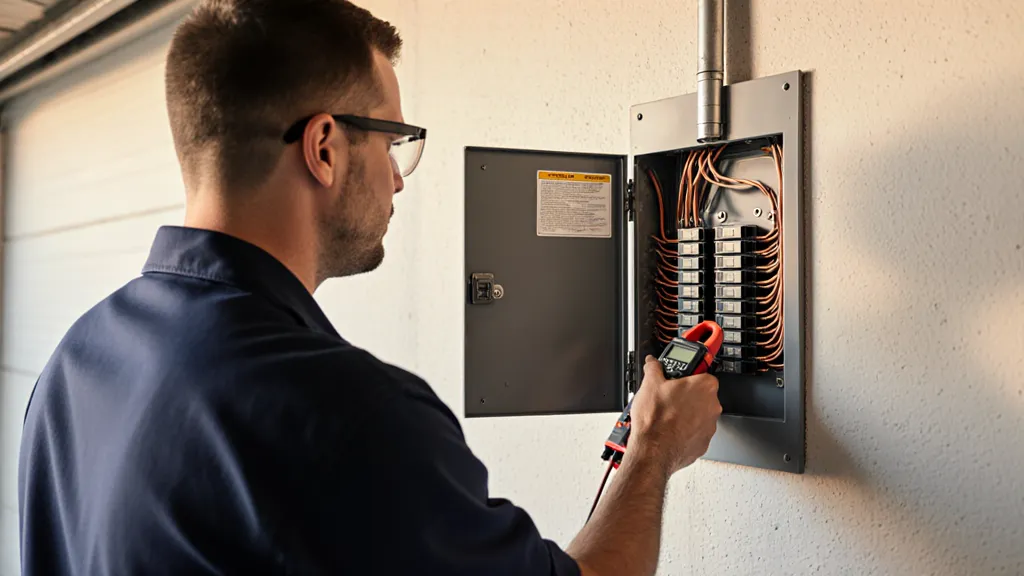
Most homeowners service the furnace, flush the water heater and change the HVAC filter on a schedule. The electrical panel — the single component every circuit in the building depends on — usually gets opened only after something has already gone wrong. Electrical panel maintenance is the cheapest preventive work in a house, and in Los Angeles it is overdue in more homes than not.
What Electrical Panel Maintenance Actually Includes
This is not a glance at the breakers. A proper service visit means de-energizing the panel, pulling the deadfront cover and working through the interior. A thorough electrical panel inspection covers:
- Torque check on terminations. Lugs, neutral and ground bars and breaker set screws are checked against the manufacturer's torque spec. Loose connections are the single most common cause of panel heat damage.
- Infrared or thermal scan under load. A hot spot shows up on a thermal camera long before anything smells or smokes.
- Grounding and bonding verification. Ground electrode conductor, bonding jumpers and the neutral-to-ground connection are confirmed to be intact and correct.
- Breaker condition and operation. Breakers are checked for corrosion, discoloration, double-tapped conductors and proper sizing against the conductor they protect.
- GFCI and AFCI testing. Protective devices are tested rather than assumed to work.
- Load measurement. Actual amperage draw is measured against the service rating, which matters before adding anything large.
- Housekeeping items. Corrosion and moisture intrusion, missing filler plates, working clearance and an accurate circuit directory.
Why Panels Age Faster in Southern California
Three local conditions work against a panel here. Daily thermal cycling — hot afternoons and cool nights, exaggerated in garages and on west-facing exterior walls — expands and contracts copper and aluminum conductors until terminations creep loose. Marine air carries enough salt inland to corrode bus bars and breaker contacts, and panels mounted outdoors on the exterior wall, which is the Southern California norm, take the worst of it. Seismic movement does the rest; every notable shake works at connections that were already loose.
Then there is load. A panel sized for a 1960s household is now running a heat pump, an induction range and a Level 2 EV charger. Equipment that is merely adequate on paper fails sooner when it runs near capacity for hours at a stretch.
Signs Your Panel Needs Service Now
Schedule maintenance at your convenience if the panel is simply old. Treat these as urgent:
- A breaker or the panel cover that is warm or hot to the touch.
- Buzzing, humming, crackling or sizzling from inside the enclosure.
- Any burning, fishy or hot-plastic smell near the panel.
- Scorch marks, rust, melted plastic or water staining inside the cover.
- Breakers that trip repeatedly on circuits that are not overloaded, or one that will not reset.
- Lights across the house dimming or flickering when a large appliance starts.
- A panel that is warm in one spot but not others.
A burning smell or audible arcing is not a maintenance item. Kill the main if you can reach it safely and call an emergency electrician rather than waiting for a scheduled visit.
How Often Should It Be Done?
For a single-family home, every three to five years is a reasonable interval, and sooner for a panel over 25 years old or mounted outdoors. Commercial and multifamily buildings are generally serviced annually, in line with NFPA 70B, the industry standard for electrical equipment maintenance. Regardless of the calendar, have the panel looked at:
- Before adding an EV charger, heat pump, pool equipment or an ADU.
- When you buy the property, as a follow-up to the general home inspection.
- After a significant earthquake, a roof or exterior wall leak, or any flooding near the panel.
- Before a solar or battery interconnection, where the installer will need the busbar rating anyway.
What It Costs
A maintenance and inspection visit on a residential panel commonly runs $150 to $400 depending on panel size, access and whether thermal imaging is included. Retorquing and tightening is usually part of that visit; replacing failed breakers, repairing corroded bus work or correcting grounding is additional. These are realistic ranges rather than quotes — get the specifics priced in writing after a look at the actual panel.
When Maintenance Is Not the Answer
Sometimes the honest recommendation is replacement rather than service. Maintenance buys nothing on a panel that is obsolete or defective by design: a fuse box, a Zinsco or Federal Pacific Stab-Lok panel, a panel with a corroded or damaged bus, or one with no remaining space and no room for the loads you are adding. In those cases an electrical panel upgrade is the work that actually reduces risk. If branch circuits elsewhere in the house are also suspect — cloth-insulated wiring, backstabbed outlets, old splices in the attic — that is separate electrical repair work a panel cannot fix.
If you do end up upgrading, check for a rebate before you pay. Which program applies depends on who bills you: much of Los Angeles County is served by Southern California Edison (SCE), while several cities run their own municipal utilities — the City of Los Angeles is served by LADWP, Pasadena by Pasadena Water & Power (PWP), Glendale by Glendale Water & Power and Burbank by Burbank Water and Power. PWP, for instance, has offered up to $1,000 toward a panel upgrade and up to $600 toward a home EV charger; amounts and eligibility change, so confirm current terms with PWP directly. For every other utility, check that utility's own active program rather than assuming a figure from a neighboring city applies.
Frequently Asked Questions
Do electrical panels really need maintenance?
Yes. A panel is a mechanical assembly of clamped connections carrying heat-generating current, and clamped connections loosen over time. Manufacturers publish torque specifications precisely because those terminations are expected to be checked. Panels are simply the one piece of building equipment with no obvious prompt to service it.
How long does a circuit breaker last?
There is no fixed replacement interval. Breakers are typically changed when they fail a test, show corrosion or heat damage, will not hold a reset, or protect a circuit that has been re-purposed. A breaker that has interrupted several heavy faults is also a reasonable candidate for replacement.
Can I maintain the panel myself?
You can keep the area clear, keep the directory accurate, test GFCI and AFCI devices with their buttons and look for rust or scorching through the vents. Everything past the deadfront cover should not be DIY: the line side of the main stays energized even with the main breaker off, and torque work requires a calibrated tool and the manufacturer's spec.
Will maintenance prevent an electrical fire?
No single measure prevents every fire, but loose and overheated connections are among the most common ignition points in residential electrical systems, and they are exactly what this work finds and corrects. Catching a hot termination on a thermal scan is far cheaper than discovering it as damage.
Does an insurer or inspector ever require this?
Commercial policies and property managers frequently require documented electrical maintenance, and some carriers ask for it on older buildings. On the residential side it is more often triggered by a sale or a claim. Either way, a dated service report with thermal images is useful documentation to have on file.
Schedule a Panel Inspection
911 Construction & Electric Inc. is a licensed, bonded and insured C-10 electrical contractor (CA Lic. #1027421) based in Pasadena and serving Los Angeles, Burbank, Glendale, Altadena, Arcadia, the San Fernando Valley and the San Gabriel Valley. We will open the panel, test it properly and tell you plainly whether it needs tightening, repairs or replacement — not the most expensive option by default. Request a free estimate or call 747-255-8595. 24/7 emergency service available.
Keep Reading
5 min read
Electrical Preventive Maintenance in Los Angeles
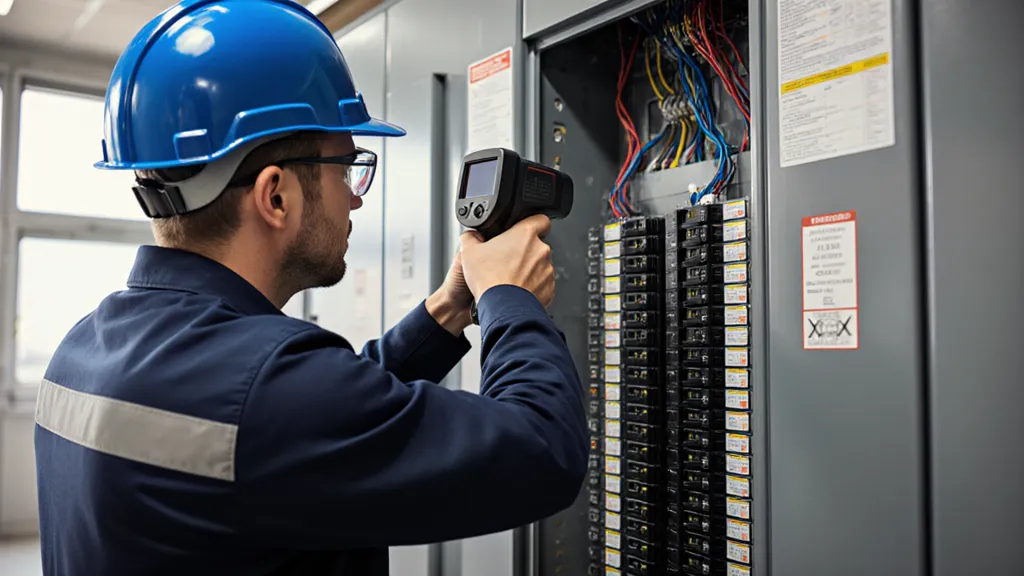
A loose lug or a scorched neutral rarely announces itself. It shows up as a breaker that trips on the hottest afternoon of the year, or a tenant calling at closing time about ha…
Read article →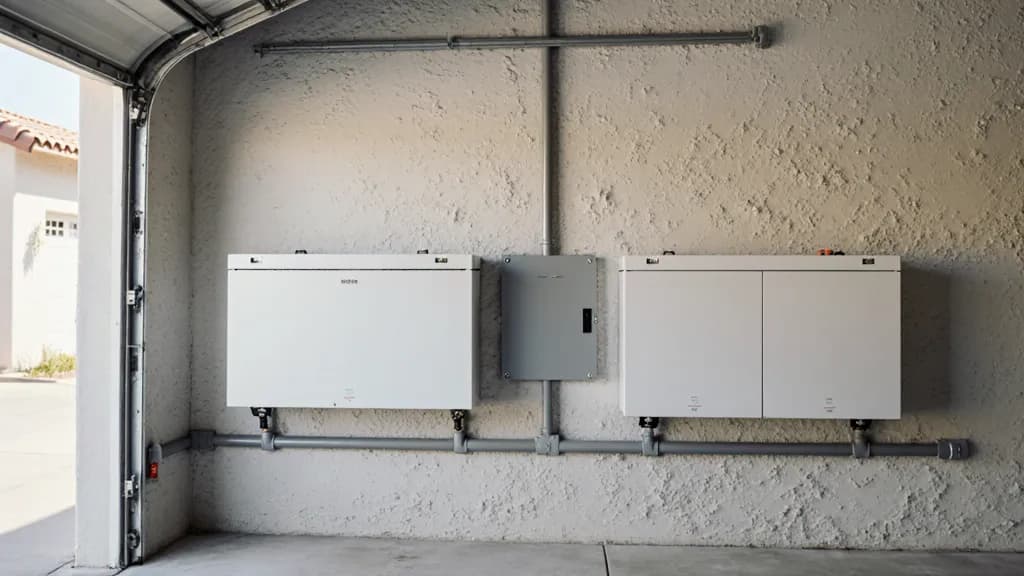
6 min read
Home Battery Backup Installation in Los Angeles
A red-flag wind warning goes up, the power drops, and suddenly the most important appliance in the house is the refrigerator. That is usually the moment Los Angeles homeowners s…
Read article →
6 min read
Dryer Outlet Installation in Los Angeles: Cost & Code
The delivery crew sets your new dryer in place, reaches behind it with the cord, and stops: the plug has four prongs and the wall has three. It is one of the most common calls w…
Read article →Have an electrical project in mind?
Talk to a licensed electrician today — free estimates, 24/7 emergency service.