Electrical Tips
Electrician in Monrovia, CA: Rewiring Older Homes
Updated 7 min read
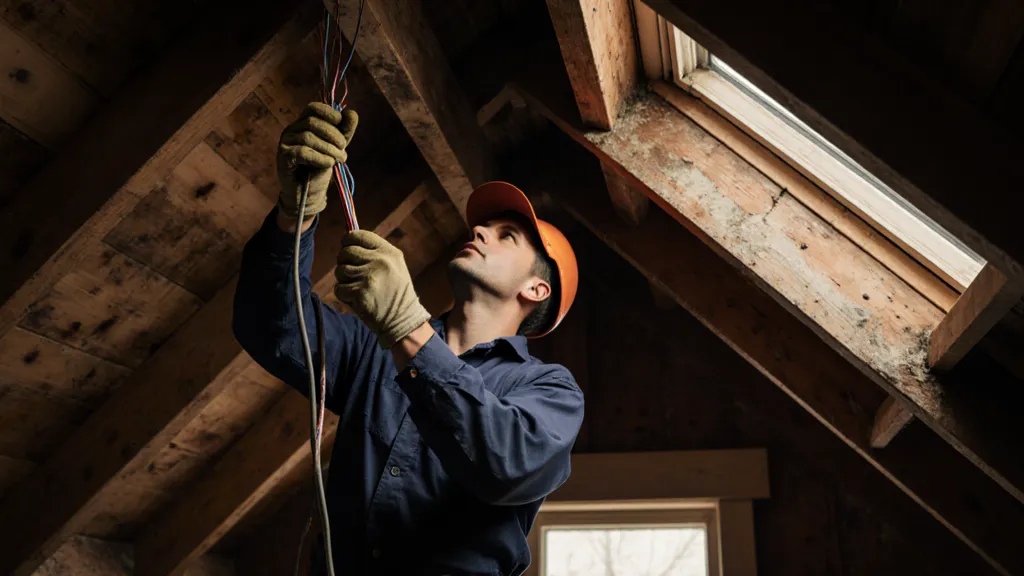
Walk a few blocks off Myrtle Avenue and you are surrounded by houses that were framed before the first electric range ever reached a California kitchen. Monrovia's Victorians, Craftsman bungalows and early foothill cottages are beautiful, well built and — behind the plaster — often still running on wiring that was never designed for the way a modern household uses power.
This guide walks through how a working electrician in Monrovia, CA approaches rewiring an older home: what we find in local walls, the warning signs worth acting on, how the work is staged, and what to expect on permits, timelines and cost.
Why Monrovia's Older Homes Outgrow Their Wiring
Monrovia was incorporated in the late 1880s, and its oldest neighborhoods — the streets around Old Town, the hillside blocks north of Foothill, and the pockets near Wild Rose — still hold a lot of that original housing stock. A house built in 1905 was wired for a few ceiling lights and maybe a single convenience outlet per room. There was no expectation of a microwave, a window AC unit, a home office, a hair dryer and a car charger all drawing at once.
The wiring did not fail overnight. What happens instead is decades of quiet compromise: extra outlets spliced into old circuits, junctions buried in walls, a subpanel added in the garage, extension cords doing permanent work. Each shortcut is small. Together they are why house rewiring in Monrovia, CA is one of the most common big-ticket calls we get in the San Gabriel Valley foothills.
Wiring types still found in local walls
- Knob-and-tube: Individual conductors run through ceramic knobs and tubes. No ground, brittle rubber insulation, and it cannot be safely buried in modern blown-in attic insulation. Many insurers will not write or renew a policy on a home that still has active knob-and-tube wiring.
- Cloth-sheathed wiring: Common in 1930s–1950s homes. The fabric jacket dries, cracks and flakes off the conductors, especially in hot attics — and Monrovia attics get hot.
- Early two-wire romex: Sheathed but ungrounded, which is why so many older homes here still have two-prong outlets throughout.
- Aluminum branch wiring: Used in some mid-1960s to mid-1970s construction. It is not automatically a rewire, but connections need proper treatment by a licensed electrician.
Signs Your Home Needs Rewiring, Not Just a Repair
Not every electrical problem means a rewire. But when several of these show up together, patching one circuit is usually money spent twice:
- Two-prong outlets in most rooms, or three-prong outlets that test as ungrounded
- Breakers or fuses that trip when ordinary appliances run at the same time
- Lights that dim noticeably when the AC, microwave or laundry kicks on
- Warm switch plates, discolored outlets, or any burning smell near a device
- Cloth or rubber insulation crumbling where wires enter the panel or attic junctions
- A fuse box, or a panel with no room left to add circuits
- An insurance company asking for documentation of knob-and-tube removal
- A remodel, ADU, or kitchen project that will add substantial load anyway
If the problem is isolated — one dead circuit, one bad outlet — start with straightforward electrical repairs and a diagnostic visit. If it is systemic, a rewire is the honest answer.
What a Whole-Home Rewire Actually Involves
A rewire replaces the branch circuit wiring between the panel and your devices — outlets, switches, lights and appliance circuits — and brings the system up to current code. On an older Monrovia home, the sequence usually looks like this:
- Assessment and mapping. We open panels and a few access points, trace circuits, and identify what is original, what was modified, and what is accessible from the attic or crawlspace.
- Permit and plan. Rewiring is permitted work through the City of Monrovia Building Division, with inspection at rough-in and again at final.
- Service and panel. Most rewires pair with an electrical panel upgrade — commonly to 200 amps — because new circuits need somewhere to land.
- Rough-in. New cable is pulled from the attic and crawlspace, with targeted drywall or plaster openings where there is no other path.
- Devices and finish. Grounded outlets, GFCI protection in kitchens, baths, garages and exterior locations, AFCI protection on living-area circuits, and hardwired interconnected smoke and CO alarms.
- Inspection and patch. Final inspection, then plaster and paint repair at every opening.
Rewiring a designated historic home
Monrovia takes its historic housing seriously, and a number of homes carry landmark or historic designation. That rarely blocks a rewire — the wiring is inside the walls — but it does change the approach. Access routes are planned to avoid original millwork, plaster medallions and period trim, and exterior-facing work like a meter or service relocation may need extra review. Tell your electrician up front if your property is designated so the plan accounts for it from day one.
Cost, Permits and Timeline: What to Expect
Every older house is different, and anyone quoting a firm rewire price without walking the property is guessing. What actually drives the number is square footage, the number of stories, attic and crawlspace access, whether the panel and service also need upgrading, plaster versus drywall, and how much patching and repainting is in scope. A single-story bungalow with a generous attic is a very different job from a two-story home with finished walls top to bottom.
As a general shape: a whole-home rewire is a five-figure project in the Los Angeles area, a panel upgrade is typically a separate line item, and a partial rewire — replacing only knob-and-tube or only the circuits feeding a remodel — can cost meaningfully less. Permit fees are set by the city and change over time. Get itemized written estimates and verify current fees and any utility rebate programs directly, because published figures go stale quickly.
On timeline, most whole-home rewires run one to three weeks of on-site work depending on size and access, plus scheduling around inspections. Many homeowners stay in the house, with power restored at the end of each working day and rooms tackled in sections.
Frequently Asked Questions
How do I know if my Monrovia home has knob-and-tube wiring?
Look in the attic or basement for individual wires suspended in white ceramic knobs, or passing through ceramic tubes in joists. Seeing it does not always mean it is live — some homes have abandoned runs left in place. An electrician can test which circuits are still energized and document what is active, which is usually what an insurer wants in writing.
Can I rewire just part of the house?
Yes. Partial rewires are common and legitimate — replacing all remaining knob-and-tube, updating a kitchen and bath, or bringing a specific area to code during a remodel. The caution is that if the untouched circuits are the same age and condition, you may be paying for access twice. We will tell you plainly when phasing makes sense and when it does not.
Do I need a permit to rewire a house in Monrovia?
Yes. Rewiring is permitted work, pulled through the City of Monrovia Building Division and inspected at rough-in and final. Permitted work protects you at resale, satisfies insurers, and is required for the job to be legal. A licensed contractor should pull the permit — be wary of anyone who suggests skipping it.
Will rewiring damage my original plaster and woodwork?
There will be some openings — that is unavoidable. The difference is in planning. Pulling from the attic and crawlspace, using existing chases, and choosing openings in inconspicuous locations keeps the count low. Ask any contractor whether patching and paint are included in the estimate or billed separately, because that assumption changes the total significantly.
Does rewiring include upgrading my electrical panel?
Not automatically, but the two usually belong together. New grounded circuits, GFCI and AFCI protection and modern appliance loads need adequate service and available breaker spaces. If your home still has a fuse box or a crowded 100-amp panel, plan for a service upgrade as part of the project rather than a surprise mid-job.
Talk to a Licensed Monrovia Electrician
911 Construction & Electric Inc. is a licensed, bonded and insured C-10 electrical contractor (CA Lic. #1027421) serving Monrovia, Pasadena, Arcadia, Sierra Madre, Duarte and communities across Los Angeles and the San Gabriel Valley. If your older home is showing its age electrically, we will walk the property, tell you what actually needs replacing, and put it in writing. Request a free estimate or call 747-255-8595 — emergency service is available 24/7.
Keep Reading
5 min read
Electrical Preventive Maintenance in Los Angeles
A loose lug or a scorched neutral rarely announces itself. It shows up as a breaker that trips on the hottest afternoon of the year, or a tenant calling at closing time about ha…
Read article →
6 min read
Electrical Panel Maintenance in Los Angeles: Checklist
Most homeowners service the furnace, flush the water heater and change the HVAC filter on a schedule. The electrical panel — the single component every circuit in the building d…
Read article →
6 min read
Home Battery Backup Installation in Los Angeles
A red-flag wind warning goes up, the power drops, and suddenly the most important appliance in the house is the refrigerator. That is usually the moment Los Angeles homeowners s…
Read article →Have an electrical project in mind?
Talk to a licensed electrician today — free estimates, 24/7 emergency service.