Electrical Tips
EV Charger Installation Electrician in San Gabriel, CA
Updated 6 min read
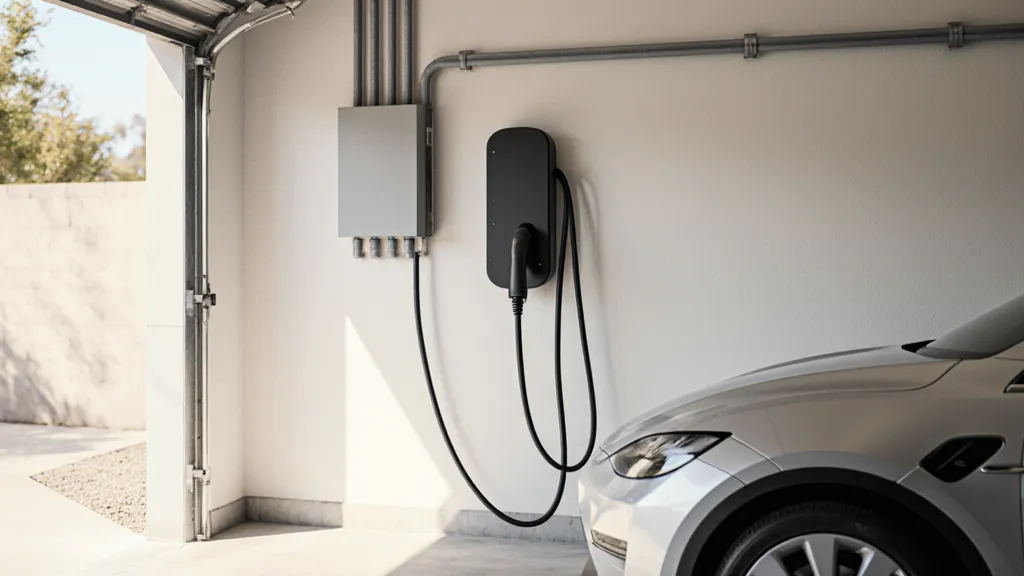
Park on almost any residential street between the Mission District and Las Tunas Drive and you will count more plug-in cars than you did two years ago. The catch in San Gabriel is rarely the charger itself — it is the 1950s service panel in the side yard and the detached garage at the back of the lot.
Why EV Charger Installation in San Gabriel Has Its Own Quirks
Much of San Gabriel's housing stock went up between the 1920s and the early 1960s — Spanish and Craftsman bungalows near the Mission, postwar ranch homes spreading south toward Valley Boulevard and east past Del Mar. Those homes were wired for a refrigerator and a radio, not a 40-amp continuous load running eight hours a night.
Three things come up on nearly every San Gabriel site visit:
- Undersized service. Plenty of homes still run 100-amp panels, and a few older properties are on 60-amp or fuse-based services that need replacing before anything else happens.
- Detached garages. Alley-facing and rear-lot garages are everywhere here. Feeding one means a trench or an overhead run, its own subpanel, and correctly rated conduit — not an extension of the kitchen circuit.
- Multi-unit and shared-meter properties. The duplexes and fourplexes along the Valley Boulevard corridor often share a meter bank, which changes where a charger can legally land and who pays for the power.
None of this makes the job hard. It just means a competent electrician in San Gabriel should be measuring your existing load before quoting a price, not after.
Load Calculation Comes First, Always
Before a single conduit strap goes up, a licensed electrician performs a load calculation under Article 220 of the California Electrical Code. That calculation compares your home's existing demand — HVAC, range, dryer, water heater — against your service capacity, then adds the charger.
There are usually three outcomes:
- You have headroom. A 200-amp service with gas appliances often absorbs a 48-amp charger with room to spare. Straightforward install.
- You are close. A load-management device or an EVSE set to a lower amperage lets you charge without touching the service. This is often the cheapest path and is fully code-compliant.
- You need more service. A 100-amp panel already feeding a heat pump and an electric range is genuinely maxed out, and the service has to grow before the charger goes in.
If the third case applies, a panel upgrade in San Gabriel is the real project and the charger is the easy part. Upgrading to 200 amps also positions the house for an induction range or heat pump water heater later, which matters as California building code keeps nudging toward electrification.
Hardwired Charger or a NEMA 14-50 Outlet?
Both are legitimate. The choice usually comes down to where the charger lives and how much power you want.
Hardwired
Required for outdoor installations in most practical cases, and required for anything above 40 amps of continuous draw. A hardwired unit can deliver up to 48 amps on a 60-amp circuit, which roughly doubles the charging speed of a plug-in unit. It is also more secure — nothing to unplug from a driveway.
NEMA 14-50 Outlet
A 50-amp receptacle capped at 40 amps of continuous charging. Good if you rent, plan to move the charger, or want the flexibility to swap brands. Since 2020 the code requires GFCI protection on that receptacle, and a cheap breaker will nuisance-trip. This is one place where the part quality genuinely shows.
For most San Gabriel homeowners with an attached garage and a single EV, a 40-amp circuit adds far more range overnight than a daily commute consumes. Chasing 48 amps mostly matters for large-battery trucks and two-car households.
Permits, Inspections, and Southern California Edison
San Gabriel requires an electrical permit for EV charger installations, pulled through the city's Building and Safety division. The permit is not optional paperwork — it protects your homeowner's insurance and it comes up during resale. A licensed contractor pulls it in their name and meets the inspector.
A few things worth knowing:
- If the install includes a service upgrade, Southern California Edison has to be looped in and will schedule the meter disconnect and reconnect. That coordination usually drives the timeline more than the electrical work itself.
- Rebates and utility programs for home charging change frequently. Check current SCE program terms and any state incentives before you budget — amounts and eligibility rules shift, sometimes mid-year.
- Condo and HOA properties in San Gabriel fall under California's right-to-charge statutes, but the association can set reasonable conditions. Get the approval in writing before scheduling work.
Costs vary widely with panel condition, run length, and whether trenching is involved. A short garage-wall run next to the panel sits at the low end; a rear detached garage with a new subpanel and a service upgrade is a multiple of that. Any electrician quoting a firm number over the phone without seeing your panel is guessing.
What a Proper Installation Looks Like
- A load calculation documented in writing, not a glance at the panel door
- Correctly sized breaker and conductors for continuous load — 125% of the charger's rated draw
- Conduit rated for its environment, with outdoor runs in sunlight-resistant material
- A dedicated circuit with no shared neutrals or piggybacked loads
- Charger mounted at a workable height with the cable reaching the vehicle's port without strain
- City permit pulled and final inspection signed off
911 Construction & Electric is EVITP-certified — the Electric Vehicle Infrastructure Training Program is the national standard for EV charging installers, and several utility rebate programs require it. We handle EV charger installation across Los Angeles and throughout the San Gabriel Valley.
Frequently Asked Questions
How long does EV charger installation take in San Gabriel?
A straightforward garage installation near the panel is typically a half-day to a full day. Add a detached garage run, a subpanel, or a service upgrade and it becomes a multi-day project, largely because of utility coordination and inspection scheduling.
Do I need a permit to install an EV charger in San Gabriel?
Yes. An electrical permit is required, and the work must pass a city inspection. Unpermitted charger installs regularly surface during home sales and can complicate insurance claims if anything goes wrong.
Can I install a Level 2 charger on a 100-amp panel?
Often yes, especially if your home has gas heat, a gas range, and a gas water heater. A load calculation gives the answer. If the numbers are tight, a load-management device or a lower charger amperage setting usually solves it without a panel upgrade.
Is a hardwired charger better than a NEMA 14-50 outlet?
Hardwired allows higher amperage and is generally the better choice outdoors or for large-battery vehicles. A 14-50 outlet offers flexibility and easier charger swaps. Both are safe when installed on a properly sized dedicated circuit by a licensed electrician.
Will my electric bill spike after installing a charger?
It will rise, but Southern California Edison offers time-of-use rate plans built for EV owners that price overnight charging well below peak rates. Most drivers find home charging materially cheaper than public DC fast charging. Compare current rate plans before enrolling, since terms change.
Talk to a San Gabriel EV Charger Electrician
911 Construction & Electric Inc. is a licensed, bonded, and insured C-10 electrical contractor (CA Lic. #1027421) serving San Gabriel, Alhambra, Temple City, Rosemead, Pasadena, and the wider San Gabriel Valley. We are EVITP-certified, we pull the permit, and we tell you what your panel can actually handle before you buy a charger. Learn more about our San Gabriel EV charger installation service, or request a free estimate — call or text 747-255-8595.
Keep Reading
5 min read
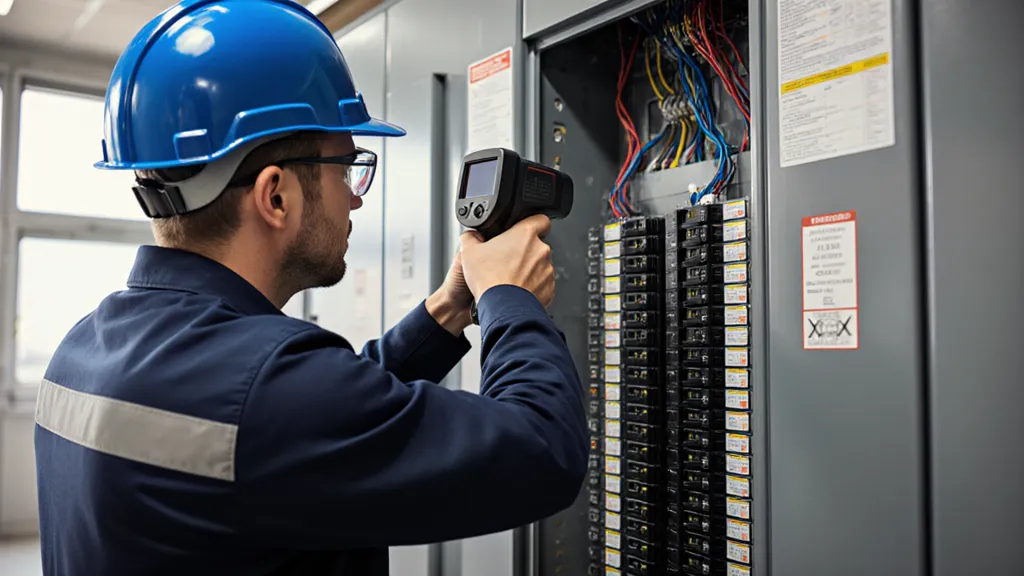
Electrical Preventive Maintenance in Los Angeles
A loose lug or a scorched neutral rarely announces itself. It shows up as a breaker that trips on the hottest afternoon of the year, or a tenant calling at closing time about ha…
Read article →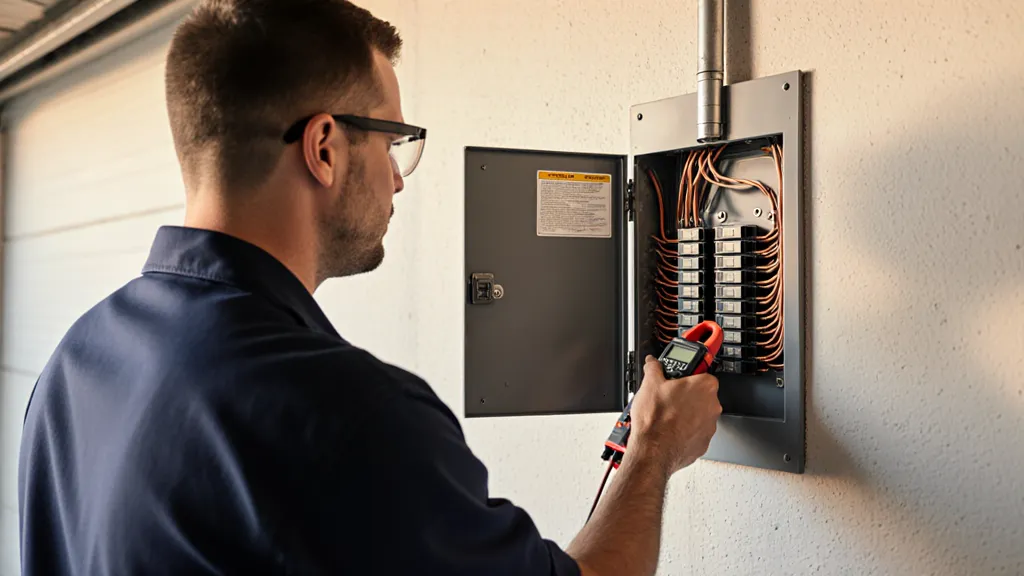
6 min read
Electrical Panel Maintenance in Los Angeles: Checklist
Most homeowners service the furnace, flush the water heater and change the HVAC filter on a schedule. The electrical panel — the single component every circuit in the building d…
Read article →
6 min read
Home Battery Backup Installation in Los Angeles
A red-flag wind warning goes up, the power drops, and suddenly the most important appliance in the house is the refrigerator. That is usually the moment Los Angeles homeowners s…
Read article →Have an electrical project in mind?
Talk to a licensed electrician today — free estimates, 24/7 emergency service.