
Electrical Tips
Garage Electrical Wiring in Los Angeles: A Guide
4 min read
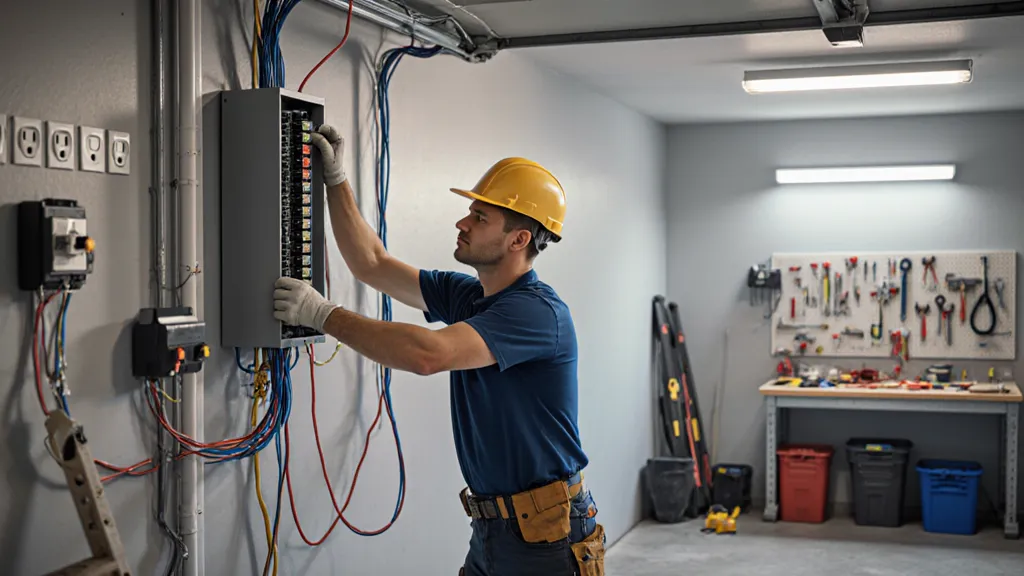
Turning a Los Angeles garage into something more useful — a home gym, a woodworking shop, a charging spot for your EV, or the first step toward an ADU — almost always runs into the same wall: the garage simply doesn't have enough power. Most older LA garages were wired for a single bulb and one outlet. Proper garage electrical wiring is what turns that space into one you can actually work in. Here's what's involved, what LA code requires, and what it typically costs.
What Garage Electrical Wiring Actually Covers
A modern garage circuit does far more than run a light overhead. Depending on how you plan to use the space, garage electrical work can include:
- Dedicated 20-amp outlets for power tools, a freezer, or an air compressor
- GFCI-protected receptacles, which are required for garages under current code
- Bright LED shop and ceiling lighting on its own switch
- A 240-volt circuit for a welder, compressor, or EV charger
- A detached-garage subpanel fed from the main house panel
Attached vs. Detached Garage Wiring
Attached garages
When the garage shares a wall with the house, wiring is usually straightforward. An electrician can extend circuits from the main panel or add a new dedicated circuit with minimal trenching. The main question is whether your existing panel has enough spare capacity — an older 100-amp panel may need an upgrade before you load it with a workshop and an EV charger.
Detached garages
Running power to a detached garage is a bigger job. It typically means a feeder cable run from the house — trenched underground in conduit (usually 18 inches deep for conduit) or, less commonly, overhead — landing in a small subpanel inside the garage. That subpanel then feeds the outlets, lighting, and any 240-volt equipment. The distance from the house and whether we're cutting through concrete or landscaping are the biggest cost drivers.
LA Permits and Code Requirements
Garage electrical work almost always requires a permit from LADBS (City of Los Angeles) or your local building department, followed by an inspection. A few code points that trip up DIY jobs:
- All 125-volt garage receptacles must be GFCI protected.
- At least one receptacle is required in an attached garage, and lighting must be switched.
- Cables like Romex generally can't be left exposed on garage walls below a certain height — they need conduit or protection.
- Feeders to a detached structure must be properly sized, with their own grounding and often a disconnect.
Pulling a permit protects you at resale and with your insurer, and it's why unpermitted garage wiring so often has to be redone. A licensed electrician handles the permit and inspection as part of the panel and circuit work.
What Garage Electrical Wiring Costs in Los Angeles
Every garage is different, so treat these as planning ranges rather than quotes — actual pricing depends on distance, panel capacity, wall access, and trenching. In the LA area you can generally expect:
- Adding outlets or a dedicated circuit: roughly $250–$800
- Detached-garage feeder + subpanel: roughly $1,500–$4,500+, driven mostly by trench distance
- 240-volt EV charger circuit: roughly $600–$2,000
- Rewiring an older garage: roughly $1,500–$3,500
If your main panel is full or you're jumping from a 100-amp to a 200-amp service to support the added load, budget for that separately. A quick on-site look is the only way to get a firm number.
Frequently Asked Questions
Do I need a permit to wire my garage in Los Angeles?
Yes. New circuits, subpanels, and feeders to a garage require an electrical permit and inspection in the City of LA and surrounding jurisdictions. Permitted work protects your home sale and insurance coverage.
Can I run power to a detached garage myself?
It's legal to work on your own home in many cases, but running a feeder, sizing a subpanel, and meeting trenching and grounding code is where DIY jobs usually fail inspection. Most homeowners hire a licensed electrician for the feeder and subpanel.
Do garage outlets need to be GFCI protected?
Yes. Current code requires GFCI protection on 125-volt garage receptacles because garages are considered damp, higher-risk areas. This is one of the most common corrections on older garages.
How much does it cost to add a subpanel to a detached garage?
In the LA area, a detached-garage subpanel with the feeder run typically lands in the $1,500–$4,500+ range, with trench distance and whether you're cutting concrete being the biggest variables.
Can my garage handle an EV charger?
Often yes, but a Level 2 charger needs a dedicated 240-volt circuit and enough spare panel capacity. If the panel is full, a panel upgrade or subpanel may be needed first — an electrician can confirm during the estimate.
911 Construction & Electric Inc. is a licensed, bonded, and insured C-10 electrical contractor (CA Lic. #1027421) serving Los Angeles, Pasadena, Burbank, Glendale, and nearby cities. Whether you're adding a few outlets or running a full subpanel to a detached garage, we handle the permit, wiring, and inspection. Contact us for a free estimate or call 747-255-8595.
Keep Reading
5 min read
Electrical Preventive Maintenance in Los Angeles
A loose lug or a scorched neutral rarely announces itself. It shows up as a breaker that trips on the hottest afternoon of the year, or a tenant calling at closing time about ha…
Read article →
6 min read
Electrical Panel Maintenance in Los Angeles: Checklist
Most homeowners service the furnace, flush the water heater and change the HVAC filter on a schedule. The electrical panel — the single component every circuit in the building d…
Read article →
6 min read
Home Battery Backup Installation in Los Angeles
A red-flag wind warning goes up, the power drops, and suddenly the most important appliance in the house is the refrigerator. That is usually the moment Los Angeles homeowners s…
Read article →Have an electrical project in mind?
Talk to a licensed electrician today — free estimates, 24/7 emergency service.