
Electrical Tips
GFCI Outlet Keeps Tripping? Fixes for LA Homeowners
6 min read
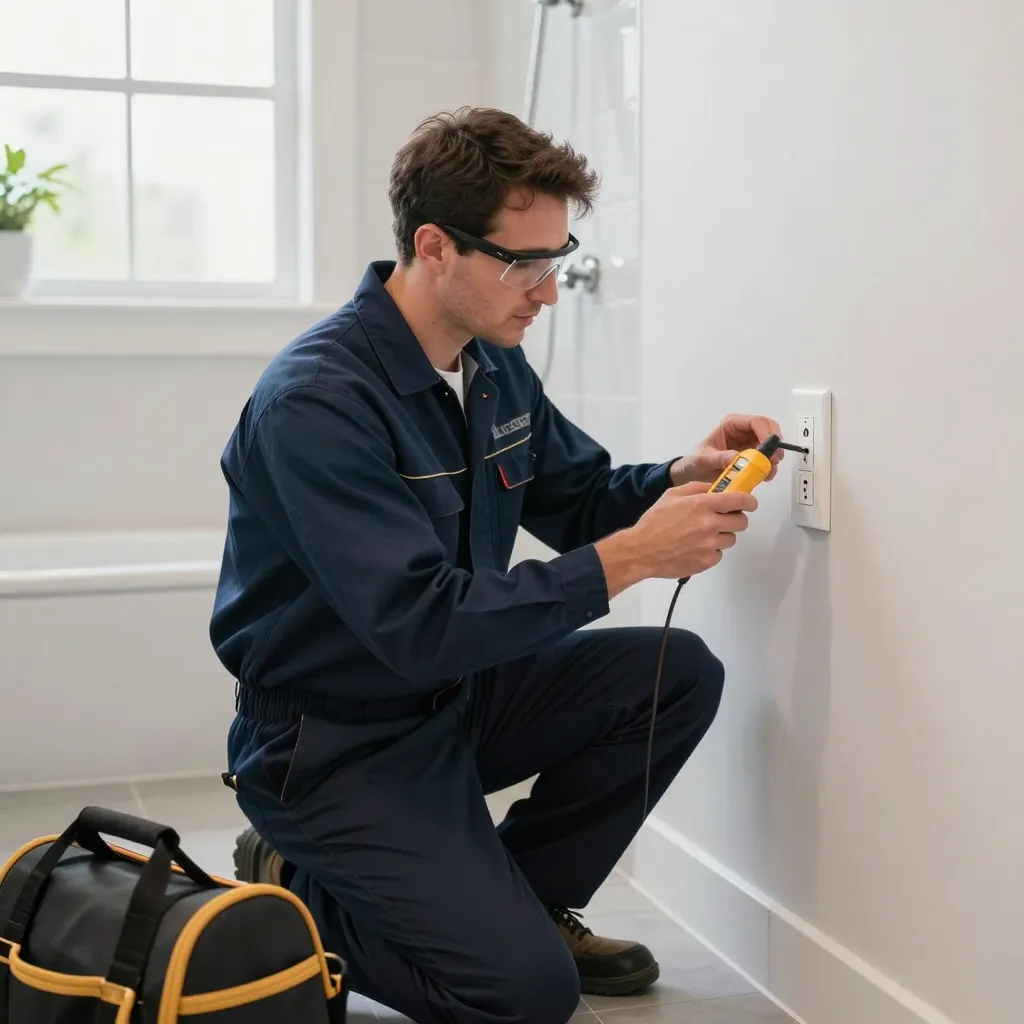
You plug in the hair dryer, the outlet clicks, and half the bathroom goes dark. If your GFCI outlet keeps tripping, the device is doing exactly what it was designed to do — the real question is what it keeps finding.
What a GFCI Is Actually Watching For
A ground fault circuit interrupter compares the current flowing out on the hot wire with the current returning on the neutral. When those two numbers differ by roughly 5 milliamps — a tiny amount, far less than it takes to trip a breaker — it assumes electricity is escaping somewhere it shouldn't, possibly through a person, and shuts the circuit off in a fraction of a second.
That sensitivity is the point. It also means a GFCI trips for reasons a normal breaker would ignore, which is why a repeatedly tripping GFCI is a message, not a malfunction. Treat it as one until an electrician proves otherwise.
The Most Common Reasons a GFCI Keeps Tripping
In Los Angeles homes, a handful of causes account for most calls:
- Moisture in an outdoor or garage receptacle. Winter rain, sprinkler overspray, and marine-layer humidity get into a cracked cover or an unsealed box. An outdoor GFCI keeps tripping far more often in January than in July for exactly this reason.
- A failing appliance. Older refrigerators, sump pumps, space heaters, pressure washers, and hair dryers develop internal leakage as their insulation ages. The outlet is fine; the thing plugged into it is not.
- Long circuit runs with several outlets. Tiny leakage from many devices adds up. This so-called nuisance tripping is common on garage and patio circuits that were extended over the years.
- Damaged or degraded wiring. Rodent damage in attics and crawlspaces, brittle mid-century insulation, and nicked cable inside a wall all create real ground faults.
- A worn-out GFCI. The internal mechanism has a service life of roughly 10–15 years, and many LA homes still have devices installed in the 1990s and 2000s.
- A shared or crossed neutral. Miswiring from a past remodel — line and load reversed, or a neutral shared between circuits — makes a GFCI trip in ways that look random.
Troubleshooting You Can Safely Do Yourself
Before calling anyone, work through this in order. It takes about ten minutes and often identifies the culprit.
- Unplug everything on the circuit — remember that one GFCI usually protects several downstream outlets, so check the whole room, the garage, and any exterior receptacles.
- Press RESET. If it holds with nothing plugged in, the wiring is likely fine and an appliance is the problem.
- Plug items back in one at a time, waiting a few minutes between each. The device that trips it is your answer.
- If it trips again with nothing connected, look for water: open covers, check that in-use bubble covers are intact, and inspect any receptacle exposed to sprinklers.
- Press the TEST button, then RESET. A GFCI that won't reset, or one where the reset button won't stay in, has usually failed and needs replacement.
What you should not do: tape the button down, swap the GFCI for a standard outlet, or run the circuit through an extension cord from another room. Each of those removes the protection that's keeping someone from getting shocked.
When the Outlet Isn't the Real Problem
Plenty of Los Angeles housing stock — the bungalows in Highland Park and Eagle Rock, the post-war homes across the San Fernando Valley — was wired long before GFCI protection existed. When protection was added later, it was often bolted onto circuits that were already stretched thin. In those houses a chronic trip frequently points to deteriorated insulation, an ungrounded run, or a junction box buried in a wall from an old addition.
If a GFCI trips on a circuit that also has flickering lights, warm faceplates, a burning smell, or breakers that trip alongside it, stop troubleshooting and get it inspected. Those combinations suggest a fault with heat behind it. Our electrical repair team traces faults with a circuit tracer and insulation tester rather than guessing, and if it's sparking or smoking, 24/7 emergency service is available.
What Repair and Replacement Typically Cost
Prices vary with access, circuit length, and how much diagnosis is involved, so treat these as planning ranges and confirm with a written estimate:
- Straight GFCI replacement: commonly around $150–$300 per device, including the outlet and labor.
- Diagnostic troubleshooting: typically a one-to-two-hour service call when the fault has to be traced through multiple outlets.
- Repairing damaged wiring in a wall or attic: varies widely with access and the length of the run, often several hundred dollars and up.
- Adding a dedicated circuit for an appliance that keeps overloading a shared GFCI: usually the higher end, since it means new cable back to the panel.
If several outlets are involved or your panel is already full, it may make more sense to combine the fix with a broader GFCI and AFCI outlet upgrade than to patch one receptacle at a time.
Frequently Asked Questions
Why does my GFCI keep tripping when it rains?
Water is reaching the receptacle or the wiring behind it. Check the cover gasket and the box seal, and look for a damaged exterior fixture on the same circuit. Outdoor receptacles need a weather-resistant device and an in-use cover to stay dry with something plugged in.
Is it dangerous if a GFCI outlet keeps tripping?
The tripping itself is protective. What's potentially dangerous is the condition causing it — leaking current, wet wiring, or damaged cable. Repeated trips warrant investigation, and any accompanying heat, buzzing, or scorch marks warrants an immediate call.
How long does a GFCI outlet last?
Roughly 10 to 15 years, sometimes less in humid or coastal locations. Manufacturers recommend pressing the TEST button monthly; if it fails to trip on test or won't reset afterward, replace it.
Can I replace a GFCI outlet myself?
California allows homeowners to do work on their own residence, but GFCI wiring is easy to get wrong — reversing the LINE and LOAD terminals is a frequent mistake that leaves downstream outlets unprotected while everything appears to work. A licensed electrician verifies protection with a tester after the swap.
Why does my GFCI trip but the breaker doesn't?
They watch for different things. A breaker responds to overload and short circuits — too much current. A GFCI responds to current leaving the circuit, which can happen at levels far below the breaker's threshold.
Get It Diagnosed Properly
911 Construction & Electric Inc. is a licensed, bonded, and insured C-10 electrical contractor (CA Lic. #1027421) based in Pasadena and serving Los Angeles, Burbank, Glendale, Altadena, Arcadia, Highland Park, Eagle Rock, and the San Fernando Valley. If a GFCI outlet keeps tripping at your home or building, request a free estimate or call 747-255-8595 — our EVITP-certified team will find the fault instead of replacing parts until it stops.
Keep Reading
5 min read
Electrical Preventive Maintenance in Los Angeles
A loose lug or a scorched neutral rarely announces itself. It shows up as a breaker that trips on the hottest afternoon of the year, or a tenant calling at closing time about ha…
Read article →
6 min read
Electrical Panel Maintenance in Los Angeles: Checklist
Most homeowners service the furnace, flush the water heater and change the HVAC filter on a schedule. The electrical panel — the single component every circuit in the building d…
Read article →
6 min read
Home Battery Backup Installation in Los Angeles
A red-flag wind warning goes up, the power drops, and suddenly the most important appliance in the house is the refrigerator. That is usually the moment Los Angeles homeowners s…
Read article →Have an electrical project in mind?
Talk to a licensed electrician today — free estimates, 24/7 emergency service.