
Electrical Tips
Temporary Power Pole Installation in Los Angeles
6 min read
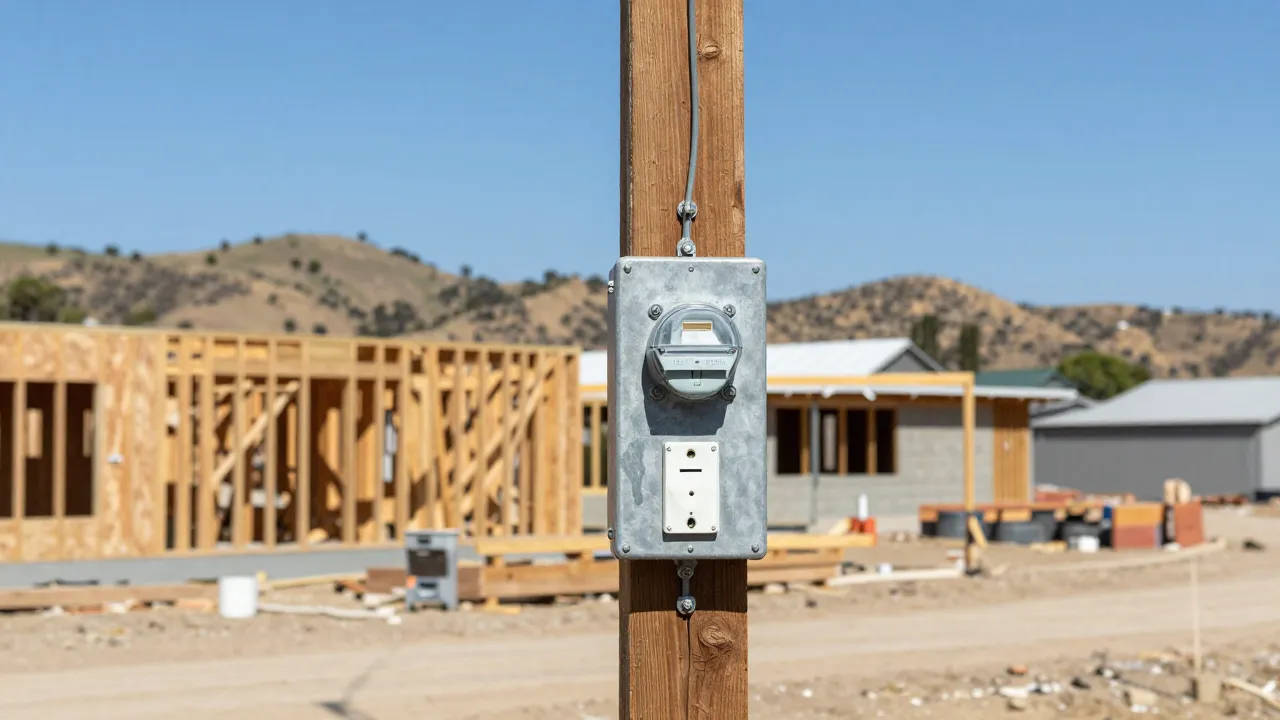
The framing crew is scheduled for Monday and there is still no power at the property. That is the moment most Los Angeles homeowners and builders discover they need a temporary power pole — and that it takes more than a phone call to get one energized.
What a Temporary Power Pole Actually Is
A temporary power pole (sometimes called a temp pole, construction pole, or temporary electrical service) is a code-compliant, utility-approved service assembly set on your job site before the permanent service exists. It carries a meter socket, a small panel with breakers, weather-rated GFCI receptacles, and a grounding electrode — everything needed to safely run saws, compressors, lifts, and jobsite trailers.
It is not a generator and it is not an extension cord from the neighbor's garage. Southern California Edison and LADWP will only set a meter on an assembly that has been permitted, built to spec, and signed off by a city inspector.
When You Need Temporary Construction Power in Los Angeles
Most projects in our service area fall into one of these situations:
- Ground-up new construction — a new single-family home, duplex, or small commercial building with no existing service.
- A rebuild after a total loss — the old service, meter, and panel were destroyed and the utility pulled the meter.
- ADU or major addition — the existing house service is being reworked or is too small to feed the construction load.
- A service relocation or overhead-to-underground conversion — the permanent service is off-line for days or weeks while the new one is built.
- Extended remodels — when the main panel has to come out and the home will be unoccupied.
If you are doing new construction, our new construction electrical services in Los Angeles page covers what happens after the temp pole comes down.
Temporary Power Pole Requirements
Exact specs come from your local building department and the serving utility, and they do vary between LADBS, Pasadena, Burbank, Glendale, and county areas. That said, temporary power pole requirements in Southern California almost always cover the following.
The pole and structure
- A solid, braced 4x4 or 4x6 wood post (or approved metal assembly) set deep enough and guyed so it cannot lean or fall.
- Service conductor attachment point and weatherhead set at the height the utility specifies for clearance over the yard, driveway, or street.
- Meter socket mounted at the utility's required height — commonly in the range of about 4 to 6 feet to the center of the meter.
Panel, breakers, and outlets
- A rated service panel with a main disconnect — 100 amps is typical for residential jobs, though heavy equipment may push you higher.
- All 125-volt, 15/20/30-amp receptacles GFCI protected, as required by the National Electrical Code for construction sites.
- Weatherproof, in-use covers on every receptacle and a lockable or latched enclosure.
Grounding and bonding
- A grounding electrode — usually one or two driven ground rods — with a properly sized grounding electrode conductor.
- Neutral and ground bonded at the temporary service disconnect, not downstream.
How the Process Works Here
The sequence matters, because skipping a step means waiting another week for the utility. A licensed contractor typically handles it like this:
- Pull the permit. An electrical permit for temporary service is filed with LADBS or the city with jurisdiction.
- Submit to the utility. SCE or LADWP issues a service planning number and confirms where the drop will land and what specs apply.
- Build and set the pole. Usually a half-day of work once materials are on site.
- Pass inspection. A city inspector signs off and releases the job to the utility.
- Utility energizes. A crew sets the meter and connects the drop. This step is normally the longest wait — plan weeks, not days.
Start the paperwork early. In our experience the pole itself is the fast part; utility scheduling is what puts projects behind.
What Temporary Power Costs
There is no flat price, and anyone quoting one sight unseen is guessing. Temporary power pole cost in Los Angeles is usually driven by:
- Amperage — a 100-amp temp costs less than a 200-amp or three-phase assembly.
- Overhead vs. underground feed, and the distance from the utility's point of connection.
- Permit and utility fees, which differ city to city.
- Site conditions — rocky soil, slopes, and tight access all add labor.
- How long the pole stays, if it is a rental rather than a purchased assembly.
For a straightforward residential 100-amp overhead temp pole in the LA area, most homeowners should budget in the low four figures once permits and utility fees are included. Fees and requirements change — confirm current numbers with your building department and utility before you plan around them.
Rebuilding in Altadena and the Foothills
A large share of the temporary power work in our area right now is tied to rebuilds in Altadena, the Pasadena foothills, and surrounding neighborhoods. If the meter was pulled and the service was destroyed, a temp pole is normally the first electrical work on the property — long before the permanent panel goes in. We cover this area directly; see our Altadena electrician page. When the permanent service is ready, that becomes an electrical panel upgrade sized for the finished home, not the job site.
Frequently Asked Questions
How long can you have a temporary power pole?
Typically for the duration of the active permit — often six months to a year, with extensions available if the permit stays current. Once the permanent service is energized and inspected, the temporary service is expected to come down. Let the permit lapse and the utility can disconnect it.
How much does a temporary power pole cost in Los Angeles?
Most residential installations land in the low-thousands range including permits and utility fees, with underground feeds, higher amperage, and difficult access pushing it up. Get a written, site-specific quote — prices and fees vary by city and change over time.
How tall does a temporary power pole have to be?
Height is set by required clearance over whatever the service drop crosses — walkways, driveways, and public streets each have different minimums. Poles are commonly built in the 16 to 20 foot range so the attachment point and weatherhead clear everything. Your utility's service guide is the authority.
What is needed to get a temporary power pole approved?
An electrical permit, an assembly built to utility and code spec, GFCI-protected outlets, proper grounding, a passing city inspection, and an application with SCE or LADWP. Missing any one of those stalls the whole thing.
Can a temporary pole feed an underground permanent service?
Yes. Underground jobs still use a temporary assembly during construction, but the pole and the trench work are coordinated differently and the utility has separate requirements. Confirm the layout with your electrician before trenching.
Need Temporary Power on Your Job Site?
911 Construction & Electric Inc. is a licensed, bonded, and insured C-10 electrical contractor (CA Lic. #1027421) serving Los Angeles, Pasadena, Altadena, Burbank, Glendale, Arcadia, and the San Fernando Valley. We handle permits, build the assembly to spec, and coordinate the utility so your crew is not standing around. Call 747-255-8595 or request a free estimate — we also offer 24/7 emergency service.
Keep Reading
5 min read
Electrical Preventive Maintenance in Los Angeles
A loose lug or a scorched neutral rarely announces itself. It shows up as a breaker that trips on the hottest afternoon of the year, or a tenant calling at closing time about ha…
Read article →
6 min read
Electrical Panel Maintenance in Los Angeles: Checklist
Most homeowners service the furnace, flush the water heater and change the HVAC filter on a schedule. The electrical panel — the single component every circuit in the building d…
Read article →
6 min read
Home Battery Backup Installation in Los Angeles
A red-flag wind warning goes up, the power drops, and suddenly the most important appliance in the house is the refrigerator. That is usually the moment Los Angeles homeowners s…
Read article →Have an electrical project in mind?
Talk to a licensed electrician today — free estimates, 24/7 emergency service.