Electrical Tips
Zinsco & Federal Pacific Panel Replacement in Los Angeles
Updated 6 min read
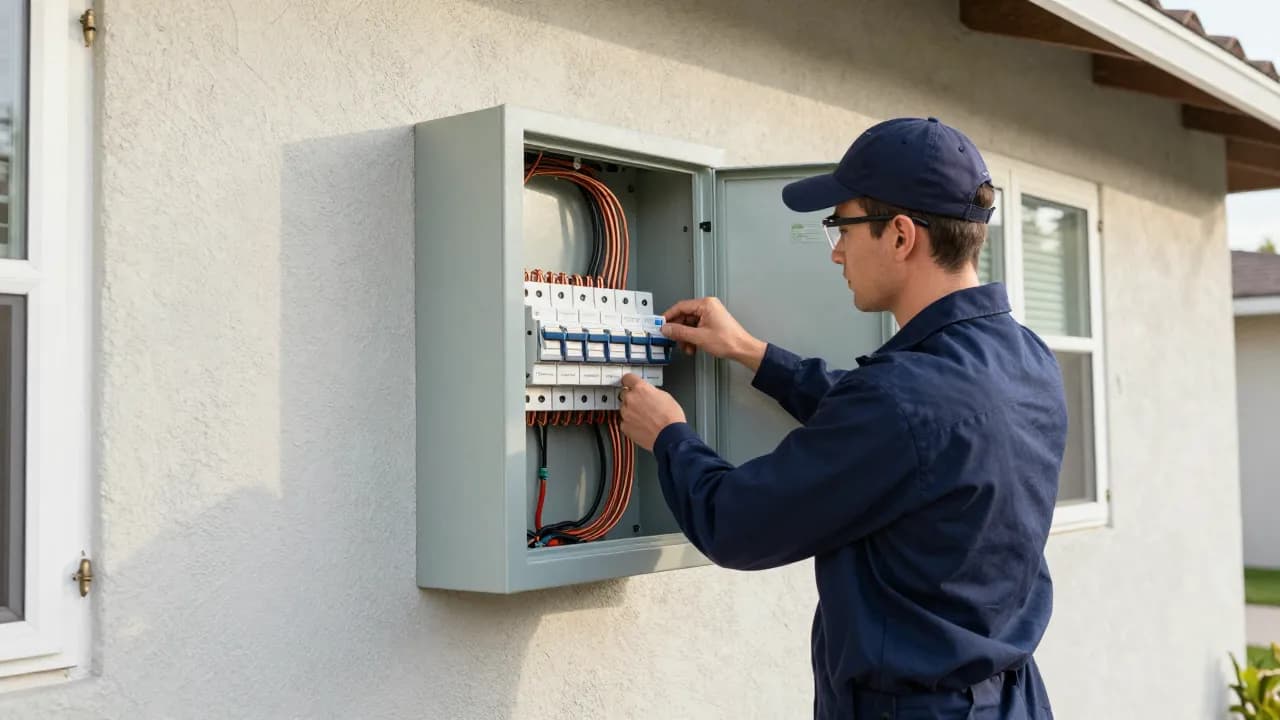
Pull the cover off the panel in a Los Angeles home built between about 1950 and 1980 and there's a real chance you'll find a brand that no longer exists: Zinsco or Federal Pacific Electric. Both were everywhere during the postwar building boom, both are now considered a fire risk by most electricians and home inspectors, and both are a common reason a sale falls through or an insurance policy gets declined.
Why These Panels Are Still Everywhere in LA
Zinsco (later sold under the Zinsco-Sylvania and GTE-Sylvania names) and Federal Pacific Electric — usually stamped Stab-Lok on the breakers — dominated residential construction through the 1950s, '60s, and '70s. That is exactly the era that built out the San Fernando Valley, Altadena, Arcadia, Eagle Rock, and much of Pasadena and Burbank. Both companies stopped making panels decades ago, but the equipment stayed in the wall. If nobody has upgraded the service since the house was built, the original panel is very likely still doing the work.
How to Identify a Zinsco or Federal Pacific Panel
You don't need to open anything to do a first check. Look at the dead front cover and the visible breaker faces:
- Zinsco: breaker handles are often colorful — red, blue, green, or bronze — sitting in a single vertical column. The panel cover may say Zinsco, Sylvania, or GTE-Sylvania.
- Federal Pacific: the label reads Federal Pacific Electric or FPE, and the breakers are marked Stab-Lok, typically with a small red stripe or red tip on the handle.
- Age clues: a flush-mounted hallway panel, a small 60- or 100-amp main, screw-in fuse leftovers nearby, or cloth-jacketed wiring at the top of the box.
- Warning signs: a burning or plastic smell, scorch marks around a breaker, a panel that is warm to the touch, or breakers that feel loose in the slot.
Never pull the interior cover yourself — the main lugs stay energized even with the main breaker off. If you see or smell anything on that last list, treat it as urgent and call an electrician rather than investigating further. Our electrical repair team can identify the panel safely in a few minutes.
Why They're Considered Unsafe
Zinsco
The core problem is the connection between the breaker and the aluminum bus bar. Over decades of heat cycling, that contact point corrodes and the breaker can fuse to the bus. When that happens the breaker looks fine — the handle even moves — but it will not actually interrupt the circuit during an overload or short. A breaker that can't trip is the whole safety system failing quietly.
Federal Pacific Stab-Lok
Independent testing over the years has reported unusually high failure-to-trip rates on Stab-Lok breakers, along with issues where a breaker doesn't seat firmly on the bus. The U.S. Consumer Product Safety Commission investigated in the early 1980s and closed the case without a mandatory recall, largely on resource grounds — so it's worth knowing that neither brand was ever formally recalled. The absence of a recall is not a clean bill of health, and most inspectors and insurers today treat both as a defect to be corrected.
What Replacement Actually Involves
Because parts for these panels are obsolete, there is no meaningful repair path — the fix is a full panel replacement, and most homeowners take the opportunity to move up to a modern 200-amp service. A typical electrical panel upgrade in Los Angeles runs like this:
- Load calculation and a walk-through of what the house actually needs now — EV charging, heat pump, induction range, ADU.
- Permit pulled with LADBS or the city building department (Pasadena, Burbank, and Glendale each run their own).
- Utility coordination with SCE or LADWP for the service disconnect and reconnect.
- Replacement of the panel, main breaker, grounding and bonding, plus the service mast or riser if it's undersized or corroded.
- New AFCI/GFCI breakers where current code requires them, then city inspection and utility re-energizing.
Plan on the power being out for most of a day. Straightforward swaps are often finished in one day; jobs that involve relocating the panel, upgrading the underground service, or rebuilding a mast can run into a second day.
Zinsco Panel Replacement Cost in Los Angeles
Every house is different, and the numbers below are realistic ranges rather than quotes — permit fees, utility requirements, and the condition of the service entrance all move the total:
- Like-for-like 100-amp replacement: roughly $2,000–$3,500 for a clean, accessible panel.
- 100-amp to 200-amp upgrade: commonly $2,800–$6,000 depending on the mast, riser, and grounding work involved.
- Panel relocation or a new service point: adds meaningfully — often $1,000 or more on top.
- Subpanel or circuit repairs found once the panel is open: priced separately after inspection.
Always get the price in writing after an on-site look. Anyone quoting a firm number over the phone without seeing the service entrance is guessing. Rebates and utility programs change frequently, so verify current offers directly with SCE, LADWP, or your city before counting on them.
Frequently Asked Questions
Are Zinsco panels dangerous?
They're widely considered a fire hazard because the breakers can fail to trip when a circuit is overloaded. Not every Zinsco panel has failed, but there is no reliable way to test for the defect in place, and replacement parts are no longer manufactured — which is why replacement is the standard recommendation rather than repair.
Were Zinsco or Federal Pacific panels ever recalled?
No. Neither brand was subject to a mandatory recall. Federal Pacific's Stab-Lok breakers were investigated by the CPSC in the early 1980s and the case was closed without a recall order. Inspectors, insurers, and electricians still flag both routinely, so the lack of a recall rarely helps in a real estate or insurance conversation.
Will my insurance company drop me over a Zinsco or FPE panel?
Many California carriers now decline new policies, refuse renewal, or require replacement within a set window when one of these panels is documented — the same pattern homeowners see with knob-and-tube wiring. Policies vary by carrier, so ask yours directly, and keep the permit and final inspection paperwork after the upgrade as proof.
Can I just replace the breakers instead of the whole panel?
Not safely. The failure mode is in the bus bar connection, not only the breaker, and aftermarket replacement breakers for these panels aren't listed for use in them. Swapping breakers leaves the underlying problem in place while making the panel look updated, which is arguably worse.
Do I need a permit to replace a panel in Los Angeles?
Yes. A panel replacement or service upgrade requires a permit and a final inspection anywhere in LA County, plus coordination with the utility to cut and restore power. Unpermitted panel work surfaces later during a home sale and usually costs far more to correct than it saved.
Get Your Panel Checked by a Licensed LA Electrician
911 Construction & Electric Inc. is a licensed, bonded, and insured C-10 electrical contractor (CA Lic. #1027421) serving Los Angeles, Pasadena, Burbank, Glendale, Altadena, Arcadia, and the San Fernando Valley. If you think you have a Zinsco or Federal Pacific panel, we'll identify it, tell you honestly whether it needs to go, and put a real number on the work. Contact us for a free estimate or call 747-255-8595 — we also offer 24/7 emergency service. Homeowners in the area can learn more about our Pasadena electrical services.
Keep Reading
5 min read
Electrical Preventive Maintenance in Los Angeles
A loose lug or a scorched neutral rarely announces itself. It shows up as a breaker that trips on the hottest afternoon of the year, or a tenant calling at closing time about ha…
Read article →
6 min read
Electrical Panel Maintenance in Los Angeles: Checklist
Most homeowners service the furnace, flush the water heater and change the HVAC filter on a schedule. The electrical panel — the single component every circuit in the building d…
Read article →
6 min read
Home Battery Backup Installation in Los Angeles
A red-flag wind warning goes up, the power drops, and suddenly the most important appliance in the house is the refrigerator. That is usually the moment Los Angeles homeowners s…
Read article →Have an electrical project in mind?
Talk to a licensed electrician today — free estimates, 24/7 emergency service.