Electrical Tips
Outlet Sparking or Burning Smell? Los Angeles Guide
5 min read
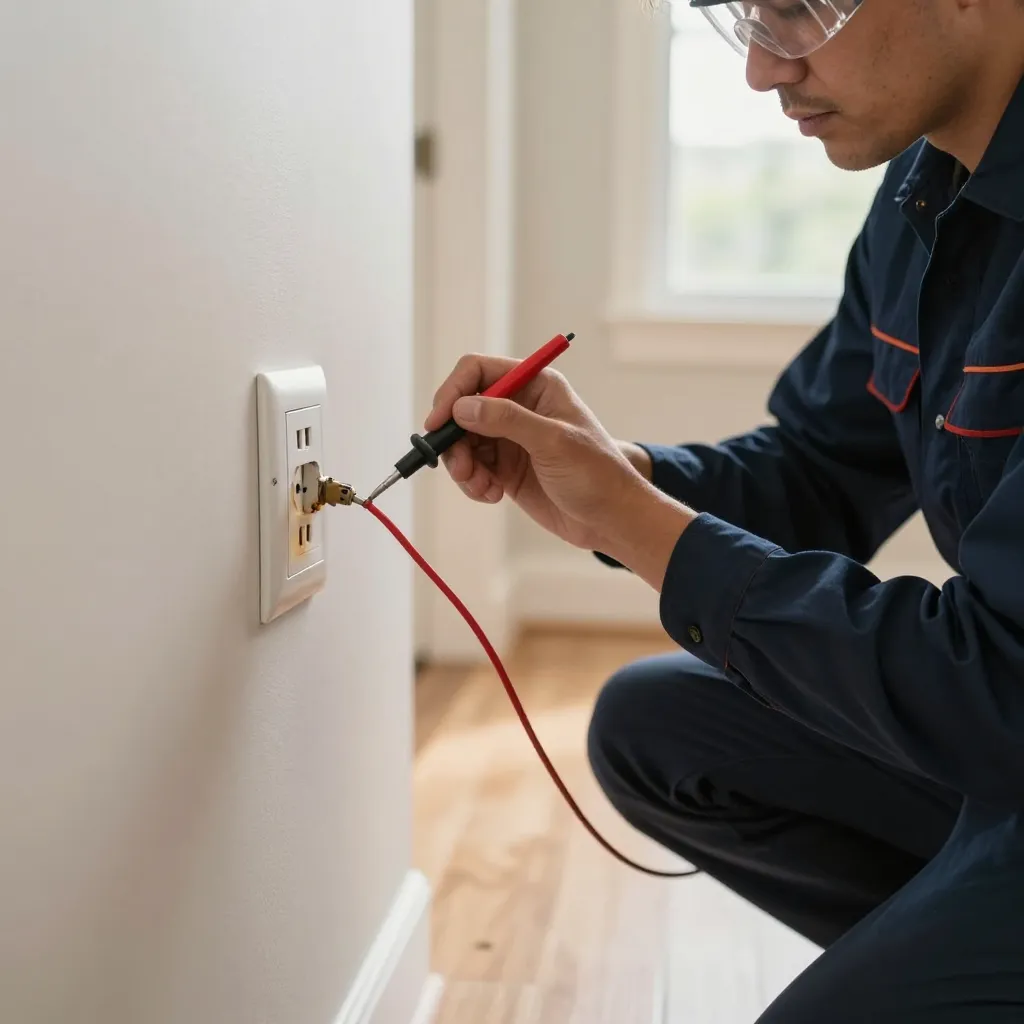
You plug in a lamp and a blue flash snaps out of the receptacle. Most Los Angeles homeowners shrug it off — but the difference between a harmless spark and the start of a wall fire comes down to a few details you can check in seconds.
Is a Sparking Outlet Ever Normal?
Sometimes, yes. A brief blue-white spark at the instant a plug makes contact is a normal load arc — electricity jumping the last fraction of an inch before the prongs seat. High-draw appliances like vacuums, space heaters, and hair dryers do it routinely. It is fast, it stays inside the outlet, and nothing gets warm.
What is never normal: sparks that linger, sparks with nothing plugged in, yellow or orange sparks, popping and crackling, or any smell of burning plastic. Those point to a fault behind the wall, not a quirk of the appliance.
Warning Signs That Mean Stop Using the Outlet Now
Shut the circuit off at the breaker and stop using the receptacle if you notice any of the following:
- A burning smell — melting plastic or an acrid "hot electronics" odor near the wall.
- Brown, black, or scorched marks around the slots or on the cover plate.
- A hot outlet — the faceplate or plug is warm to the touch even under light load.
- Buzzing, humming, or crackling coming from inside the box.
- A melted outlet — deformed slots, a plug that no longer fits snugly, or discolored prongs.
- Repeated tripping of the breaker or GFCI tied to that outlet.
A burning smell with no visible source is an emergency. If you cannot identify which outlet or fixture it is coming from, kill the main breaker and call an emergency electrician in Los Angeles rather than hunting for it yourself.
What Causes Outlets to Spark, Melt, or Smell Like Burning
Loose or backstabbed connections
The most common cause we find in LA homes. Cheap receptacles let an installer push wire into a spring-clip hole on the back instead of wrapping it around the screw terminal. Those clips relax over years of heat cycling, and the loose connection arcs, heats, and eventually chars the device and the insulation around it.
Old wiring in older housing stock
Much of Pasadena, Highland Park, Eagle Rock, Altadena, and the older Valley neighborhoods predates modern receptacle standards. Cloth-insulated circuits, ungrounded two-prong outlets, and 1960s–70s aluminum branch wiring all behave badly at the connection point — aluminum especially, since it expands and contracts against copper screws until the joint loosens.
Overloaded circuits and worn receptacles
A 15-amp circuit feeding a microwave, an air fryer, and a space heater runs hot at every splice. Add a receptacle that has been plugged and unplugged for thirty years and the internal contacts no longer grip the prongs — loose grip means arcing every time the appliance cycles on.
What to Do Right Now
- Unplug whatever is in the outlet, if you can do it safely and nothing is hot to the touch.
- Switch off the breaker for that circuit and label it so nobody flips it back on.
- Do not swap in a new receptacle yourself — if the fault is upstream, a new device hides it instead of fixing it.
- If you see flame, smoke, or a spreading burning smell, leave and call 911 first.
- Book a licensed electrician to test the circuit, every device on it, and the breaker feeding it.
How an Electrician Fixes It — and What It Costs in LA
A proper repair starts with diagnosis, not a parts swap: checking the circuit under load, inspecting terminations at every device, and checking the breaker and panel connections. Typical ranges for electrical repairs in Los Angeles look roughly like this — actual pricing depends on access, wiring type, and permit requirements:
- Diagnostic service call — usually a flat fee covering troubleshooting of the circuit.
- Replacing a damaged receptacle — a modest add-on once the tech is on site, more if the box or wire tails are burned.
- Repairing a burned junction or re-terminating a circuit — typically a few hundred dollars, depending on how many devices are affected.
- Adding a dedicated circuit — higher, and often the real fix for chronic overloading.
- Partial or whole-home rewiring — when cloth or aluminum branch wiring is failing in several places at once.
If several outlets on different circuits are running hot, or the panel itself is warm, buzzing, or a known problem brand, the receptacle is a symptom. An electrical panel upgrade is often the more durable fix, and it also clears the way for EV charging and modern appliance loads.
Frequently Asked Questions
Is it normal for an outlet to spark when I plug something in?
A single, quick blue spark at the moment of contact is usually a normal load arc, especially with high-draw appliances. Sparks that linger, repeat, come with a noise, or leave any mark or smell are not normal and need to be inspected.
Can a sparking outlet cause a fire?
Yes. Arcing at a loose connection produces intense localized heat that can ignite insulation, dust, and framing inside the wall cavity. That is exactly the hazard AFCI breakers were created to detect, and it is why a scorched or melted outlet should be taken out of service immediately.
Why does my outlet smell like burning but look fine?
The damage is usually behind the device — at a termination inside the box or a splice further up the circuit. A clean faceplate does not rule out charring on the back of the receptacle, which is why the box has to be opened and inspected.
Why is my outlet hot to the touch?
Heat means resistance where there should be almost none — a loose terminal, a damaged conductor, an overloaded circuit, or a failing receptacle. A dimmer or a large plug-in transformer can run mildly warm by design, but a hot standard outlet is a fault.
Do I need a permit to replace an outlet in Los Angeles?
Like-for-like receptacle replacement generally does not require a permit, but new circuits, panel work, and rewiring do — and the requirements vary between the City of LA, Pasadena, Burbank, and Glendale. A licensed contractor will tell you which category your job falls into and pull the permit when one is needed.
Get It Checked by a Licensed LA Electrician
911 Construction & Electric Inc. is a licensed, bonded, and insured C-10 electrical contractor (CA Lic. #1027421) based in Pasadena, serving Los Angeles, Burbank, Glendale, Altadena, Arcadia, Highland Park, Eagle Rock, and the San Fernando Valley. We troubleshoot sparking outlets, burning smells, and hot receptacles the same day, with 24/7 emergency service. Contact us for a free estimate or call 747-255-8595.
Keep Reading
5 min read
Electrical Preventive Maintenance in Los Angeles
A loose lug or a scorched neutral rarely announces itself. It shows up as a breaker that trips on the hottest afternoon of the year, or a tenant calling at closing time about ha…
Read article →
6 min read
Electrical Panel Maintenance in Los Angeles: Checklist
Most homeowners service the furnace, flush the water heater and change the HVAC filter on a schedule. The electrical panel — the single component every circuit in the building d…
Read article →
6 min read
Home Battery Backup Installation in Los Angeles
A red-flag wind warning goes up, the power drops, and suddenly the most important appliance in the house is the refrigerator. That is usually the moment Los Angeles homeowners s…
Read article →Have an electrical project in mind?
Talk to a licensed electrician today — free estimates, 24/7 emergency service.