Electrical Tips
EV Charger Load Management in Los Angeles
Updated 6 min read
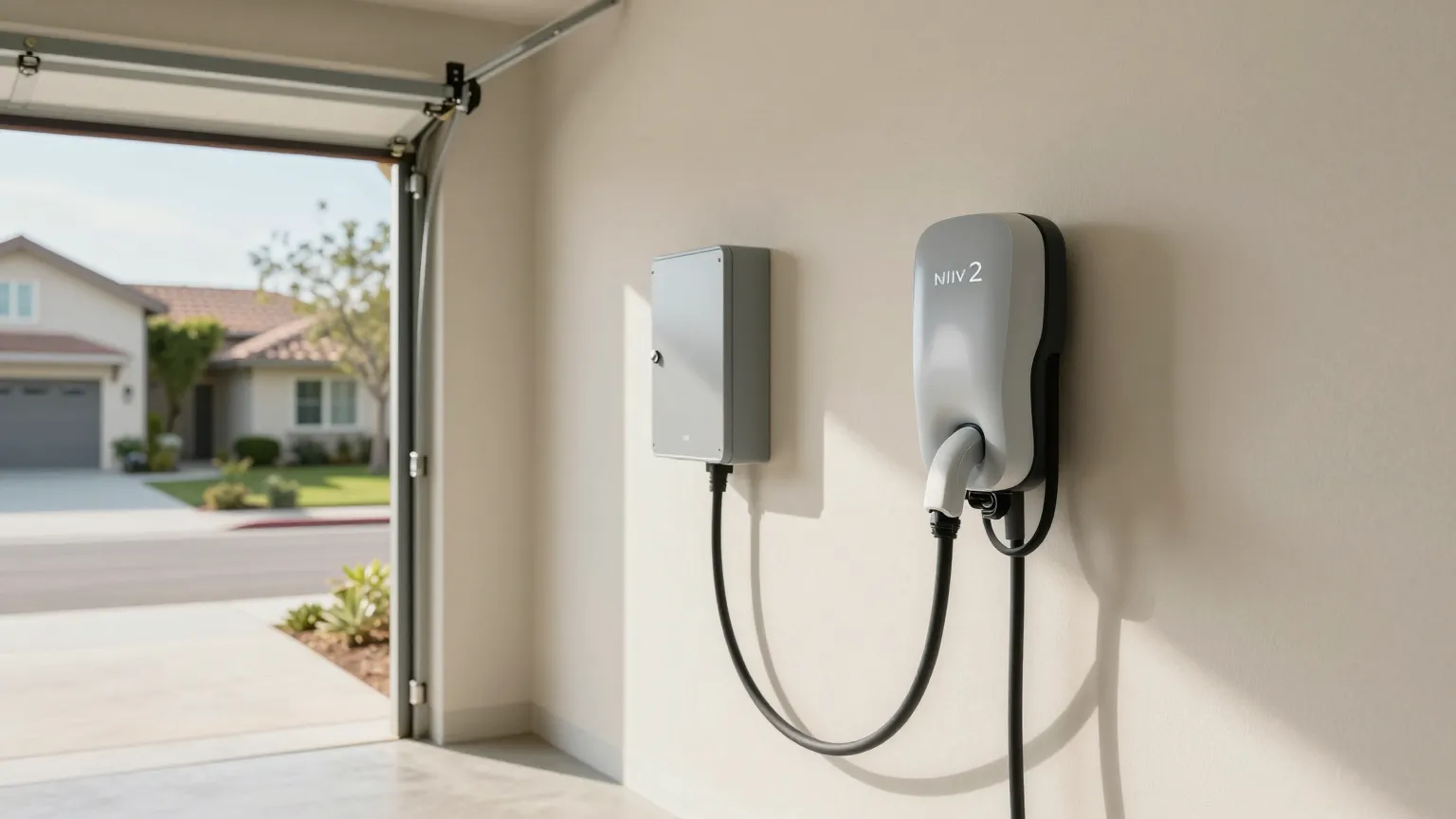
Your electrician quotes several thousand dollars for a panel upgrade before you can plug in the EV sitting in your driveway. Before you write that check, it is worth asking whether EV charger load management can get you charging on the service you already have.
What EV Charger Load Management Actually Does
A home electrical service has a fixed ceiling — usually 100 or 200 amps in Los Angeles. Load management does not add capacity. It either throttles the charger so the total household draw never crosses that ceiling, or it shuts the charger off for a few minutes when the air conditioner, dryer, and oven all come on at once. The California Electrical Code recognizes both approaches: energy management systems (NEC Article 750) and adjustable EVSE output settings are accepted ways to size a circuit for less than a charger's maximum rating.
The practical reason this works so well: your car is parked overnight. Even a charger dialed back to 24 amps adds roughly 20 miles of range per hour, so a typical LA commute is replaced in about an hour of a ten-hour window. Most drivers never notice the difference.
Does Your Panel Really Need an Upgrade?
There are two ways a licensed electrician answers can my electrical panel handle an EV charger, and they often disagree:
- The optional calculation method (NEC 220.83). Adds up square footage and appliance nameplate ratings with demand factors applied. It is conservative, and it is the reason many homeowners are told they need an upgrade.
- The maximum demand method (NEC 220.87). Uses a year of actual metered demand from SCE or LADWP — or a 30-day recording meter — multiplied by 125%. Older LA homes with gas heat, gas water heating, and a gas range frequently land far below their panel rating on this method.
That said, load management is not always the right answer. Push toward a real electrical panel upgrade if any of these apply:
- A 60- or 100-amp service already carrying central A/C, an electric range, and an electric dryer
- A Zinsco or Federal Pacific panel, which should be replaced regardless of the EV charger
- No open breaker spaces and no listed tandem breakers for that panel
- Plans for a heat pump, induction range, ADU, or second EV within a few years
- Corroded bus bars, a failing meter enclosure, or deteriorated service conductors
Five Ways to Add a Charger Without a Panel Upgrade
- Dial the charger down. Nearly every modern EVSE lets the installer set output — 48 amps down to 32 or 24. When that setting is not user-accessible, the circuit can be sized to the adjusted value. Zero added hardware cost.
- A branch-circuit load controller. A relay-based device mounted beside the panel monitors whole-house current and cuts the charger when the home approaches its limit. This is the most common retrofit in older LA housing stock.
- A meter-socket adapter. Installs between the meter and its socket to feed the charger ahead of the panel, with load control built in. Availability depends on your utility approving that specific device, so confirm with SCE or LADWP before buying one.
- Load sharing between two chargers. Two-EV households can put two units on a single circuit and split the available amps automatically — supported by Tesla Wall Connectors and several other brands.
- A smart panel. If the panel is being replaced anyway, a smart electrical panel handles circuit-level load management natively and gives you app monitoring alongside it.
Cost in Los Angeles: Load Management vs. a Panel Upgrade
Every home is different, and the numbers below are realistic ranges rather than quotes. Wire run length, conduit routing, panel condition, permit fees, and utility coordination all move the final figure:
- Adjustable output setting: no added hardware — part of a standard EV charger install, commonly $800–$2,200 total depending on the run.
- Branch-circuit load controller: roughly $1,200–$2,200 installed, including the device, labor, and permit.
- Meter-socket adapter: roughly $1,500–$2,500 installed where the utility approves it.
- 100A to 200A panel upgrade: commonly $3,500–$7,000 or more, higher when the service drop, meter, or grounding electrode system also has to be brought current.
Rebate and incentive programs change from year to year, so verify current terms directly with SCE or LADWP before you commit. If an upgrade is genuinely the better path, our guide to a panel upgrade for EV charger installation walks through what that job involves.
Permits, Inspection, and Utility Coordination
LADBS — and the building departments in Pasadena, Burbank, and Glendale — require an electrical permit for a new 240-volt EV charger circuit, and the load-management device is part of that permit. Expect the inspector to ask for the load calculation that justifies the install, so if you relied on utility demand data, keep that report with your paperwork.
This is also where load management wins on schedule. A managed install is typically a one-day job with an inspection behind it. A service upgrade adds a utility disconnect and reconnect, which is usually what turns a one-day project into several weeks. For the EV work itself, ask whether your installer is EVITP-certified — some incentive programs require it, and the training is EV-specific.
Frequently Asked Questions
Can I install an EV charger on a 100-amp panel?
Very often, yes. Plenty of 100-amp LA homes support a 32- or 40-amp charger once an actual load calculation is run, and a load-management device covers the gap when the calculation is tight. It depends on what else is electric in the house, not on the panel's amperage alone.
Does load management slow down my charging?
Only when the house is near its limit, and usually only for minutes at a time. A charger set to 24 amps still adds roughly 20 miles of range per hour, which is more than most drivers use in a day. If you regularly need a full battery overnight from near-empty, mention that during the estimate.
Is a load-management device actually code-compliant in California?
Yes. Energy management systems are recognized in the code and permitted for exactly this purpose, provided the device is listed for the application, installed per the manufacturer's instructions, and covered by a permit and inspection. An unpermitted workaround is a different matter and can create insurance and resale problems.
Do I still need a permit if I am not upgrading the panel?
Yes. Any new 240-volt branch circuit requires an electrical permit in Los Angeles, whether or not the service changes. Permitted work also gives you documentation for rebates, home insurance, and a future sale.
Will load management affect my rebate eligibility?
Usually not, but program rules change annually and some incentives are tied to the charger model, the installer's certification, or the panel work itself. Confirm current requirements with the administering utility before you purchase equipment.
Talk to an EVITP-Certified LA Electrician First
911 Construction & Electric Inc. is a licensed, bonded, and insured C-10 electrical contractor (CA Lic. #1027421) with EVITP-certified installers, serving Los Angeles, Pasadena, Burbank, Glendale, Altadena, Arcadia, Highland Park, Eagle Rock, and the San Fernando Valley. We run the load calculation before quoting a panel upgrade you may not need — see our EV charger installation services. Call 747-255-8595 or request a free estimate and we will tell you honestly which path your home needs.
Keep Reading
5 min read
Electrical Preventive Maintenance in Los Angeles
A loose lug or a scorched neutral rarely announces itself. It shows up as a breaker that trips on the hottest afternoon of the year, or a tenant calling at closing time about ha…
Read article →
6 min read
Electrical Panel Maintenance in Los Angeles: Checklist
Most homeowners service the furnace, flush the water heater and change the HVAC filter on a schedule. The electrical panel — the single component every circuit in the building d…
Read article →
6 min read
Home Battery Backup Installation in Los Angeles
A red-flag wind warning goes up, the power drops, and suddenly the most important appliance in the house is the refrigerator. That is usually the moment Los Angeles homeowners s…
Read article →Have an electrical project in mind?
Talk to a licensed electrician today — free estimates, 24/7 emergency service.