Electrical Tips
Three-Phase Power Installation in Los Angeles
6 min read
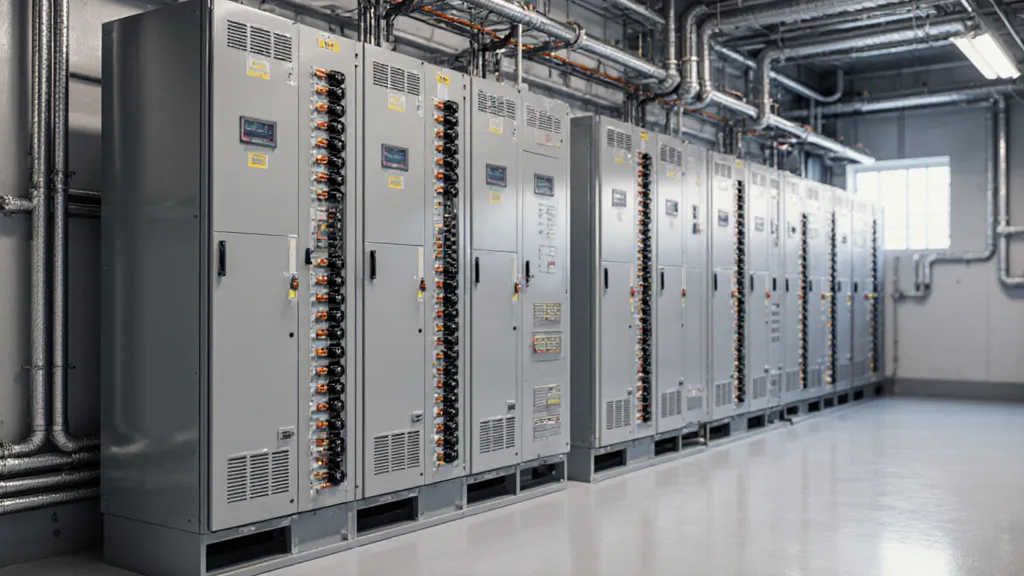
A bakery adds a second convection oven, a machine shop brings in a CNC mill, a gym replaces a rooftop HVAC unit — and the existing electrical service simply will not carry it. That is usually the moment a Los Angeles business owner starts asking about three-phase power installation, and it is a very different project from a residential panel swap.
What Three-Phase Power Actually Does for a Business
Almost every home in Los Angeles runs on single-phase power: energy arrives as one alternating wave that rises and falls 60 times a second. Three-phase power delivers three waves offset from one another, so the flow of energy is steady instead of pulsing. In practice that means motors start under load without dimming the lights, large equipment runs cooler and lasts longer, and the same amount of power moves through smaller, cheaper conductors.
That efficiency is why virtually all commercial and industrial equipment is built for it. If you are weighing three-phase vs single-phase for a growing shop, the honest answer is that three-phase is not an upgrade you choose for comfort — it is what your equipment nameplate demands. When three-phase genuinely is not available at the address, a heavy commercial electrical service upgrade on single-phase is sometimes the practical fallback, though it caps what you can install later.
Signs Your Building Needs Three-Phase Service
- An equipment nameplate reads 3Ø, 208V/3-phase, or 480V — single-phase will not run it at all
- Motors above roughly 5 to 10 horsepower: air compressors, elevators, large chillers, packaging lines
- Lights dim or breakers trip every time a big motor starts, or you see visible voltage sag across the building
- Commercial kitchen equipment, welders, CNC machines, or large refrigeration racks
- A bank of commercial EV chargers for a fleet yard, office lot, or multifamily garage
- You are taking over a space that was previously office or retail and converting it to production or food service
208V or 480V: Choosing the Right Service
208Y/120V — Most Small Commercial Buildings
This is the common choice for restaurants, retail, small shops, and offices across Los Angeles. A 208V three-phase panel feeds three-phase equipment and ordinary 120V outlets and lighting circuits from the same board, so you do not need a separate transformer for everyday loads.
480Y/277V — Larger Facilities and Industrial Loads
Warehouses, manufacturing, and buildings with large motor loads usually run 480V. It moves more power on smaller conductors, feeds 277V high-bay lighting directly, and handles big HVAC efficiently — but it needs a step-down transformer for any 120V receptacles, which adds equipment and space.
How a Three-Phase Installation Actually Happens Here
Three-phase work is a coordinated project between you, your contractor, the building department, and the utility. The sequence matters, and the utility side is almost always the long pole. This is the same coordination that governs new construction and tenant-improvement wiring, so it pays to start early.
- Load calculation and equipment schedule — every three-phase piece, its voltage, horsepower, and duty cycle, plus room for growth.
- Utility service application — filed with the utility that serves your address: Southern California Edison across most of the region, LADWP inside the City of Los Angeles, and municipal utilities in Pasadena (PWP), Glendale (GWP), and Burbank (BWP). Each has its own forms, engineering review, and queue.
- Permit — pulled with LADBS or your city building department, with a one-line diagram and panel schedule.
- Utility-side work — a three-phase transformer and service conductors to the property. If the street already carries three-phase, this is straightforward; if not, expect engineering time and a longer schedule.
- Contractor-side work — service equipment, meter, main switchboard, feeders, subpanels, grounding, and circuits out to each machine.
- Inspection and energization — city sign-off, then the utility sets the meter and releases power.
What Drives the Cost
There is no flat price for three-phase, and anyone quoting one over the phone has not looked at your service. The variables that move the number most:
- Whether three-phase already exists in the street and how far the nearest transformer sits from your service point
- Overhead versus underground service — trenching, conduit, and paving restoration add real cost
- 208V versus 480V, and whether a step-down transformer is required
- Switchboard ampacity and how many feeders and subpanels the layout needs
- Utility engineering fees, line-extension charges, and any required easements
- The condition of existing conduit, grounding, and service equipment you are tying into
Inside an existing three-phase building, adding a panel and feeders can land in the low thousands. Bringing three-phase to a property that has never had it — new transformer, new service, trenching — commonly reaches well into five figures. Utility charges and lead times change, so get an itemized quote and a written utility estimate before you commit. If the real problem turns out to be voltage drop or nuisance tripping on an existing service, the fix is often far smaller than a new service.
Frequently Asked Questions
How do I know if three-phase power is available at my address?
Your utility can confirm it from the service address, and an electrician can often tell from the street: three-phase distribution runs three conductors on the pole rather than one or two, and three transformer cans instead of one. Availability varies block by block, so check before signing a lease on a space that needs it.
Can I get three-phase power at a home in Los Angeles?
Rarely, and rarely worth it. Residential streets are usually fed single-phase, so bringing three-phase to a house means a line extension at the owner's expense. For home workshop equipment, a variable frequency drive or a rotary phase converter on a heavy single-phase service is almost always the cheaper path.
What is the difference between single-phase and three-phase power?
Single-phase delivers power in one pulsing wave; three-phase delivers three overlapping waves for a steady, continuous flow. The result is smoother motor operation, more power through smaller conductors, and the ability to run commercial and industrial equipment that single-phase simply cannot start.
How much does three-phase power installation cost?
It depends almost entirely on how far the utility has to bring the service and whether trenching is involved. Panel and feeder work inside a building that already has three-phase is a modest project; a brand-new service with a transformer is a major one. Prices and utility fees vary — confirm current figures with your utility and get a written scope.
How long does a three-phase service installation take?
The electrical work itself is often a matter of days. The schedule is set by utility engineering and permitting, which can run several weeks to several months depending on the utility's queue and whether new infrastructure is needed. Start the utility application before ordering equipment.
Talk to a Commercial Electrician in Los Angeles
911 Construction & Electric Inc. is a licensed, bonded, and insured C-10 electrical contractor (CA Lic. #1027421) serving Los Angeles, Pasadena, Burbank, Glendale, Altadena, Arcadia, the San Fernando Valley, and the San Gabriel Valley. If you are planning new equipment, a tenant improvement, or a service upgrade, we will run the load calculation, coordinate the utility application, and give you a straight scope before anything is ordered. Request a free estimate or call 747-255-8595.
Keep Reading
5 min read
Electrical Preventive Maintenance in Los Angeles
A loose lug or a scorched neutral rarely announces itself. It shows up as a breaker that trips on the hottest afternoon of the year, or a tenant calling at closing time about ha…
Read article →
6 min read
Electrical Panel Maintenance in Los Angeles: Checklist
Most homeowners service the furnace, flush the water heater and change the HVAC filter on a schedule. The electrical panel — the single component every circuit in the building d…
Read article →
6 min read
Home Battery Backup Installation in Los Angeles
A red-flag wind warning goes up, the power drops, and suddenly the most important appliance in the house is the refrigerator. That is usually the moment Los Angeles homeowners s…
Read article →Have an electrical project in mind?
Talk to a licensed electrician today — free estimates, 24/7 emergency service.