
Electrical Tips
Video Doorbell Installation in Los Angeles: Wiring Guide
6 min read
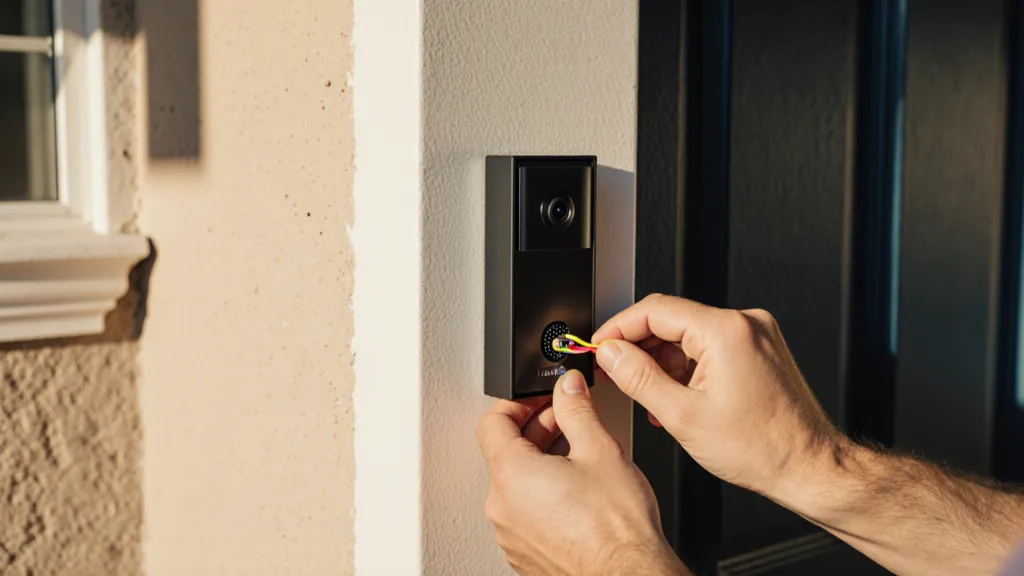
A video doorbell that keeps dropping offline, shows a dim night image, or dies every time someone rings it usually isn't a defective camera or weak Wi-Fi. In an older Los Angeles home it's almost always the doorbell transformer — a small 1950s-era component buried somewhere in the house that was never meant to run a camera.
Here's why video doorbell installation so often turns into a wiring job, and what a proper install involves.
Why Video Doorbells Struggle on Old Doorbell Wiring
Doorbells run on low-voltage AC stepped down from a 120-volt circuit by a transformer. A mechanical chime needs almost nothing, so homes built from the 1940s through the 1970s typically got a 10 VA transformer at 16 volts — plenty to clang a bell for one second. A video doorbell runs a camera, radio, speaker, and infrared LEDs continuously, and most models want 16–24 volts AC at 10–40 VA. Undersize that supply and you get the symptoms people blame on the device:
- The doorbell reboots or goes offline when motion or live view starts.
- Night vision looks dim, grainy, or cuts out.
- The internal battery never reaches a full charge.
- The existing chime buzzes, hums, or only half-rings.
- It works for a few minutes after a reset, then drops again.
Fitting a correctly sized transformer solves most of these outright. It isn't a voltage "boost" — it's matching the supply to the load, the same principle behind any other electrical troubleshooting call.
Where Your Doorbell Transformer Is Hiding
This is where most DIY installs stall, because the transformer is rarely anywhere obvious. In LA-area housing stock, check in this order:
- Inside the chime housing — pop the hallway chime cover; it may be mounted right there.
- At the electrical panel — screwed to the enclosure or a nearby junction box in the garage.
- Garage ceiling or framing — very common in postwar tract and Valley ranch homes.
- The attic — on a joist near the ceiling junction box, often under blown-in insulation.
- Crawlspace or basement — typical in hillside and Craftsman-era homes.
- A hall or coat closet — high on a wall or ceiling, sometimes painted over.
It's a metal box about the size of a deck of cards with two low-voltage screw terminals. If all six spots come up empty, it may sit in a closed wall or buried junction box — a code problem on its own, since junction boxes must stay accessible. At that point the circuit needs tracing by a low-voltage electrician rather than more guesswork.
Confirming the Transformer Is the Problem
The nameplate tells you most of it: look for the VA rating and voltage stamped on the body, and treat 10 VA or 16 VA as a strong candidate for replacement. If the label is unreadable, the real test is a voltage reading taken under load — a tired transformer can read fine at rest and collapse the moment the camera draws current. The chime terminals are low-voltage, but the primary side is a live 120-volt connection, so that work belongs behind a breaker that has been shut off and verified dead.
What a Professional Installation Includes
- Locating and evaluating the existing transformer, chime, and low-voltage run.
- Replacing the transformer with a correctly sized unit for your specific model, mounted somewhere accessible.
- Adding a digital chime kit or bypass where the mechanical chime isn't compatible, so you keep an indoor ring.
- Running new low-voltage cable if the existing wire is broken, corroded, or too short.
- Mounting at a usable height, with a wedge or corner kit so the view covers the walkway rather than the sky.
- Testing under load — live view, night vision, and chime — before anyone leaves.
Worth knowing: none of this involves your electric utility. A transformer swap is interior low-voltage work on an existing circuit — no meter pull, no rebate program. That only changes if the job grows into a panel upgrade, where the utility matters: Southern California Edison serves most of the area, while Pasadena is on Pasadena Water & Power (historically up to $1,000 toward a panel upgrade — confirm current terms with PWP), Glendale on Glendale Water & Power, and Burbank on Burbank Water and Power, each with its own rebate program to check directly.
Hardwired or Battery?
- Hardwired: continuous power, no recharging, reliable night vision, and the indoor chime keeps working. Needs correct transformer sizing.
- Battery: no wiring, and it works where there's no doorbell circuit — but expect recharges every one to three months and no indoor chime unless you add a plug-in one.
- Hardwired with battery backup: the middle ground on most current models, and what homeowners tend to be happiest with.
If a doorbell is already being done, it's a sensible moment to handle other smart home wiring in the same visit — smart switches, a neutral check for dimmers, or entry lighting upgrades.
Frequently Asked Questions
How much does video doorbell installation cost in Los Angeles?
A straight swap onto wiring that already works is a short, low-cost service call. Add a transformer replacement, a chime bypass, or a new cable run and the price rises with labor and access — an attic pull costs more than a transformer on the garage wall. Pricing varies by home, so get a quote after someone has seen the setup.
Where is my doorbell transformer located?
Check inside the chime cover first, then the panel area, garage ceiling, attic, crawlspace, and hall closet. Look for a small metal box with two low-voltage screw terminals. If none of those turn it up, the circuit needs to be traced rather than hunted.
Do I need a new transformer for a Ring or Nest doorbell?
Often yes, especially in a home with its original chime. Most video doorbells specify 16–24 VAC and a VA rating well above the 10 VA transformers common in mid-century houses. Compare your model's requirement to the rating stamped on the transformer, and replace it if it falls short.
Can a weak transformer damage the doorbell?
It's unlikely to destroy the unit, but chronic undervoltage causes constant reboots, failed firmware updates, and a battery that never fully charges, which shortens its life. The more common casualty is the mechanical chime, which can buzz or overheat when driven incorrectly.
Can I install a video doorbell myself?
With sound wiring and a correctly sized transformer, many homeowners handle the mount and app setup fine. The parts worth handing off are replacing the transformer, opening a junction box, and running new cable — that's 120-volt work, and in an older home it often uncovers a buried box or damaged run that needs correcting anyway.
Get It Powered Properly
911 Construction & Electric Inc. is a licensed, bonded, and insured C-10 electrical contractor (CA Lic. #1027421) based in Pasadena, serving Los Angeles and nearby cities. We handle doorbell transformers, chime wiring, and smart-home low-voltage work, with 24/7 emergency service when something can't wait. Request a free estimate or call 747-255-8595.
Keep Reading
5 min read
Electrical Preventive Maintenance in Los Angeles
A loose lug or a scorched neutral rarely announces itself. It shows up as a breaker that trips on the hottest afternoon of the year, or a tenant calling at closing time about ha…
Read article →
6 min read
Electrical Panel Maintenance in Los Angeles: Checklist
Most homeowners service the furnace, flush the water heater and change the HVAC filter on a schedule. The electrical panel — the single component every circuit in the building d…
Read article →
6 min read
Home Battery Backup Installation in Los Angeles
A red-flag wind warning goes up, the power drops, and suddenly the most important appliance in the house is the refrigerator. That is usually the moment Los Angeles homeowners s…
Read article →Have an electrical project in mind?
Talk to a licensed electrician today — free estimates, 24/7 emergency service.