Electrical Tips
Commercial Generator Installation in Los Angeles
5 min read
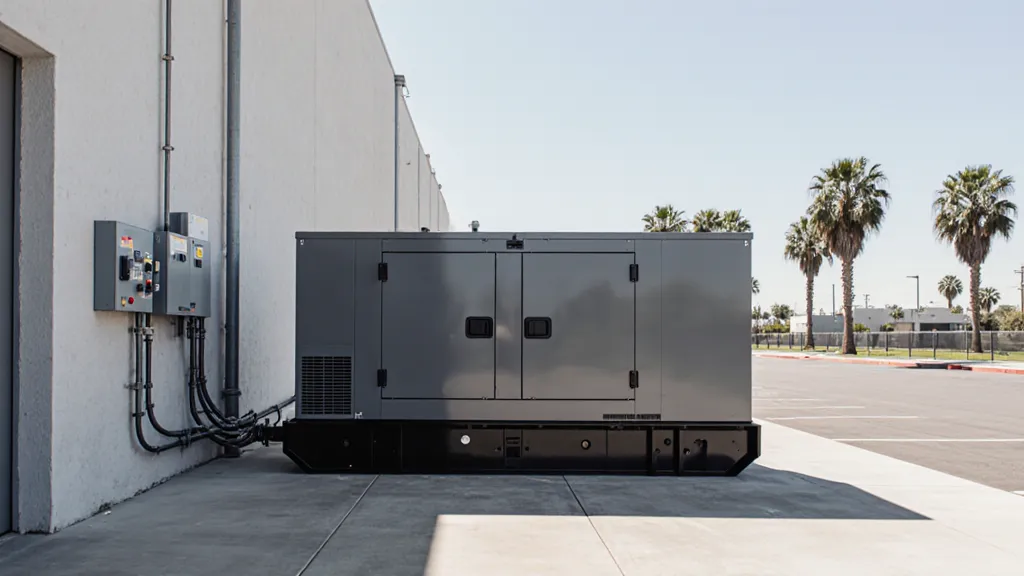
A two-hour outage costs a restaurant a walk-in full of product. For a dental office it costs a day of booked appointments. Commercial generator installation is how Los Angeles businesses stop guessing whether the lights stay on — and most of that project is electrical work, not engine work.
What Commercial Generator Installation Actually Involves
A generator set is one line item. What decides whether the system works on the day you need it is the electrical scope: the automatic transfer switch, feeders and overcurrent protection, grounding and bonding, and the panel work that separates the loads you must keep alive from the ones you can let go dark.
On a typical commercial standby generator project, the sequence looks like this:
- Load study. A measured electrical load calculation of actual demand, not nameplate guesswork.
- Sizing and spec. kW, voltage, phase, fuel type, and enclosure/sound rating matched to the site.
- Transfer scheme. Automatic or manual, service-entrance rated or downstream of the main.
- Distribution work. An essential-loads panel, feeders, conduit, and often a panel upgrade to support the new gear.
- Pad, clearances, and ventilation. Code working clearances are a common reason a layout gets rejected.
- Permits, inspection, and load testing. Commissioning that proves the system carries the load.
Sizing: The Decision Everything Else Depends On
Oversizing is expensive and leaves diesel units running lightly loaded. Undersizing is worse — the generator trips the moment a compressor or elevator starts. Commercial generator sizing has to account for motor inrush, not just steady-state amps.
Whole-building vs. essential-loads backup
Backing up an entire building is simplest to operate and most expensive to build. The common alternative is an essential-loads design: refrigeration, servers and POS, security and egress lighting, one HVAC zone, and a few dedicated circuits move to an emergency panel while everything else stays on normal power. On three-phase service, that also keeps the generator and transfer equipment a size smaller.
Automatic Transfer Switch vs. Manual Switching
An automatic transfer switch (ATS) senses the loss of utility power, starts the generator, and transfers load in seconds with no one on site — which matters for refrigeration, life-safety systems, and anything unattended overnight. A manual switch costs less and suits a small shop where someone is always present and a few minutes of downtime is tolerable.
Either way, the switch must be listed for the application and installed so the generator can never backfeed the utility — the first thing an inspector checks.
Permits, Inspections, and Your Utility
Expect more than one approval on a commercial standby project in Los Angeles County:
- Electrical permit from the city or county building and safety department with jurisdiction over the address.
- Air quality permit. Stationary engines generally require a permit from the South Coast AQMD; diesel units have the most involved review.
- Fire department sign-off where fuel is stored on site.
- Utility coordination. Most of our service area is Southern California Edison (SCE) territory, while Pasadena is served by Pasadena Water & Power (PWP), Glendale by Glendale Water & Power (GWP), and Burbank by Burbank Water and Power (BWP). Confirm interconnection and metering requirements with whichever utility serves your address.
What It Costs — and What Moves the Number
There is no honest flat price for commercial generator installation. An essential-loads system for a storefront and a large standby plant for a medical building differ by an order of magnitude; most commercial projects land from the low tens of thousands into six figures. The cost drivers are predictable:
- kW size, fuel type, and sound-attenuated enclosure
- Automatic vs. manual transfer, and whether the switch is service-entrance rated
- Distance from the pad to the electrical room — feeder runs and trenching add up fast
- Whether existing service capacity and switchgear support the design as-is
- Load testing, commissioning, and a service agreement
Any contractor quoting a commercial generator without walking the site and reviewing your load data is guessing. Prices and permit requirements change — get a written, site-specific proposal.
Frequently Asked Questions
How do I size a generator for a commercial building?
Start with a measured load study, then add inrush for the largest motor loads and any planned expansion. Sizing from square footage or service amperage alone is how buildings end up with a generator that trips on startup.
What should I expect during a commercial generator installation?
A site walk and load study, then design and permitting, then the physical work: pad, conduit and feeders, transfer switch, and emergency panel. Most buildings need only a short scheduled shutdown for the tie-in, and approvals usually take longer than the installation itself.
How often should a commercial generator be serviced?
Follow the manufacturer's schedule — commonly annual service with more frequent checks — and run the unit under load on a regular exercise cycle. Systems serving life-safety loads carry extra testing and recordkeeping obligations, so keep the logs.
Do I need a permit to install a commercial generator in Los Angeles?
Yes. A permitted, inspected installation is required, and stationary engines generally need an air-quality permit too. Unpermitted standby equipment tends to surface during a sale, tenant improvement, or insurance review, and costs far more to correct after the fact.
Can a generator power my whole building?
It can, if it is sized and the service is built for it. Most owners get better value from an essential-loads design that protects revenue-critical and life-safety systems for a fraction of the cost. We price both so you can compare.
Talk to a Licensed Los Angeles Electrical Contractor
911 Construction & Electric Inc. is a licensed, bonded, and insured C-10 electrical contractor (CA Lic. #1027421) handling commercial electrical work across Los Angeles, Pasadena, Burbank, Glendale, Arcadia, the San Fernando Valley, and the San Gabriel Valley. We also offer 24/7 emergency electrical service for the outages that happen before the generator is in. For a free estimate, call 747-255-8595.
Keep Reading
5 min read
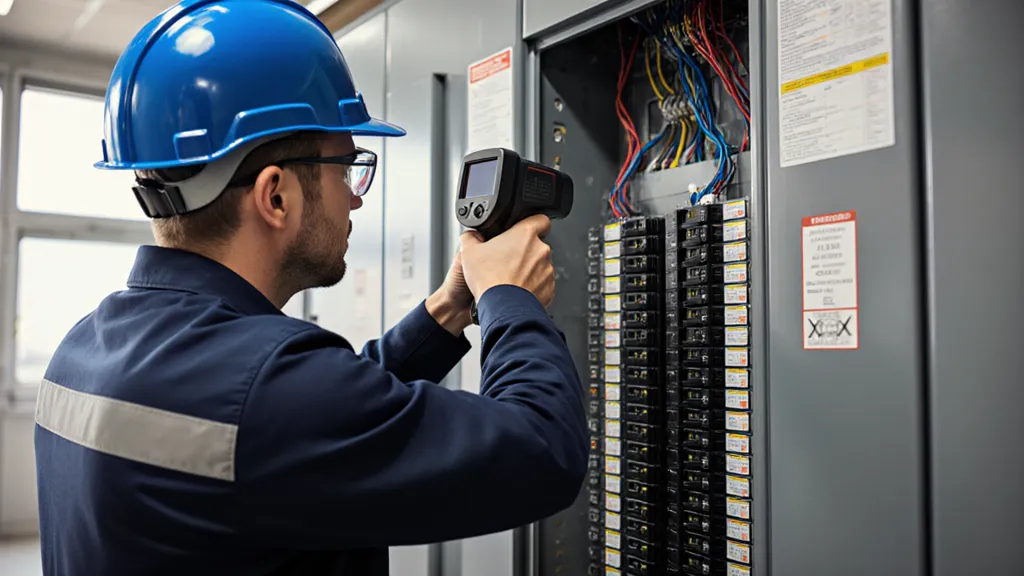
Electrical Preventive Maintenance in Los Angeles
A loose lug or a scorched neutral rarely announces itself. It shows up as a breaker that trips on the hottest afternoon of the year, or a tenant calling at closing time about ha…
Read article →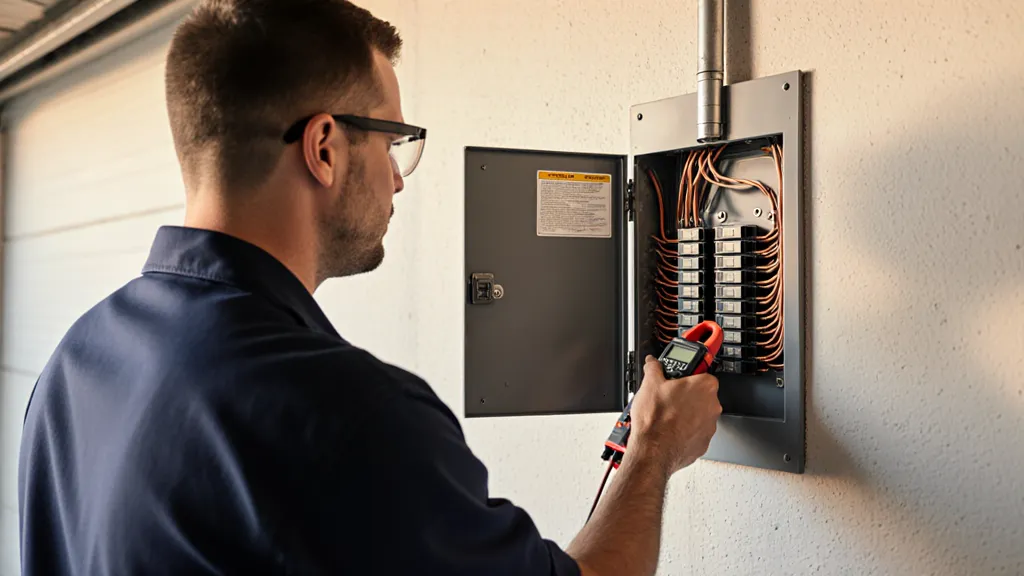
6 min read
Electrical Panel Maintenance in Los Angeles: Checklist
Most homeowners service the furnace, flush the water heater and change the HVAC filter on a schedule. The electrical panel — the single component every circuit in the building d…
Read article →
6 min read
Home Battery Backup Installation in Los Angeles
A red-flag wind warning goes up, the power drops, and suddenly the most important appliance in the house is the refrigerator. That is usually the moment Los Angeles homeowners s…
Read article →Have an electrical project in mind?
Talk to a licensed electrician today — free estimates, 24/7 emergency service.