Electrical Tips
Dryer Outlet Installation in Los Angeles: Cost & Code
6 min read
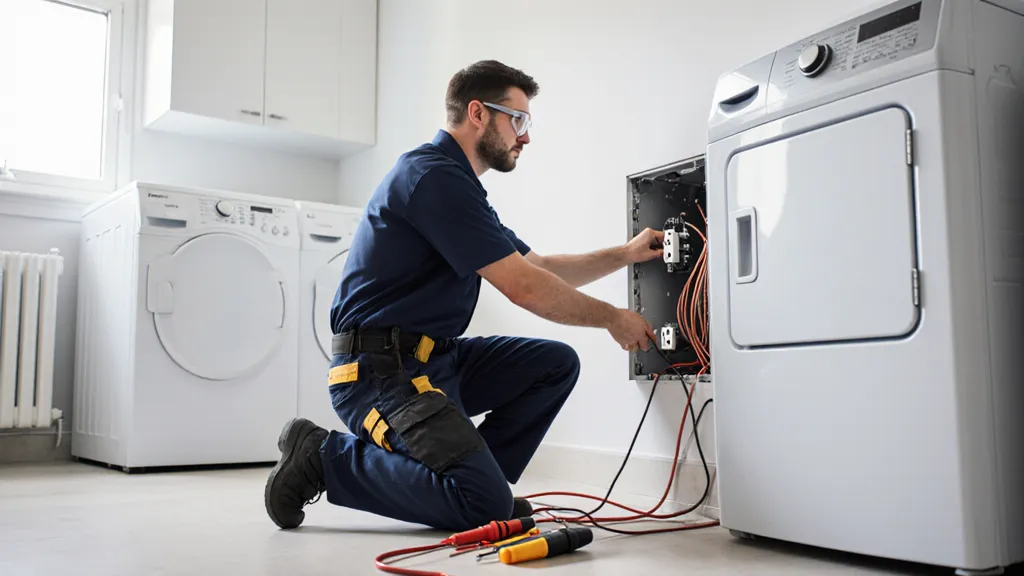
The delivery crew sets your new dryer in place, reaches behind it with the cord, and stops: the plug has four prongs and the wall has three. It is one of the most common calls we get in Los Angeles, and the fix is almost never as simple as swapping the cord.
Why Your New Dryer Won't Plug Into the Old Outlet
Older homes across Los Angeles were wired with a NEMA 10-30 receptacle — the three-prong dryer outlet, where the neutral also served as the ground. Starting in the mid-1990s, the National Electrical Code required new electric dryer circuits to use four wires: two hots, a separate neutral, and a separate equipment ground. That is the modern NEMA 14-30 receptacle, and it is what virtually every dryer sold today is built for.
Existing three-prong installations are generally allowed to stay in service, so a 3-prong to 4-prong dryer outlet change is usually driven by a new appliance, not a code violation. The catch: a true conversion means running four-wire cable back to the panel. You cannot create a separate ground by adding a terminal to the old three-wire run.
What a Code-Compliant 240V Dryer Circuit Needs
A standard electric dryer needs its own dedicated branch circuit — no laundry receptacles or lights sharing it. For a typical residential installation that means:
- A 30-amp double-pole breaker — a dryer circuit breaker size of 30 amps covers nearly every full-size residential electric dryer. Confirm against the appliance nameplate; compact and ventless models vary.
- 10 AWG copper conductors sized for the 30-amp circuit.
- Four wires for new work — two hot legs at 240 volts, a neutral, and an equipment ground.
- A NEMA 14-30R receptacle in a properly sized, securely mounted box, with the cord matched to the receptacle.
- A permit and inspection in most jurisdictions, because this is a new branch circuit, not a device swap.
If a modern-looking 240V dryer outlet keeps tripping, the cause is usually a loose termination, a failing breaker, or a damaged cord — diagnostic work. Our electrical repair and troubleshooting team traces it rather than guessing at parts.
Gas-to-Electric Conversions, ADUs, and Second Laundry Rooms
A gas to electric dryer conversion is a bigger job than an outlet swap, because the laundry space usually has no 240-volt circuit at all. In a finished house the route matters more than the distance: an unfinished garage wall is straightforward, fishing through a stuccoed exterior wall is not. The same applies to laundry in a garage conversion or a new ADU, which is why laundry loads belong in our ADU and new construction wiring scope from the start. One note on heat pump dryers — some are 240-volt and some run on a standard 120-volt circuit, so check the model before assuming a new circuit is needed.
Panel Capacity, Permits, and Your Local Utility
Adding 30 amps at 240 volts is a real load. Before running the circuit we do a load calculation on the existing service, and in older Los Angeles homes with 100-amp panels — especially ones already carrying central air, an electric range, or a Level 2 EV charger — there is sometimes no capacity or no breaker space left. Then the honest answer is a subpanel or an electrical panel upgrade first.
Utility territory is not the same across our service area. Most cities we serve — Los Angeles, Altadena, Arcadia, Alhambra, San Marino, Monrovia, Temple City, El Monte and the rest of the San Gabriel Valley — are Southern California Edison (SCE) customers. Pasadena is different: it is served by Pasadena Water & Power (PWP), a municipal utility with its own programs, including rebates of up to $1,000 toward a panel upgrade and up to $600 toward a home EV charger — amounts and eligibility change, so confirm current terms with PWP. Glendale (Glendale Water & Power) and Burbank (Burbank Water and Power) are municipal too; check the utility's current rebate program rather than assuming SCE's terms apply.
What Dryer Outlet Installation Costs in Los Angeles
Pricing depends on how far the circuit travels and what it travels through. Realistic ranges we see locally:
- Receptacle replacement in kind, existing circuit sound: roughly $150–$350.
- New 30-amp circuit, short accessible run near the panel: roughly $450–$900 with permit.
- Long run or finished walls: roughly $900–$1,800, more with drywall repair or exterior conduit.
- Panel work — a subpanel or service upgrade, when capacity is the limiter: priced separately.
These are ranges, not quotes — permit fees, panel condition, and access all move the number. Get it in writing after someone has actually looked at your panel.
Signs an Existing Dryer Outlet Needs Attention Now
- Scorch marks, discoloration, or a melted spot on the receptacle face.
- A cover plate or plug warm to the touch after a cycle.
- The breaker tripping partway through a drying cycle, repeatedly.
- A plug that falls out, wobbles, or only works held at an angle.
- A burning or fishy smell near the laundry area — stop using the circuit and call.
Each points to heat at a connection, which is how electrical fires start. A 30 amp dryer outlet carrying a heavy load through a loose terminal gets worse, not better.
Dryer Outlet Installation FAQ
What size breaker and wire does a dryer outlet need?
A standard full-size electric dryer uses a 30-amp double-pole breaker with 10 AWG copper conductors. Verify against the dryer's nameplate — a few high-capacity units call for more, and compact models sometimes call for less.
How many amps is a dryer outlet?
Thirty amps at 240 volts for the common residential configuration, whether it is the older three-prong NEMA 10-30 or the current four-prong NEMA 14-30. Receptacle, breaker, and wire all have to match that rating.
Can I just use a 3-prong to 4-prong adapter?
In some situations changing the dryer's cord to match an existing three-prong circuit is a legitimate, code-recognized option. Stacking adapters, or bonding neutral and ground at the appliance in a way the manufacturer does not specify, is not. Have an electrician confirm which option your circuit and appliance allow.
Do I need a permit to install a dryer outlet in Los Angeles?
Replacing a damaged receptacle in kind generally does not. Adding a new 240-volt branch circuit generally does, whether you are in the City of Los Angeles or a San Gabriel Valley city with its own building department. We pull the permit and meet the inspector.
How long does the installation take?
A straightforward receptacle replacement is usually under an hour. A new circuit on an accessible wall is typically a half day. Long runs through finished space, or anything waiting on a panel upgrade or inspection, stretch across more than one visit.
Get a Free Estimate
911 Construction & Electric Inc. is a licensed, bonded, and insured C-10 electrical contractor (CA Lic. #1027421) based in Pasadena, serving Los Angeles, Burbank, Glendale, Altadena, Arcadia, the San Fernando Valley, and the San Gabriel Valley. Whether you need a dryer outlet replaced this week or a full laundry circuit run for a gas-to-electric conversion, request a free estimate or call 747-255-8595. 24/7 emergency service is available when a scorched outlet needs to come out of service tonight.
Keep Reading
5 min read
Electrical Preventive Maintenance in Los Angeles
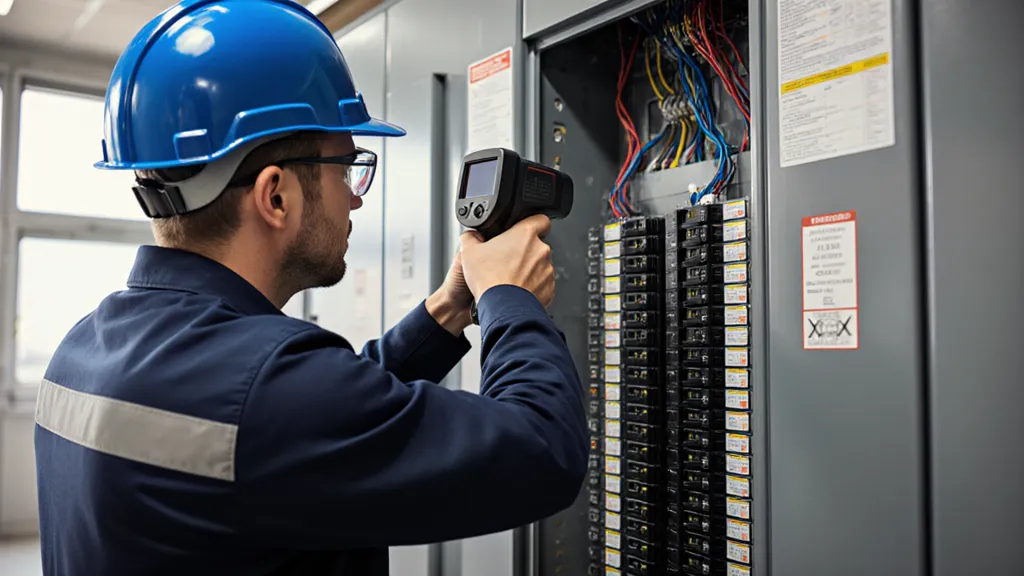
A loose lug or a scorched neutral rarely announces itself. It shows up as a breaker that trips on the hottest afternoon of the year, or a tenant calling at closing time about ha…
Read article →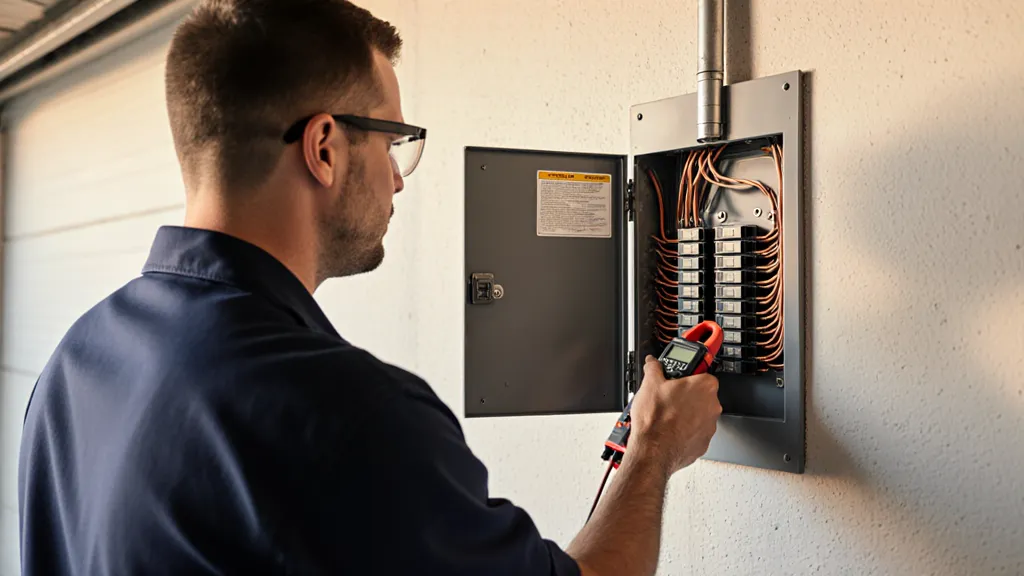
6 min read
Electrical Panel Maintenance in Los Angeles: Checklist
Most homeowners service the furnace, flush the water heater and change the HVAC filter on a schedule. The electrical panel — the single component every circuit in the building d…
Read article →
6 min read
Home Battery Backup Installation in Los Angeles
A red-flag wind warning goes up, the power drops, and suddenly the most important appliance in the house is the refrigerator. That is usually the moment Los Angeles homeowners s…
Read article →Have an electrical project in mind?
Talk to a licensed electrician today — free estimates, 24/7 emergency service.