Home Battery, Tesla Powerwall & Generator Backup in Los Angeles, CA
911 Construction & Electric Inc. is a Tesla Energy Certified installer of Tesla Powerwall and other home batteries, and connects portable and standby generators with permitted interlock kits and transfer switches in Los Angeles, CA. We handle the load calculation, panel work, permit and inspection. We install batteries only; we don't install solar panels.
- ✓ Licensed & Insured (Lic. #1027421)
- ✓ 24/7 Emergency Service
- ✓ Free Estimates
- EVITP Certified
- Tesla Certified
- SCE Charge Ready Home
- C-10 Licensed
Get Your Free Quote
We respond fast — usually within 15 minutes.
- CSLB Lic. #1027421, C-10 Electrical
- Tesla Energy Certified Installer
- SCE Charge Ready Home
- EVITP Certified
- 5.0 on Google (77 reviews) · 5.0 on Yelp (46 reviews)
- Call 747-255-8595
911 Construction & Electric Inc. keeps Los Angeles homes and businesses powered through heat waves, windstorms and Public Safety Power Shutoffs. We're a Tesla Energy Certified installer for Tesla Powerwall and other home batteries, and we connect portable and standby generators safely with permitted interlock kits and transfer switches. We're electricians first, so we handle the parts that decide whether backup power actually works: the load calculation, the panel, the permit and the inspection.
We install batteries. We don't install solar panels.
Battery or generator?
- Home battery: silent, no fuel, switches over automatically, usually without you noticing. On normal days it can run the house during peak hours on stored grid power, depending on your rate plan and settings. It runs until it's drained, then recharges from the grid. Big loads like central AC need enough battery output sized for them. Mostly hands-off.
- Portable generator with an interlock or transfer switch: usually the lowest-cost way to power hardwired circuits like the fridge, lights, internet and furnace fan. You start it and switch over by hand, and it runs as long as you have fuel.
- Standby generator with an automatic transfer switch: natural gas or propane, starts and switches over within seconds with nobody home, runs as long as fuel lasts and handles big loads like central air more easily. Needs periodic service and runs its own exercise cycle.
Some homes choose one, some both. We'll ask what needs to keep running at 2 a.m. during a red-flag outage, then size the system to that, not to a brochure.
Home batteries and Tesla Powerwall
A battery system includes the battery unit(s) (your quote lists the model and how many), backup controls that disconnect the house from the grid so power can't flow back onto utility lines, and app monitoring. The first decision is what it backs up:
- Backed-up circuits (critical-load panel): the fridge, some lighting, Wi-Fi, bedroom outlets, a furnace blower or mini-split, medical equipment. Common in older LA homes, and it stretches one battery much further.
- Whole-home backup: every circuit stays live, including central air. That usually takes more than one battery and often a service or panel upgrade.
Already have solar? A battery can be added to many homes that already have solar. We look at how the battery ties into your existing electrical system. We don't install, move or service solar panels, so any work on the panels themselves stays with your solar company.
Generators and transfer switches
Never plug a generator into a wall or dryer outlet to power the house. That "suicide cord" backfeeds the utility lines and can electrocute line crews. Every option below prevents it:
- Generator interlock kit: a listed sliding plate on your panel makes it impossible to have the main and the generator breaker on at the same time. We add a 2-pole generator breaker and an outdoor inlet box, and you can run any circuit. Needs a listed kit for your panel. → Generator interlock kits
- Manual transfer switch: a separate switch panel with pre-selected circuits. Simpler under stress, and a good fit when the panel has no listed interlock kit.
- Automatic transfer switch (ATS) for a standby generator: senses the outage, starts the generator and switches back when utility power returns. → Whole-house generators
Compare the options: Generator transfer switch guide
How a backup power job works
- Call and photos. Why you want backup (outages, medical equipment, peak rates), what must stay on, your generator's wattage and outlet type if you have one, and photos of your main panel, its label, the meter, and where the battery or generator would go.
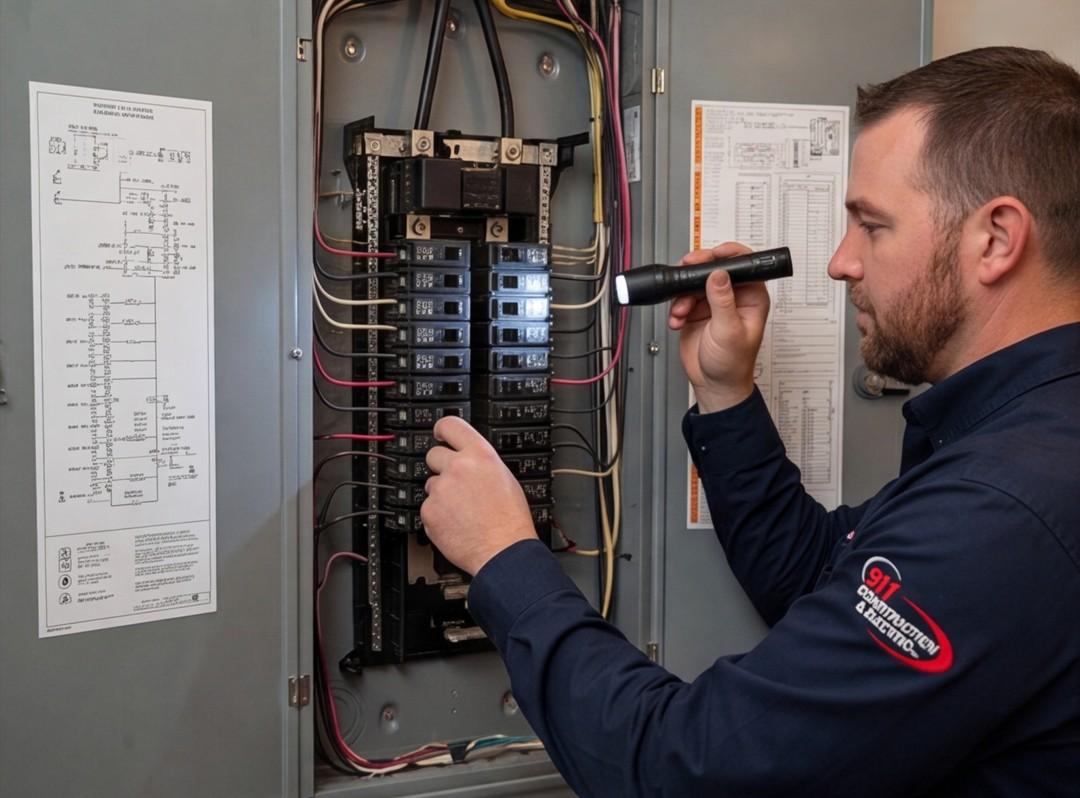
- Site visit and load calculation. We check service size, panel brand and condition, open breaker space, grounding, and whether a listed interlock kit exists. Code limits how much battery current a panel's busbar can accept, so this is where we find out if your panel can take a battery or generator connection as is.
- Location. Batteries usually go on a garage wall and must meet the manufacturer's clearances, temperature range and vehicle protection. Generators run outdoors only, well away from doors, windows and vents.
- Written scope and price: equipment, which circuits stay on, any panel work, the permit, utility paperwork and the timeline.
- Permit and utility paperwork. We pull the electrical permit under our C-10 license with LADBS or your local building department. Batteries also need utility approval (SCE, LADWP, Pasadena Water & Power, Glendale Water & Power or Burbank Water and Power), which we prepare and submit. Standby generators also need the fuel (gas) connection permitted separately; who handles that connection depends on the job.
- Install. Interlock or manual switch: usually a few hours. Battery: usually one to a few days, depending on panel work. Standby generator and ATS: usually one to two days of electrical work once the unit is set on its pad and the fuel connection is ready. Any panel upgrade usually comes first.
- Inspection, testing and walkthrough. For batteries, we commission the system, test a simulated outage and set up the app; it runs normally once the utility gives permission to operate. For portable generators, we walk you through the outage routine: generator outside, main off, generator breaker on, loads on one at a time. For standby units, the exercise cycle and status readout.
More: Tesla Powerwall installation guide · Home battery backup guide · Santa Ana winds, PSPS and backup power
Why Choose Us for Home Battery & Generator Backup
Tesla Energy Certified Installer
We install Tesla Powerwall and other home batteries, plus the backup controls, backup panel and electrical work around them. Batteries only: we don't install solar panels.
Battery, Generator or Both
We explain the trade-offs between a battery, an interlock kit, a manual transfer switch and a standby generator with an automatic switch, then recommend what fits your home, panel and budget.
Sized to What Must Stay On
A load calculation matches the battery, generator and switch to the circuits you actually need, so the system isn't overloaded the first time the AC and the fridge kick on together.
Panel Readiness Checked First
Homes with 100-amp service, a full panel, or a Zinsco or Federal Pacific panel often need an upgrade first; Zinsco and Federal Pacific Stab-Lok panels generally have no listed interlock kit. If needed, we do the upgrade under the same permit.
Permit & Utility Paperwork Handled
We pull the electrical permit, prepare and submit the utility paperwork batteries need before they can operate. Standby generators also need a separately permitted fuel connection; who handles it depends on the job.
Honest About Incentives
As of November 2026, the federal 25D credit doesn't apply to systems installed after Dec 31, 2025 (per the IRS), and SCE lists its SGIP ratepayer budgets as closed. We'll check what's open for your address, such as the PWP battery rebate.
The Benefits
What You Get
Power Through Outages
Your chosen circuits keep running during heat waves, windstorms and Public Safety Power Shutoffs, from a silent battery, a generator, or both.
No Backfeed, No Suicide Cord
Every setup keeps backup power off the utility lines, protecting line crews, your equipment and your home.
Permitted, Inspected & Tested
A finaled permit, utility permission to operate for batteries, and a tested switchover before we leave, plus a clear outage routine you can follow in the dark.
FAQ
Home Battery & Generator Backup FAQs
Do you install solar panels?
No. We install home batteries, the backup panel and the electrical work around them, plus generator connections. We don't install solar.
Do I need solar to get a battery?
No. A battery can charge from the grid and still give you backup power. Solar just lets it recharge during long outages.
Should I get a battery or a generator?
A battery is silent, needs no fuel and can shift usage off peak, but runs down if it can't recharge. A standby generator runs as long as fuel lasts and handles big loads like central air more easily. A portable generator with an interlock or transfer switch is usually the lowest-cost option. Some homes choose one, some both. We'll walk you through it for your home.
How long will a battery run my house?
It depends on capacity and what's connected. A backup panel with the fridge, lights, networking and some outlets lasts far longer than whole-home backup with central air running. We size the system to your actual loads and tell you what to expect.
Will a battery run my air conditioner?
That depends on the battery's output, not just its capacity. Large AC compressors draw a big surge at startup. We'll tell you whether your AC can be backed up and what it takes.
Do I need a transfer switch or interlock for a portable generator?
Yes, if you want to power hardwired circuits like the furnace fan, ceiling lights or well pump. Extension cords only reach plug-in devices, and plugging into a wall outlet to backfeed the house is illegal and dangerous.
Interlock or transfer switch, which is better?
An interlock is usually cheaper and lets you run any circuit, but it needs a listed kit for your panel. A manual transfer switch works with almost any panel and is simpler during an outage, but only runs the circuits chosen ahead of time.
Do I need a permit?
Yes. Batteries need an electrical permit, inspection and utility approval. Generator connections, interlocks and transfer switches need an electrical permit and inspection, and standby generators also need the fuel (gas) connection permitted separately; who handles that depends on the job. We handle the electrical permit and the battery utility paperwork.
How long does installation take?
Interlock and manual switch installs usually take a few hours. Batteries usually take one to a few days depending on panel work, and standby generator electrical work is usually one to two days once the unit is set and fuel is ready. Permit and utility steps add time, and we give you a realistic timeline in your estimate.
Will a generator work with my solar or battery?
Standard transfer switches are designed for generators. Battery and solar systems use their own backup controls, so tell us what you have and we'll plan the connection safely before anything is wired.
Ready to schedule your home battery & generator backup?
Contact Us
Get Your Free Quote Today
Phone
747-255-8595Office
1308 East Colorado Blvd Ste 141, Pasadena, CA 91106
Hours
24/7 Emergency Service