Electrical Tips
Carbon Monoxide Detector Installation in Los Angeles
6 min read
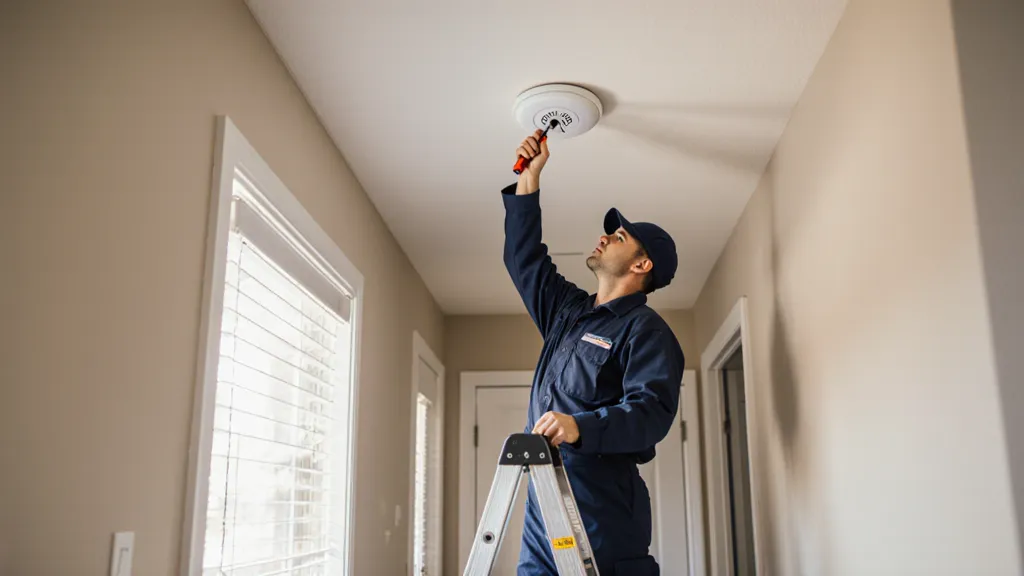
Carbon monoxide gives you no warning on its own — no smell, no color, no irritation — which is why California made alarms mandatory rather than optional. If your house has a gas furnace, gas water heater, gas range, a fireplace or an attached garage, carbon monoxide detector installation in Los Angeles is not a nice-to-have, and getting the placement and wiring right matters as much as owning the device.
What California actually requires
The Carbon Monoxide Poisoning Prevention Act of 2010 requires a state-fire-marshal-approved CO alarm in every dwelling unit that has a fossil-fuel-burning appliance, a fireplace or an attached garage. Single-family homes came under the rule in July 2011 and multi-family units followed in January 2013. A few things owners regularly get wrong:
- It is per dwelling, not per appliance. An all-electric condo with an attached garage still needs alarms, because vehicle exhaust is a CO source.
- Landlords own the obligation. In rentals, installation and maintenance fall to the property owner, and CO alarms are part of what buyers' inspectors and insurers look for.
- Smoke alarms do not count. A smoke detector does not sense CO. You need either separate CO alarms or listed combination units.
- Approval matters. The device has to be an approved CO alarm, not a plug-in air-quality gadget.
Carbon monoxide detector placement: where they go
Placement is where most self-installed alarms go wrong. CO mixes fairly evenly with air, so it is less about height than about coverage and avoiding nuisance alarms:
- One alarm on every level of the home, including a basement and a finished attic.
- One outside each separate sleeping area — a hallway serving three bedrooms counts as one area.
- Inside any bedroom that contains a fuel-burning appliance, such as a wall heater or a gas fireplace.
- Roughly 15 feet or more away from a furnace, water heater or range, so normal start-up exhaust does not trip it.
- Not in bathrooms, not in unconditioned garages, not within a few inches of a ceiling corner, and not where a door will block airflow.
If you are wondering how many carbon monoxide detectors you need, the practical answer for a typical two-story Los Angeles home with bedrooms split across floors is three to four: one per level plus one per sleeping-area hallway.
Hardwired or battery — and why an electrician gets involved
A battery-only alarm satisfies the law, but a hardwired carbon monoxide detector running on 120 volts with battery backup is what most owners want, for one reason: interconnection. Hardwired alarms can be wired together so that when one senses CO, every unit in the house sounds. That is the difference between hearing an alarm from the far end of the house at 3 a.m. and sleeping through it.
The usual approach is a combination smoke and carbon monoxide detector, hardwired onto the existing smoke alarm circuit so you get one device, one interconnect and one set of ceiling boxes. That works cleanly in newer homes. In pre-1960 housing stock around Highland Park, Eagle Rock, Altadena and much of the San Gabriel Valley, there is often no interconnect conductor at all — and sometimes original knob-and-tube or deteriorated wiring that needs to be addressed before anything new gets tied to it. If your smoke alarms are already due, it is worth handling smoke detector installation and CO alarms as one job.
What installation involves, and what it costs
- A walkthrough to map required locations against what exists, including whether current alarms are interconnected and how old they are.
- Existing ceiling boxes get checked for a neutral and for the three-wire interconnect that multi-station alarms need.
- Where no interconnect exists, either a new conductor is run or listed wireless-interconnect alarms are used — often the less invasive choice in finished plaster.
- Devices are mounted, dated, and tested individually and as a group so one alarm genuinely triggers the rest.
- Any shared circuit is verified for load and proper breaker protection before the work is signed off.
On a home with usable existing wiring, expect roughly $150 to $275 per device installed; jobs that need new interconnect runs, new boxes or plaster access commonly land in the $275 to $500 per location range. A whole-house set of four to six combination units is usually quoted as a package. Device pricing and labor change, so treat these as ballpark figures and get a written quote. If the circuit turns out to be overloaded or the panel is obsolete, an electrical panel upgrade may need to come first.
Chirping, false alarms, and end of life
CO sensors wear out. Most units are rated for seven to ten years from the manufacture date printed on the back, and they will chirp at end of life whether or not the battery is fresh — replacing the battery on a ten-year-old alarm accomplishes nothing. Repeated alarms in a garage-adjacent room usually mean vehicle exhaust migrating indoors, which is a real reading and worth investigating rather than silencing. Nuisance trips near a furnace generally mean the alarm is mounted too close.
If an alarm is actually sounding, get everyone outside into fresh air first and call 911 or the gas utility from outside — do not stay indoors troubleshooting. SoCalGas serves gas in this area. On the electrical side, most homes we work on are Southern California Edison customers, while Pasadena runs its own Pasadena Water & Power, Glendale has Glendale Water & Power and Burbank has Burbank Water and Power — which matters mainly if the job grows into panel or service work that needs utility coordination.
Frequently Asked Questions
How many carbon monoxide detectors do I need?
One on each level of the home plus one outside each separate sleeping area, and one inside any bedroom containing a fuel-burning appliance. Most two-story Los Angeles homes end up with three or four.
Where should a carbon monoxide detector be installed?
On each floor and outside sleeping areas, at least about 15 feet from furnaces, water heaters and ranges to avoid nuisance alarms. Avoid bathrooms, garages, dead-air ceiling corners and spots behind doors. Wall or ceiling both work, since CO does not settle.
Does California require hardwired carbon monoxide detectors?
For existing homes, an approved battery-operated alarm generally satisfies the requirement. Hardwired, interconnected units are typically required in new construction and in permitted remodels, and they are the better choice in any home because every alarm sounds together.
Can one device handle both smoke and carbon monoxide?
Yes. Listed combination smoke and CO alarms are common and are approved for both purposes, which reduces the number of devices on your ceilings. Just confirm the unit carries both listings rather than assuming.
How long do carbon monoxide detectors last?
Seven to ten years depending on the model, measured from the manufacture date rather than the day you installed it. Write the replacement year on the housing at install so nobody has to guess later.
Do I need a permit to add carbon monoxide detectors?
Swapping or adding battery alarms does not require a permit. Adding new hardwired devices, running new interconnect conductors or extending a circuit is electrical work that may require a permit depending on your city, so ask your contractor what your jurisdiction enforces.
911 Construction & Electric Inc. is a licensed, bonded and insured C-10 electrical contractor (CA Lic. #1027421) based in Pasadena, serving Los Angeles, Glendale, Burbank, Altadena, Arcadia, the San Gabriel Valley and the San Fernando Valley. Request a free estimate or call 747-255-8595 — and if you have lost power to an alarm circuit or need help after hours, we provide 24/7 emergency electrical service.
Keep Reading
5 min read
Electrical Preventive Maintenance in Los Angeles
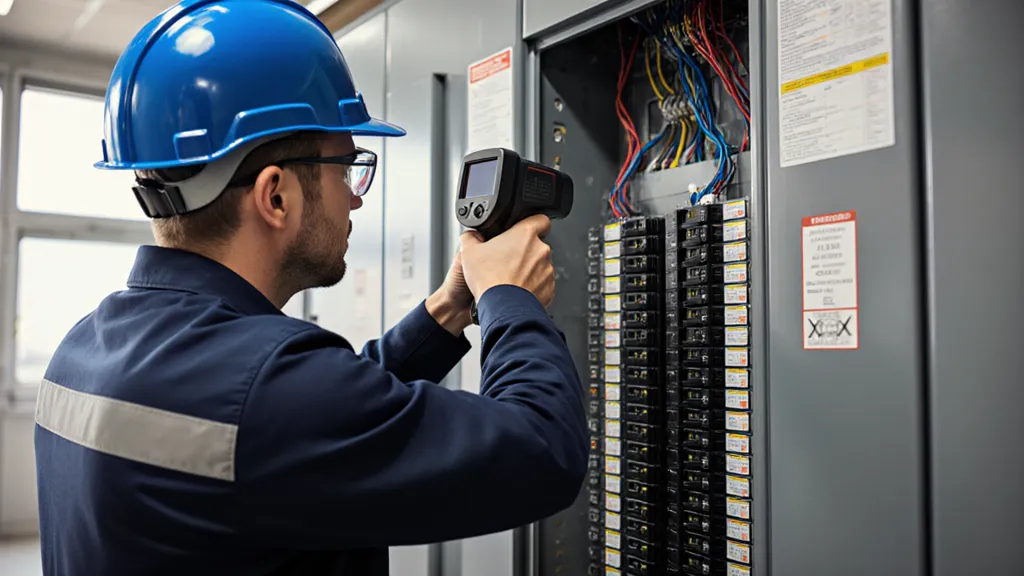
A loose lug or a scorched neutral rarely announces itself. It shows up as a breaker that trips on the hottest afternoon of the year, or a tenant calling at closing time about ha…
Read article →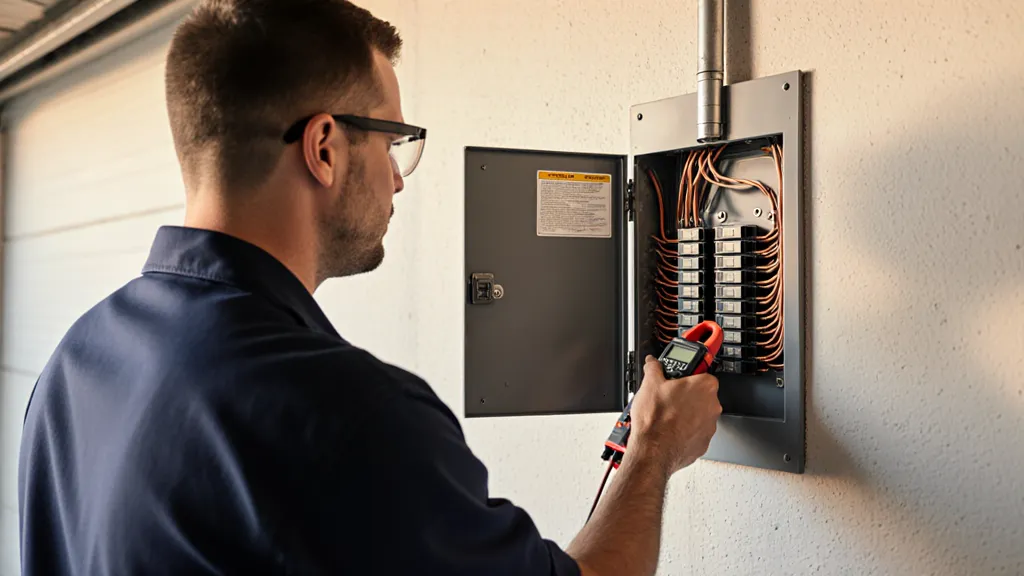
6 min read
Electrical Panel Maintenance in Los Angeles: Checklist
Most homeowners service the furnace, flush the water heater and change the HVAC filter on a schedule. The electrical panel — the single component every circuit in the building d…
Read article →
6 min read
Home Battery Backup Installation in Los Angeles
A red-flag wind warning goes up, the power drops, and suddenly the most important appliance in the house is the refrigerator. That is usually the moment Los Angeles homeowners s…
Read article →Have an electrical project in mind?
Talk to a licensed electrician today — free estimates, 24/7 emergency service.