
Electrical Tips
Parking Lot Lighting Repair in Los Angeles: Owner's Guide
6 min read
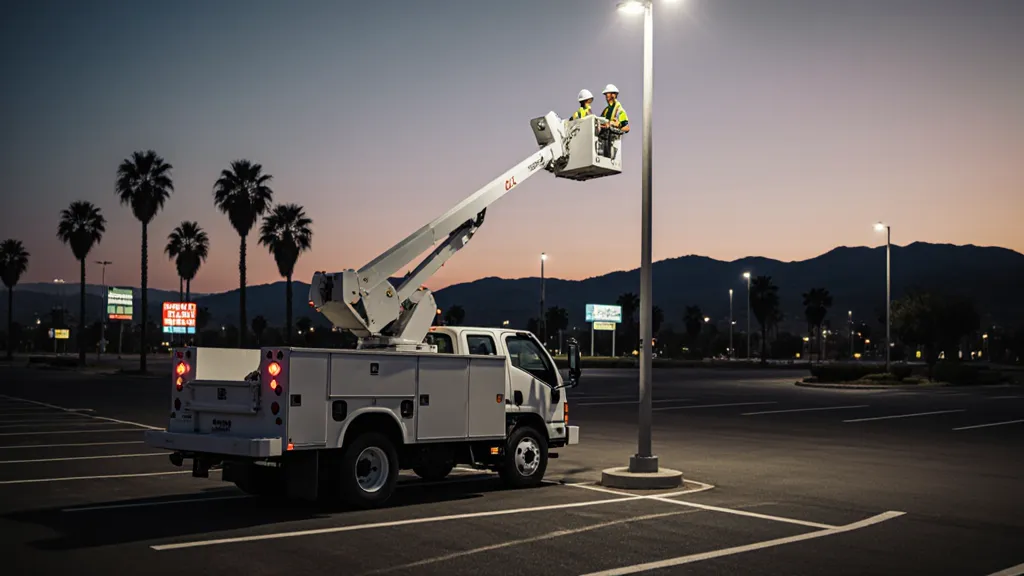
A dark row of parking stalls is more than an eyesore. It's a slip-and-fall claim waiting to happen, an invitation to break-ins, and a reason customers and tenants quietly go somewhere else. This guide walks property owners and managers through parking lot lighting repair in Los Angeles: what usually fails, how a licensed electrician tracks it down, and when an LED retrofit makes more sense than another round of patching.
Why Parking Lot Lights Fail
Most lot lighting runs outdoors, on long underground circuits, 20 to 30 feet in the air. That combination wears parts out in predictable ways:
- Photocells and timers: the most common culprit. A failed photocell leaves lights on all day or off all night, and a timer that lost its settings after a power outage can do the same.
- Ballasts and LED drivers: older metal halide and high-pressure sodium heads burn through ballasts; LED fixtures can lose their driver long before the diodes wear out.
- Lamps at end of life: metal halide lamps dim and turn pinkish before they quit, so a lot can look "mostly lit" while light levels drop well below where they should be.
- Underground wiring faults: splices in handholes and pole bases corrode, rodents chew conductors, and water gets into conduit. One bad splice can take out a whole string of poles.
- Physical damage: delivery trucks clip poles, bases rust out, and anchor bolts loosen. A leaning pole is a safety hazard, not a cosmetic problem.
- Tripping breakers: a ground fault somewhere on the circuit will keep tripping the breaker until it's located and repaired.
How We Troubleshoot a Dark Lot
Good parking lot lighting repair starts with finding the actual fault instead of swapping parts until something works. A typical service call looks like this:
- Check the controls first. We verify the photocell, time clock, contactor, and breaker at the panel, since one control failure can darken every pole at once.
- Map the pattern. One dark pole points to that fixture or its splice; a whole row out usually means a circuit, contactor, or underground issue.
- Test at the pole. Using a lift or bucket truck, we check voltage at the base and the head, then inspect the lamp, ballast or driver, and fuses in the pole handhole.
- Locate underground faults. If power isn't reaching a pole, we test the circuit, open handholes, and trace the break so repairs are targeted rather than trenching blind.
- Inspect the structure. We look at bases, anchor bolts, and grounding while we're up there and flag anything that needs attention.
Many of these same failure points show up in other exterior systems too, which is why our electrical repair and troubleshooting work often covers building-mounted wall packs and signage circuits on the same visit.
Repair or Upgrade to LED?
If your lot still runs metal halide or sodium fixtures, every repair call is a good moment to ask whether patching old heads is worth it. A parking lot LED retrofit is usually worth a serious look when:
- You're replacing ballasts or lamps on several poles every year.
- The light is uneven, with bright pools under poles and dark gaps between them.
- Your electric bill for exterior lighting is noticeably high.
- You want dimming or motion-based controls for after-hours savings.
LED heads typically last far longer than metal halide lamps and cut maintenance lift trips substantially. Retrofit options range from swapping just the head on existing poles to full fixture-and-control replacements. We handle both as part of our commercial lighting installation service, and if you're also improving building-mounted lights, our guide to security lighting installation covers wall packs, floods, and placement.
Title 24 and permits
California's Title 24 energy code sets requirements for outdoor lighting controls, and larger lighting alterations can trigger them. New poles or relocated poles generally need a permit and properly engineered footings. A like-for-like repair is usually simpler, but it's worth confirming the scope with your electrician and your city's building department before a larger project starts.
Utility incentives
Commercial lighting incentives depend on which utility serves the property. Most of Los Angeles County is Southern California Edison (SCE) territory, while properties in Pasadena, Glendale, and Burbank are served by their own municipal utilities (Pasadena Water & Power, Glendale Water & Power, and Burbank Water and Power). Program availability changes, so check your utility's current business programs before you budget around a rebate.
What Parking Lot Lighting Repair Costs
Pricing depends heavily on pole height, access, and what actually failed, so treat these as rough ranges and get a site-specific quote:
- Simple fixes (photocell, timer, fuse, or a single lamp): often a few hundred dollars including the lift.
- Ballast or LED driver replacement: typically a few hundred dollars per fixture, less per unit when several are done in one visit.
- LED retrofit per fixture: commonly several hundred to well over a thousand dollars, depending on fixture type and whether controls are added.
- Underground fault repair: varies widely with how deep and where the break is, and whether trenching or boring is needed.
- New or replacement poles: a larger project involving footings, permits, and wiring, usually priced in the thousands per pole.
Batching repairs saves money, because lift time is a big part of every call.
Don't Wait on Hazards
Lot lighting problems can escalate. Exposed wiring at a damaged pole base, a pole leaning after a vehicle strike, or a circuit that keeps tripping should be treated as urgent. For after-hours hazards, our 24/7 emergency electrician team can make the area safe and restore lighting as quickly as possible.
Frequently Asked Questions
Why are my parking lot lights on during the day?
A failed or dirty photocell, or a time clock that lost its programming, is the usual cause. A stuck contactor can also keep the circuit energized. These are typically quick, inexpensive repairs.
Why is only one row of parking lot lights out?
When several poles on the same run go dark together, the problem is usually shared: a tripped breaker, a failed contactor, or an underground fault or bad splice feeding that row.
Is it worth retrofitting parking lot lights to LED?
For most lots still running metal halide or sodium, yes. LED fixtures use less energy, last longer, and reduce how often you pay for lift trips. Check your utility's current business incentives, since they can improve the payback.
Do I need a permit for parking lot lighting repair?
Replacing lamps, ballasts, or photocells generally doesn't require a permit. Installing new poles, relocating poles, or making larger lighting alterations usually does, and may bring Title 24 control requirements into play.
How fast can a dark parking lot be repaired?
Control and fixture problems are often fixed in a single visit. Underground wiring faults and damaged poles can take longer, but we can usually make the site safe right away and give you a clear repair plan.
Get Your Lot Lit Again
911 Construction & Electric Inc. is a licensed, bonded, and insured electrical contractor (CA Lic. #1027421) serving Los Angeles, Pasadena, Glendale, Burbank, and the San Gabriel Valley. Request a free estimate or call 747-255-8595 to schedule parking lot lighting repair or an LED retrofit.
Keep Reading
5 min read
Electrical Preventive Maintenance in Los Angeles
A loose lug or a scorched neutral rarely announces itself. It shows up as a breaker that trips on the hottest afternoon of the year, or a tenant calling at closing time about ha…
Read article →
6 min read
Electrical Panel Maintenance in Los Angeles: Checklist
Most homeowners service the furnace, flush the water heater and change the HVAC filter on a schedule. The electrical panel — the single component every circuit in the building d…
Read article →
6 min read
Home Battery Backup Installation in Los Angeles
A red-flag wind warning goes up, the power drops, and suddenly the most important appliance in the house is the refrigerator. That is usually the moment Los Angeles homeowners s…
Read article →Have an electrical project in mind?
Talk to a licensed electrician today — free estimates, 24/7 emergency service.