Electrical Tips
Warehouse Lighting Installation in Los Angeles
5 min read
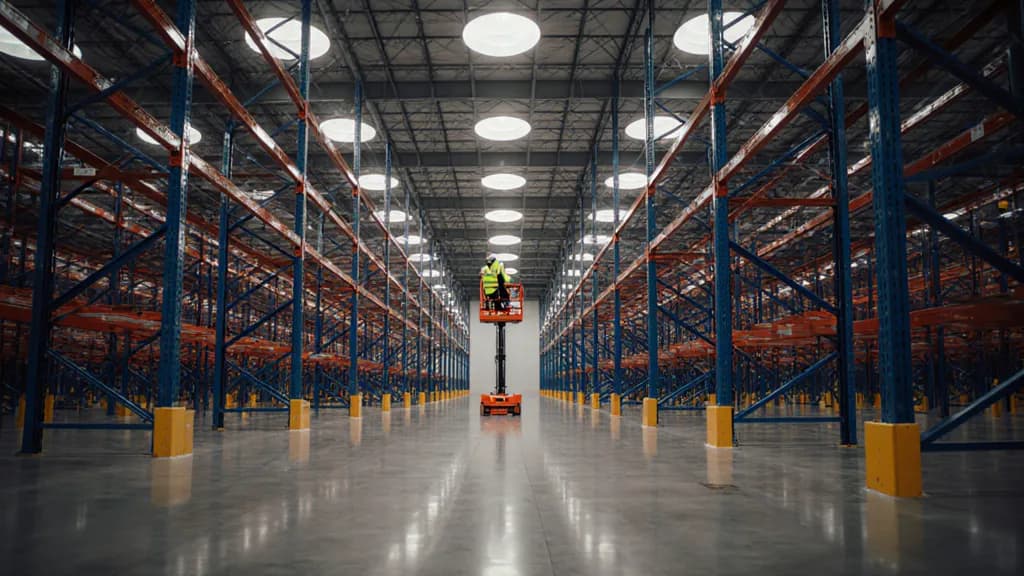
If your warehouse still runs on metal halide or fluorescent fixtures, you are paying for light you can't fully use: slow warm-up, flicker, fading output and fixtures that stay on in empty aisles. A well-planned warehouse lighting installation fixes all of that, but only if the layout, controls and permits are handled correctly from the start.
This guide covers what Los Angeles warehouse, distribution and light-industrial owners should know before replacing or adding lighting.
Why LA Warehouses Are Switching to LED High Bay Lights
Most older buildings in the San Fernando Valley, the San Gabriel Valley and the industrial areas around downtown LA were lit with 400-watt metal halide or T5/T8 fluorescent high bays. LED high bay lights have replaced them as the standard for a few practical reasons:
- Lower energy use. LED fixtures typically deliver the same or better light on a fraction of the wattage, which matters in buildings that run long shifts.
- Instant on. No 10–15 minute restrike delay after a power blip, which is a real safety issue on a busy floor.
- Longer life. Fewer lifts rented to change lamps 25–40 feet up.
- Better light quality. Higher color rendering makes labels, barcodes and forklift traffic easier to see.
- Built-in controls. Many fixtures ship with occupancy and daylight sensors, which helps with California code.
Planning a Warehouse Lighting Installation
Good warehouse LED lighting starts with a plan, not a fixture catalog. Before quoting, a qualified electrician should look at:
Ceiling height and racking layout
Mounting height decides the fixture type and beam spread. Open floors and staging areas usually suit wide-beam high bays, while tall, narrow racking aisles often need aisle-optic fixtures that push light down onto vertical shelf faces instead of the rack tops.
Light levels for the work being done
Bulk storage, active picking, packing tables and loading docks all need different light levels. A photometric layout lets you place the right fixture in the right spot rather than over-lighting one zone and leaving another dim.
Existing electrical capacity
Swapping old high bays for LED usually reduces load, so most retrofits don't need new service. But if the project also adds conveyors, EV forklifts, charging stations or new equipment, it's worth reviewing the panel and feeders at the same time. Our commercial electrical services page covers that broader work.
Retrofit kit vs. full fixture replacement
- Retrofit kits reuse the existing housing and can be quicker, but they depend on the old fixture being in good condition.
- New fixtures cost more up front but give you a fresh warranty, better optics and cleaner sensor integration. For fixtures that are decades old, replacement is often the better long-term choice.
Title 24 Lighting Requirements for Warehouses
California's energy code is where many do-it-yourself or handyman projects go wrong. Title 24 lighting requirements (Part 6) apply to new nonresidential lighting and to many alterations, including replacing a significant share of fixtures in a space. For warehouses, that generally means:
- Automatic shut-off controls so lighting turns off when the building is unoccupied.
- Occupancy sensing in aisles and open areas, so lighting drops or turns off when no one is there. This is where motion sensor warehouse lighting earns its keep.
- Daylight controls in zones near skylights or large windows.
- Multi-level lighting so areas can be dimmed rather than just switched on or off.
- Compliance documents and acceptance testing. Nonresidential lighting controls usually require compliance forms, and acceptance testing by a certified technician before final sign-off.
Exact requirements depend on the scope of the alteration and the current code cycle, so your electrician should confirm them for your building before work starts. Skipping this step can hold up a final inspection or a certificate of occupancy for a new tenant.
What Warehouse Lighting Installation Costs
There is no honest flat price for a warehouse, because cost depends on square footage, ceiling height, fixture count, controls and access. The main cost drivers are:
- Number and type of fixtures, including aisle-optic or high-output models
- Mounting height and lift rental, since higher ceilings and tight racking take longer
- Controls, from simple built-in sensors to a networked lighting control system
- Wiring changes, such as new circuits or relocated fixtures to match a new racking layout
- Permits, Title 24 forms and acceptance testing
- After-hours scheduling so your operation doesn't stop
A site walk is the fastest way to get a real number. Ask for a quote that lists fixtures, controls and code work separately so you can compare bids fairly.
Rebates and Incentives Depend on Your Utility
Energy-efficiency incentives for commercial LED retrofit projects come from your electric utility, and in Los Angeles County that isn't the same for every address:
- Inside the City of Los Angeles, most businesses are served by LADWP.
- Pasadena, Glendale and Burbank businesses are served by their municipal utilities: Pasadena Water & Power, Glendale Water & Power and Burbank Water and Power.
- Much of the rest of the county is served by Southern California Edison (SCE).
Programs, eligibility and amounts change often and some require pre-approval before any fixtures are ordered. Check your utility's current business programs before you sign a contract, and ask your electrician to provide the fixture specification sheets they will need.
Frequently Asked Questions
How long does a warehouse lighting installation take?
A straightforward retrofit of a small to mid-size warehouse can often be completed in a few days. Larger buildings, new circuits or networked controls take longer. Work can usually be phased by zone or done after hours to limit downtime.
Do I need a permit to replace warehouse lights in Los Angeles?
Often, yes. Many commercial lighting alterations require an electrical permit and Title 24 documentation. Requirements vary by city and scope, so confirm with your electrician before work begins.
Are LED high bay lights worth it over metal halide?
For most warehouses, yes. LED high bays use less energy, turn on instantly, last far longer and pair easily with the occupancy controls Title 24 expects.
What is the difference between warehouse lighting and industrial lighting installation?
They overlap heavily. Industrial lighting installation can also cover manufacturing floors, wet or hazardous locations and equipment task lighting, which may need specially rated fixtures.
Can you install lighting while we stay open?
Usually. We can schedule nights or weekends and work zone by zone so aisles and docks stay usable.
Get a Warehouse Lighting Quote
For other commercial projects, see our guides to commercial lighting installation and commercial electrical inspections, or our main lighting installation and upgrades service.
911 Construction & Electric Inc. is licensed, bonded and insured (CA Lic. #1027421) and serves warehouses and businesses across Los Angeles, the San Fernando Valley and the San Gabriel Valley. Request a free estimate or call 747-255-8595 to schedule a site walk.
Keep Reading
5 min read
Electrical Preventive Maintenance in Los Angeles
A loose lug or a scorched neutral rarely announces itself. It shows up as a breaker that trips on the hottest afternoon of the year, or a tenant calling at closing time about ha…
Read article →
6 min read
Electrical Panel Maintenance in Los Angeles: Checklist
Most homeowners service the furnace, flush the water heater and change the HVAC filter on a schedule. The electrical panel — the single component every circuit in the building d…
Read article →
6 min read
Home Battery Backup Installation in Los Angeles
A red-flag wind warning goes up, the power drops, and suddenly the most important appliance in the house is the refrigerator. That is usually the moment Los Angeles homeowners s…
Read article →Have an electrical project in mind?
Talk to a licensed electrician today — free estimates, 24/7 emergency service.