Electrical Tips
Electrical Panel Upgrade Cost in Los Angeles (2026 Guide)
Updated 14 min read
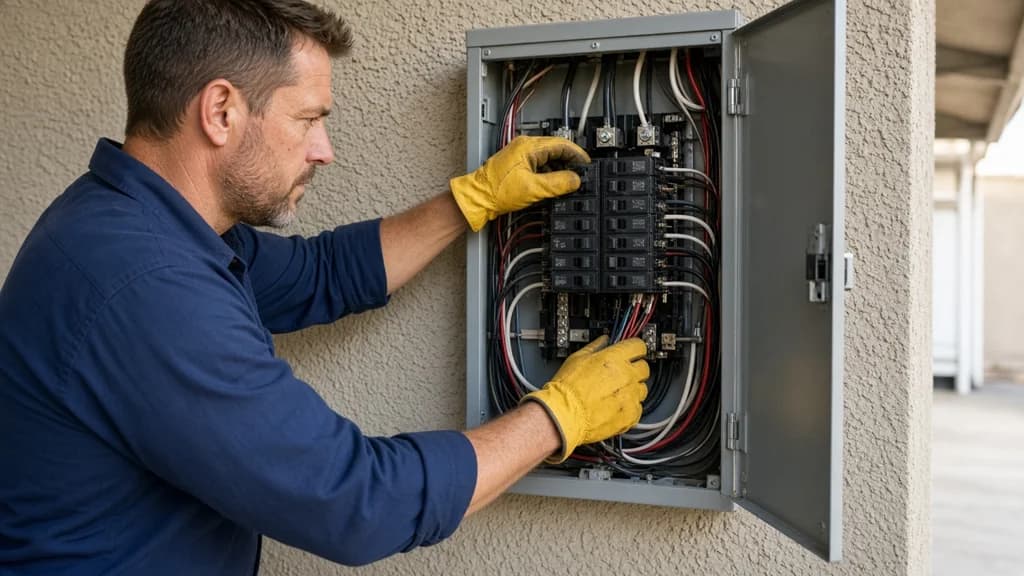
If your Los Angeles home still runs on a 60- or 100-amp service, you have probably wondered what an upgrade actually costs before you call anyone out. The honest answer is that the electrical panel upgrade cost in Los Angeles depends on your amperage, your home's wiring, permit fees, and which utility and city your home is in. This 2026 guide covers realistic price ranges, what drives them up or down, and what changes by city. Prices are typical 2026 market ranges and every home is different, so treat them as planning numbers. For a firm number on your home, request a free estimate or call 747-255-8595.
What to know first
- For most single-family homes here, a standard electrical panel upgrade cost falls between roughly $2,000 and $4,500 for a like-for-like 200-amp service. Those are typical 2026 planning ranges, not a written quote.
- Two independent reference points sit in a similar band: a 2025 national survey by Lawrence Berkeley National Laboratory found a $3,500 median for a single-family main panel replacement, and Southern California Edison's home-electrification guide says a panel upgrade will likely cost between $2,000 and $6,000. Neither is a Los Angeles bid, and neither replaces a site visit.
- A permit and inspection are required for panel work throughout Los Angeles County. In the City of Los Angeles, LADBS generally requires electrical plan check when the total load exceeds 400 amperes or the equipment is rated 600 amperes or more — so a typical 200-amp house job often does not need plan check, though other project conditions can still trigger one.
- The utility's own work is separate from the panel you own. LADWP says that if its existing service can handle the new demand, there are generally no installation charges; conduit work in public property, transformer work, or street resurfacing can bring charges. In SCE territory, Rule 16 applies an allowance to SCE's service work and bills the estimated cost above it; a relocation you request is billed at SCE's full estimated cost. Pasadena, Glendale, and Burbank each have their own utility rules.
- Some 2026 "panel rebate" headlines are already closed for houses. The federal Energy Efficient Home Improvement Credit (25C) applied to qualifying work through December 31, 2025. California's HEEHRA single-family rebates were fully reserved as of February 24, 2026, and the program implementer later closed the waitlist as of July 17, 2026. Local utility programs that are still listed — including PWP's panel rebate and SCE Charge Ready Home for qualifying customers — have their own rules; confirm them before you start.
How Much Does an Electrical Panel Upgrade Cost in Los Angeles?
For most single-family homes in Los Angeles, a standard electrical panel upgrade cost falls between roughly $2,000 and $4,500 for a like-for-like 200-amp service. Larger jobs that involve moving the panel, upgrading the meter, or adding a subpanel can run higher. Here are typical price ranges by job type:
- 100-amp panel replacement: $1,500 – $2,800 — best for small homes, condos, and like-for-like swaps.
- 100A to 200A panel upgrade: $2,500 – $4,500 — the right call for most homes adding EV chargers, AC, or modern appliances.
- 200-amp upgrade with meter and service-entrance work: $3,500 – $6,000 — for older homes with outdated service entrances.
- 400-amp service upgrade: $5,000 – $10,000+ — for large homes, ADUs, and heavy electrification. See our guide to 400-amp service upgrades.
- Subpanel addition: $900 – $2,500 — for garages, workshops, and room additions.
The single biggest variable is amperage. 200-amp service is the most common request we see in Los Angeles, because it gives you headroom for an EV charger, central air, a heat pump, and modern appliances all at once.
How those ranges compare with independent data
The planning ranges above are estimates, not a written quote. Confirm whether permit and utility charges are included. They are not a published statistic. Two public sources are useful as a cross-check:
- Lawrence Berkeley National Laboratory ran a national survey in summer 2025 (140 respondents in 34 states) and published it in August 2026. For single-family homes, contractors and engineers reported a $3,500 median for a main service panel replacement (middle half of answers $2,100–$5,000; 34 answers). A service-size increase on the customer-owned equipment had a $2,800 median ($2,000–$5,000; 22 answers). Utility-side costs passed to the owner were more variable: a $3,500 median ($1,650–$7,000; 19 answers). Those utility figures are national; LADWP and SCE publish their own local rules, below. Medians are the better guide in that survey because a few expensive jobs pull the averages up.
- SCE's own Guide to Home Electrification says upgrading your panel will likely cost between $2,000 and $6,000, depending on its age.
If two quotes for the same house are far apart, they are often pricing different scopes — for example, a panel swap in place versus new service-entrance conductors, or a job that also moves the panel or goes underground.
What's Included in the Cost of a Panel Upgrade
When a licensed electrician quotes an electrical panel replacement cost, the price usually bundles several line items. Understanding them helps you compare bids fairly:
- The panel and breakers — a quality 200-amp load center with breakers typically runs $300–$800 in materials.
- Labor — usually the largest share, reflecting a full day of work for a licensed crew plus a utility-coordinated shutdown.
- Permit and inspection fees — Los Angeles requires a permit for panel work; city fees commonly range from about $150 to $500 depending on jurisdiction. In the City of Los Angeles you can run an estimate in the LADBS fee estimator; other cities and unincorporated Los Angeles County set their own fees.
- Utility coordination — disconnecting and reconnecting service with your utility (Pasadena Water & Power, Southern California Edison, LADWP, Glendale Water & Power or Burbank Water & Power), and any meter changes.
- Code-required extras — grounding and bonding updates, AFCI/GFCI breakers, and new service-entrance conductors if the old ones are undersized. The California Electrical Code (Title 24, Part 3) is the statewide electrical code; the 2025 edition took effect January 1, 2026. It includes provisions for a surge-protective device at services that supply dwellings, and for an emergency disconnect in a readily accessible outdoor location on one- and two-family homes. Cities and counties adopt that code and may amend it, so the local building department is the authority for what a replacement at your address must include.
What Makes Panel Upgrade Costs Go Up
Two homes on the same street can get very different quotes. These are the factors that most often push an electrical panel upgrade cost toward the high end in Los Angeles:
Older homes and outdated service
Many homes in Pasadena, Burbank, Glendale, and the San Fernando Valley predate modern electrical demands. If the meter or service conductors are also outdated, those need replacing too. Homes with hazardous Federal Pacific (FPE) or Zinsco panels almost always need a full replacement rather than a simple swap. See why Zinsco and Federal Pacific panels are a problem.
Panel relocation
Moving the panel to a new wall — for clearance, remodeling, or aesthetics — adds rewiring and patching labor. Keeping it in the same spot is always cheaper.
Rewiring and code corrections
If an inspector finds aluminum branch wiring, missing grounds, or unsafe splices, those may need to be addressed before the new panel passes. You can often handle electrical repairs as part of the same visit, which is more efficient than a separate trip. In the Berkeley Lab survey, rewiring hazardous or undersized conductors had a $5,000 median per single-family home — a reminder that hidden corrections, not the panel itself, can move a quote.
Higher amperage and EV readiness
Stepping up to 400-amp service, or wiring the panel to support a Level 2 charger, increases both materials and labor. If a charger is on your roadmap, mention it up front — planning your EV charger installation alongside the panel upgrade avoids paying for two separate mobilizations.
Permits and Utility Steps by City: What Changes Your Panel Upgrade
Yes, a panel upgrade needs a permit and an inspection everywhere in Los Angeles County. A reputable electrician pulls the permit for you and schedules the inspection. Unpermitted panel work can void insurance, fail at resale, and create real safety hazards. What changes from city to city is who issues the permit and which utility sets your meter:
- Pasadena (Pasadena Water & Power): City of Pasadena Building & Safety issues the permit. PWP's steps start with a meter spot from its Electric Service Planning office, and only PWP may unlock the meter. It currently lists 14 business days to re-energize small residential jobs after all clearances, and services over 200 amps single-phase need provisions for a City-owned transformer on your property. Details are in our Pasadena electrical permits guide.
- Altadena, South Pasadena, San Marino, Sierra Madre and Arcadia (Southern California Edison): Altadena permits come from LA County Public Works, Building & Safety; the other cities use their own building departments. Not sure which utility serves you? See PWP vs SCE.
- Most City of Los Angeles neighborhoods (LADWP): LA Department of Building and Safety (LADBS) issues the permit. For a new single-family panel up to 320 amps, LADWP asks you to request a free meter spot before installing, and the LADBS inspector may ask to see it. LADBS electrical permit rules list when electrical plan check is required, including when the total load exceeds 400 amperes or the equipment is rated 600 amperes or more.
- Glendale and Burbank (their own city utilities): Glendale Water & Power and Burbank Water & Power each run their own service-upgrade process. Glendale's official EV charger guidance calls for a separate service-upgrade permit when the meter or panel changes, so confirm the steps first.
We pull the permit under our C-10 license and coordinate with your utility, so none of this lands on you.
Who pays for the utility's work
The panel, meter socket, and service-entrance conductors on your side of the service are yours to pay for. The utility's own facilities are a different question:
- LADWP: If an electric service is being upgraded and the existing LADWP service is adequate to handle the new electrical demand, LADWP says there are generally no installation charges. For jobs that need conduit work in public property, transformer work, or street resurfacing, charges may apply; a Service Planning Engineer calculates those from the plans.
- SCE: Under Rule 16, when SCE replaces its service facilities it treats the work as a new service extension and applies an allowance first; you pay SCE's estimated installed cost above that allowance. If you ask SCE to relocate or rearrange its facilities for your own reasons (a remodel, aesthetics, and similar requests), you pay SCE's total estimated cost.
- Pasadena, Glendale, and Burbank: These cities run their own electric utilities. Do not assume LADWP or SCE rules apply. Ask the utility, or start with the city notes above.
What to ask each quote to itemize
Written, itemized quotes are easier to compare than a single lump sum. Ask every bid to state:
- Which of the job types above it is pricing, and whether the meter socket or service-entrance conductors are included
- The new panel's busbar rating, main-breaker rating, and number of spaces
- Permit and inspection, and which building department will issue them
- Utility coordination (meter spot, disconnect, and reconnect), and whether any utility-side charges are known
- Grounding and bonding, and any surge protection or outdoor emergency disconnect the local department will require on this job
- Whether stucco, drywall, or trench repair is included
- Whether a Level 2 EV circuit is part of this mobilization, if you want one
Signs It's Time to Upgrade Your Panel
Cost matters, but so does timing. Consider an upgrade if you notice any of these:
- Breakers that trip frequently or won't reset
- A 60-amp or 100-amp service feeding a modern, appliance-heavy home
- Plans for an EV charger, heat pump, hot tub, or ADU
- A fuse box, or a known-defective FPE or Zinsco panel
- Flickering lights, warm panel covers, or a burning smell
- Reliance on power strips because you've run out of circuits
If you're seeing the last two warning signs, treat it as urgent and call a licensed electrician right away. Learn more about a full electrical panel upgrade in Los Angeles and what the process looks like from quote to final inspection.
How to Save Money on a Panel Upgrade
You don't have to spend more than necessary. A few practical tips:
- Bundle related work. Combining a panel upgrade with EV charger wiring, repairs, or a subpanel cuts down on repeat labor and trip charges.
- Get itemized, written quotes. Compare panel, labor, permit, and utility line items rather than a single lump sum.
- Right-size the service. A 200-amp panel covers the vast majority of LA homes; you rarely need 400 amps unless you're heavily electrifying or running an ADU.
- Ask about rebates. PWP currently lists $1,000 (plus $500 if income-qualified) for an upgrade to 200 amps or more with dedicated EV charger and water heater circuits; see our Pasadena panel upgrade rebate guide and how a panel upgrade can save money. Qualifying SCE customers may get up to $4,200 through Charge Ready Home (eligibility details). That program is limited to income-qualified households or residents of designated disadvantaged communities, on a single-family home, and it does not pay for the charger itself. Rebates are paid only to that utility's customers and terms change, so confirm with your utility first.
- Do not count on closed federal or state credits for 2026 work. The IRS Energy Efficient Home Improvement Credit (25C) was available for qualifying improvements made through December 31, 2025, including certain 200-amp panel work tied to other qualifying equipment, with a $600 cap on that item. The California Energy Commission noticed on February 24, 2026 that HEEHRA single-family rebates were fully reserved statewide; TECH Clean California later closed the single-family waitlist as of July 17, 2026 and said it will not approve waitlisted reservation requests.
- Hire licensed and insured pros. A correctly permitted, inspected job protects your home value and avoids costly redo work. You can verify a California contractor license on the CSLB site.
Frequently Asked Questions
How much does it cost to upgrade an electrical panel in Los Angeles?
Most Los Angeles homeowners pay between $2,000 and $4,500 for a standard 100-amp to 200-amp upgrade. Jobs that also require meter or service-entrance work, or a panel relocation, can range from $3,500 to $6,000 or more. Those are typical ranges, not a quote. For comparison, Berkeley Lab's 2025 national survey found a $3,500 median for a single-family main panel replacement, and SCE's guide puts a typical panel upgrade between $2,000 and $6,000.
How much does it cost to upgrade to a 200-amp panel?
The cost to upgrade an electrical panel to 200 amps typically runs $2,500 to $4,500 in the LA area, including the panel, breakers, labor, and permit. The final price depends on the condition of your existing service and how much code-correction work is needed.
Do I need a permit to upgrade my electrical panel?
Yes. Panel upgrades require a permit and inspection in Los Angeles and neighboring cities. A licensed electrician should pull the permit and coordinate the inspection as part of the job. In the City of Los Angeles, see LADBS electrical permits for when plan check applies.
Can you upgrade an electrical panel without rewiring the house?
Often, yes. If your branch wiring is in good condition and up to code, the panel can be replaced without rewiring. Rewiring is only needed when an inspector finds unsafe or outdated wiring that must be corrected.
When should I upgrade my electrical panel?
Upgrade when you have a 60- or 100-amp service feeding a modern home, when you're adding major loads like an EV charger or heat pump, or when you notice tripping breakers, a fuse box, or a defective FPE/Zinsco panel. Any burning smell or warm panel is an emergency.
Does LADWP or SCE charge for a service upgrade?
Not always. LADWP generally charges no installation fee when its existing service can carry the new load; transformer, public-property conduit, or street work can be charged case by case. SCE Rule 16 applies an allowance to SCE's service work and bills the estimated cost above it; a relocation you request is billed at full estimated cost. The equipment on your side of the service is always yours to pay for.
Get an Accurate Panel Upgrade Quote in Los Angeles
911 Construction & Electric Inc. is a licensed, bonded and insured C-10 electrical contractor (CA Lic. #1027421) at 1308 E Colorado Blvd Ste 141, Pasadena, CA 91106, serving Pasadena, Altadena, Glendale, Burbank, Arcadia, the San Gabriel Valley and greater Los Angeles. The only way to know your real panel upgrade cost is a proper assessment of your existing service, and we give upfront pricing after we see it. Request a free estimate, call 747-255-8595 or visit https://911electrics.com. 24/7 emergency service available.
Sources
Figures in this article were checked against the linked pages on November 10, 2026. Rates, fees, and program terms change; confirm with the agency or utility before you rely on a number.
- Lawrence Berkeley National Laboratory, Understanding the Costs and Barriers of Residential Electrical Panel and Service Upgrades (August 2026)
- Southern California Edison, A Handy Guide to Home Electrification (panel upgrade cost range)
- SCE Rule 16 — Service Extensions (CPUC tariff)
- SCE Charge Ready Home eligibility
- LADWP charges and fees for electric service requests
- LADBS electrical permits (plan check thresholds)
- LADBS permit fee estimator
- California Energy Commission, HEEHRA Phase I Single-Family Rebates Fully Reserved (docketed February 24, 2026, docket 23-DECARB-01)
- TECH Clean California, HEEHRA Single-Family Waitlist Funding Update (waitlist closed as of July 17, 2026)
- Internal Revenue Service, Energy Efficient Home Improvement Credit (25C, through December 31, 2025)
- California Building Standards Commission, Title 24 codes (2025 California Electrical Code effective January 1, 2026)
Was this helpful?
Keep Reading
5 min read
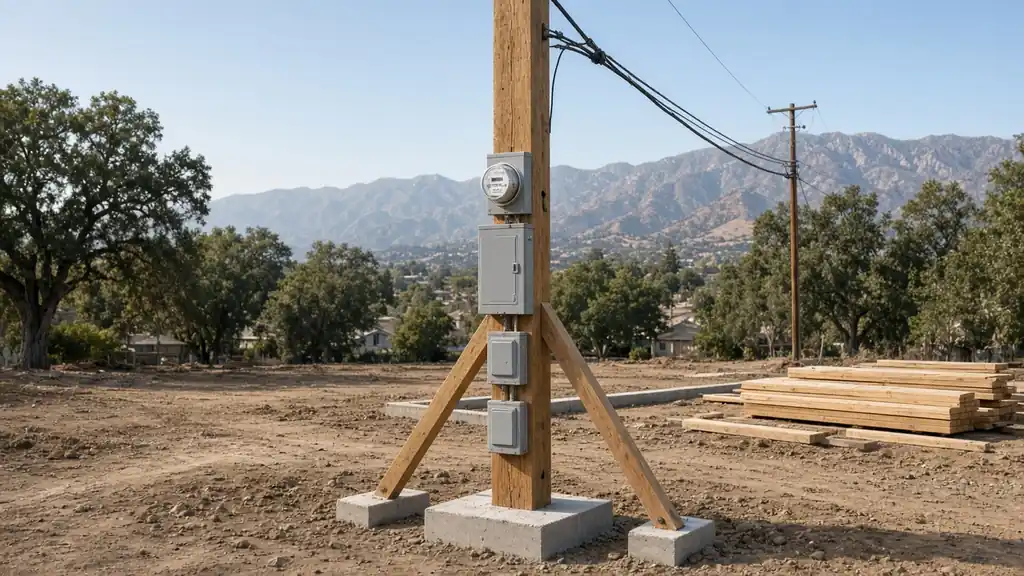
Temporary Power for Altadena Rebuilds: SCE & County Steps
Most Altadena rebuilds can't start framing until there's power on the lot, and that means a temporary power pole. Altadena is unincorporated LA County on Southern California Edi…
Read article →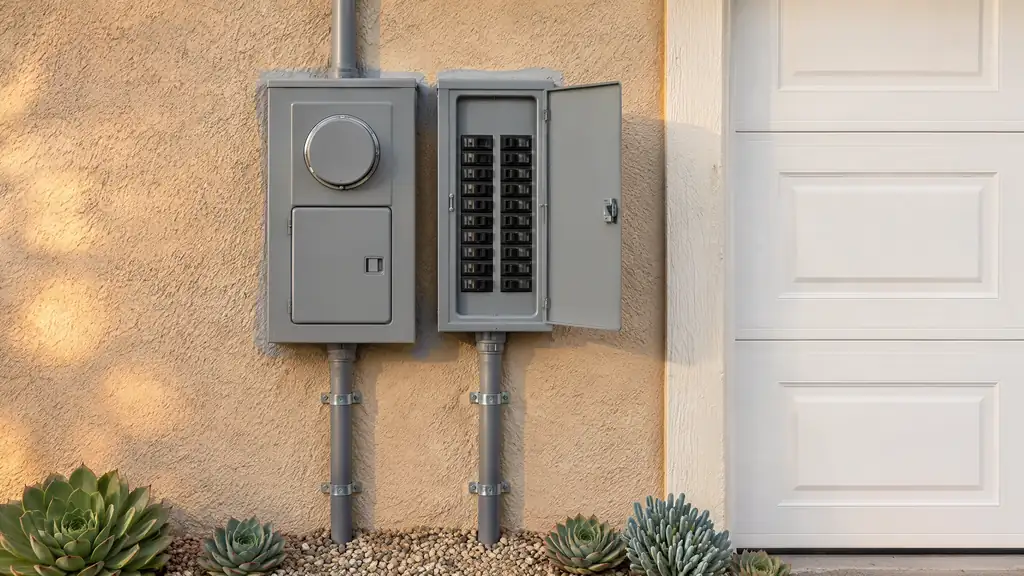
6 min read
LADWP Panel Upgrade Steps: From Service Planning to Power
Most of the City of Los Angeles gets its power from the Los Angeles Department of Water and Power (LADWP), and that changes how a panel upgrade works in neighborhoods like Eagle…
Read article →
6 min read
Pasadena Tenant Improvement Electrical: Permits & Timeline
Signing a lease in Pasadena is the easy part. The electrical work for a tenant improvement (TI) is where schedules slip: new circuits for equipment, a lighting layout that has t…
Read article →Have an electrical project in mind?
Talk to a licensed electrician today — free estimates, 24/7 emergency service.